Israeli Strikes Kill At Least 12 In Southern Lebanon Despite Ceasefire
Key Takeaways
- Israeli strikes in southern Lebanon killed civilians, including a child.
- Attacks continued despite a ceasefire between Israel and southern Lebanon.
- Casualties centered in Nabatieh region, with Habboush among the struck towns.
Southern strikes despite ceasefire
Israeli strikes in southern Lebanon killed at least 12 people, including a child, as Israel continued its attacks despite a ceasefire, according to Al Jazeera.
“At least 12 people have been killed, including a child, in southern Lebanon, as Israel continues its strikes despite a ceasefire”
Al Jazeera reported that Israeli forces killed at least eight people in Habboush in the Nabatieh district on Friday and wounded at least eight others, including another child and a woman.

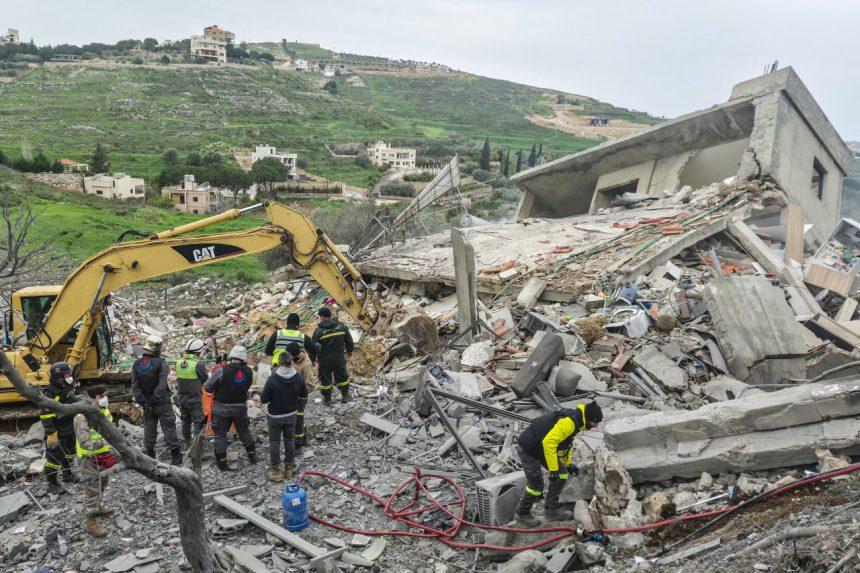
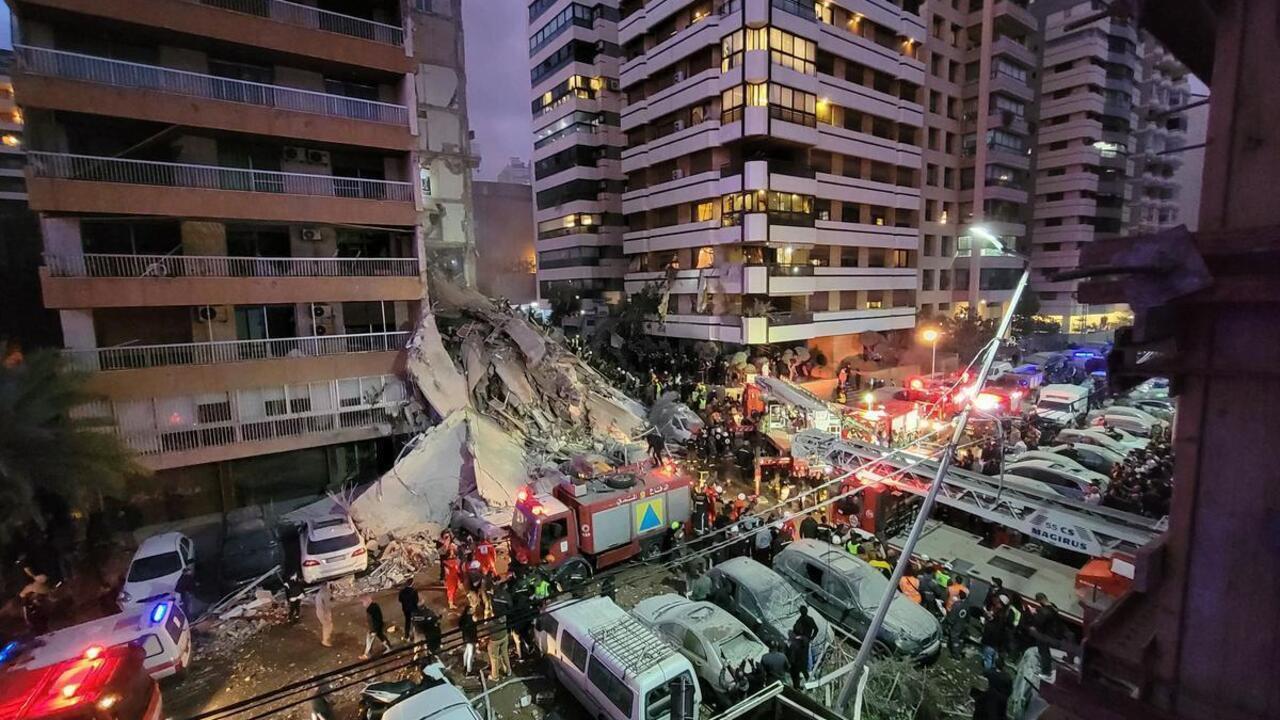
The Lebanese Civilian Defence searched through the rubble of what Al Jazeera’s Obaida Hitto described as “the massive set of air strikes that destroyed a residential neighbourhood” in the southern Lebanese city of Tyre.
Hitto said, “The footage coming out of there is really dramatic, with buildings completely flattened,” and added, “We keep seeing this same kind of strategy throughout the country.”
He further stated, “There were strikes that killed and injured many other people in at least six other locations in southern Lebanon today, including women and children.”
Al Jazeera also said another four people were reported killed in other attacks near Tyre and Nabatieh, citing the country’s National News Agency.
In parallel, CBC reported that Israel carried out several airstrikes Friday on southern Lebanon that killed at least 10 people while Hezbollah said it fired rockets and drones at northern Israel where two soldiers were wounded.
Evacuation orders and targets
Multiple outlets described Israeli actions around Habboush and other southern localities, including evacuation orders and strikes tied to Hezbollah’s presence.
Al Jazeera said Israel issued a forced evacuation order to residents in Habboush on Friday, located north of the Litani River, and that the military’s Arabic-language spokesperson, Avichay Adraee, told people to immediately move at least 1,000 metres away in a post on social media before strikes struck the village.

Al Jazeera added that Israel attacked the town a day earlier without giving any warning.
CBC similarly reported that Israel’s military on Friday afternoon urged residents of the Lebanese village of Habboush near the southern city of Nabatiyeh to evacuate, warning that those close to Hezbollah's facilities would be in danger.
CBC said an airstrike on Habboush that occurred around the time of the warning killed six people, including a woman and a child — and wounded eight, the Health Ministry said.
TRT World and Daily Sabah both described additional strikes in the same broader area, with TRT World citing state media that an Israeli strike targeted Nabatieh al-Fawqa, killing two people and injuring 10 others, and Daily Sabah reporting an Israeli strike targeted the town of Nabatieh al-Fawqa, killing two people and injuring 10 others.
L’Orient Today added further detail about the day’s focus, saying Israeli forces “especially focused its attacks on the locality of Habboush, near Nabatieh” and that “Its powerful strikes killed at least six people and hit a residential building, a supermarket and several homes,” citing vice president of the municipal council Hussein Traboulsi.
Ceasefire violations and counterfire
The reporting also tied the renewed strikes to ongoing exchanges between Israel and Hezbollah, while describing the ceasefire as not stopping attacks.
“Israel strikes southern Lebanon as the death toll nears 2,000 ahead of talks mediated by the United States”
Al Jazeera said Israel has claimed its attacks target the pro-Iran Lebanese group Hezbollah, but that a large proportion of those killed have been civilians, and it added that Hezbollah continued attacks on Israeli forces and vehicles inside Lebanon, saying it targeted a Merkava tank and other vehicles, as well as soldiers in Sour.
Al Jazeera stated that the death toll continues to climb despite the US-brokered ceasefire announced on April 17 and extended to May 17.
CBC described the same ceasefire context, saying Israel's military and Hezbollah kept up their attacks despite a ceasefire in place since April 17, and it reported that by Friday afternoon Hezbollah had issued six statements saying it launched drones and rockets at Israeli military positions.
TRT World and Daily Sabah both said Israel carried out renewed attacks despite a temporary ceasefire, with TRT World describing “fresh Israeli air strikes in southern Lebanon on Friday despite a temporary ceasefire” and Daily Sabah reporting “renewed attacks despite a temporary cease-fire.”
L’Orient Today said Hezbollah continued its attacks on Israeli soldiers and army vehicles operating in southern Lebanon, though “at a reduced level compared to before the Lebanon-Israel cease-fire of April 17,” and it quoted Hezbollah claims of attacks including “three in Bayyada on the coast south of Sour, particularly with exploding drones.”
In the same account, L’Orient Today said the Israeli army reported a rocket and a booby-trapped drone landing near a zone where its soldiers operate “causing no casualties,” and later Channel 12 reported that two soldiers were “slightly wounded” following the explosion of a drone in southern Lebanon.
Humanitarian toll and Red Cross
Beyond the immediate strike counts, the sources described a broader humanitarian toll and specific targeting concerns involving medical workers.
Al Jazeera said Lebanon’s Ministry of Public Health’s Emergency Operations Center reported on Friday that 2,618 people have been killed and 8,094 wounded since hostilities began on March 2.

CBC reported that Lebanon's Health Ministry said Friday that the war's death toll reached 2,618, while 8,094 people have been wounded, matching Al Jazeera’s figures.
CBC also reported that a senior official with the International Federation of Red Cross (IFRC) and Red Crescent Societies condemned the targeting of Red Cross volunteers during the Israel-Hezbollah war, with Xavier Castellanos Mosquera saying that “two Lebanese Red Cross volunteers have been killed and 18 others wounded by Israeli strikes.”
CBC added that “More than 100 health workers in total have been killed in Lebanon during the war, according to its Health Ministry,” and it included Mosquera’s account that Red Cross volunteers in southern Lebanon described hugging each other before departing on a call “because they don't know if they will return.”
CBC further said Mosquera told the Associate Press that he had seen video showing “ambulances that were hit by bullets” while trying to rescue journalist Amal Khalil.
TRT World described the displacement and war context, saying Israel has waged an offensive in Lebanon since March 2, killing more than 2,600 people, and displacing over 1 million.
Numbers, brands, and framing differences
The sources diverged on both the daily casualty totals and the broader framing of what is happening in Lebanon, while also tying the conflict to international diplomacy.
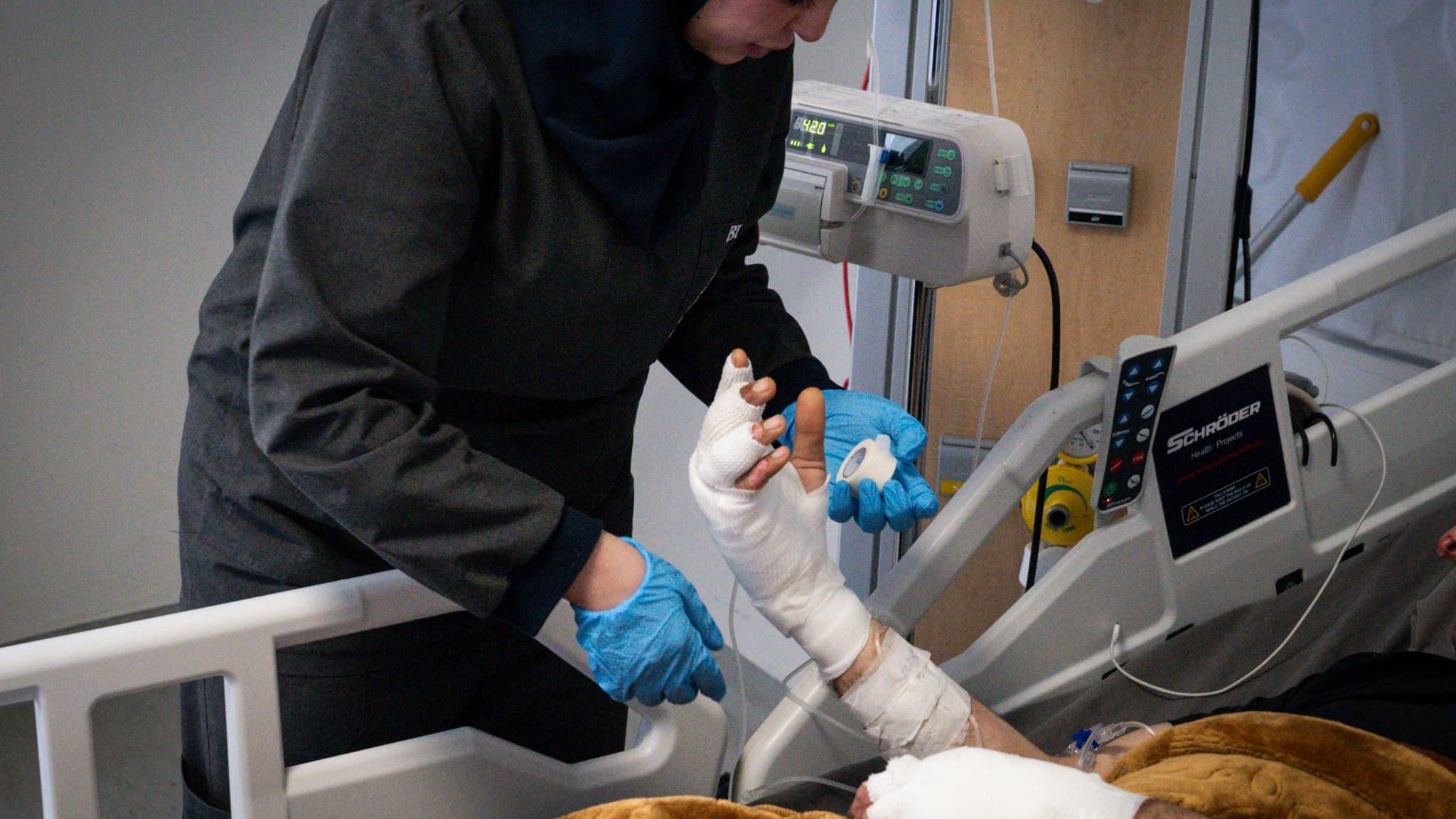
“At Nabatieh Hospital, in southern Lebanon, cries of distress drown out the sound of sirens”
On casualties, Al Jazeera said at least 12 were killed in the latest Israeli attacks, while CBC said at least 10 people were killed in Friday’s strikes, and TRT World said at least 17 people were killed in fresh Israeli air strikes despite a temporary ceasefire.
L’Orient Today described “at least six people” killed in Habboush and also reported additional deaths in other locations, including four members of the same family in Zrarieh (Saida) and two people killed in Burj Qalaway and between Qana and Hanaway.
On the diplomatic track, Annhar said the death toll nears 2,000 ahead of talks mediated by the United States, reporting “1,953 dead and 6,303 wounded,” and said Israeli planes carried out an airstrike on the city of Nabatieh on Saturday morning and another strike targeting the Zefta highway in southern Lebanon.
Annhar also said Israel had previously announced that it would not discuss a ceasefire with Hezbollah during direct talks planned with the Lebanese government next week in Washington, and it reported that the Israeli ambassador to Washington, Yechiel Leiter, and Lebanese counterpart, Nada Hamadeh Moawad, agreed to meet on Tuesday at the U.S. State Department headquarters.
In a different framing, Arab News’s Lebanon item foregrounded US-Europe tensions rather than the strike details, quoting a European diplomat saying, “We are braced for anything, anytime,” and referencing Trump’s threats to cut troop levels in Germany, which it linked to the broader transatlantic relationship.
Even within the Lebanon-focused reporting, Al Jazeera emphasized that Israel claimed its attacks target Hezbollah while a large proportion of those killed have been civilians, while HRW in العربي الجديد accused Israel of using internationally banned white phosphorus in shelling that targeted Yohmor and other areas, including the southern suburb of Beirut.
What comes next
The sources also pointed to continuing military activity, ongoing ceasefire disputes, and the prospect of talks mediated by the United States.
Al Jazeera said Israel continues to occupy parts of southern Lebanon, which it calls a buffer zone, and it described how the death toll continues to climb despite the US-brokered ceasefire announced on April 17 and extended to May 17.
TRT World said Israel continues to violate the ceasefire daily through air strikes and the demolition of homes, while it also maintained a “buffer zone” in southern Lebanon.
Annhar reported that talks mediated by the United States are planned, stating that the Israeli ambassador to Washington, Yechiel Leiter, and Lebanese counterpart, Nada Hamadeh Moawad, agreed to meet on Tuesday at the U.S. State Department headquarters, and it said Israel had previously announced that it would not discuss a ceasefire with Hezbollah during the direct talks planned with the Lebanese government next week in Washington.
L’Orient Today described how Israeli forces continued escalation after forcing residents to evacuate Habboush, and it said all rescue teams deployed in the village had to leave due to attempts by Israeli army drones to target them.
In the humanitarian sphere, CBC reported that Mosquera said Red Cross volunteers hugged each other before departing on a call “because they don't know if they will return,” and it noted that more than 100 health workers have been killed in Lebanon during the war, according to Lebanon’s Health Ministry.
In addition, HRW’s accusation in العربي الجديد raised a separate set of stakes by alleging illegal use of white phosphorus, with the report warning that “The use of white phosphorus over residential areas is extremely alarming and will have dire consequences for civilians.”
More on Lebanon

Israeli Strikes Kill At Least 15 In Southern Lebanon Despite Ceasefire
17 sources compared

Israeli Airstrikes Kill Nine in Tyre and Ain Baal as Lebanon Toll Reaches 1,368
14 sources compared
Israeli Army Kills Three Lebanese Civil Defense Volunteers at Majdal Zoun Funeral in Sour
10 sources compared

Islamic Resistance In Lebanon Targets Israeli Military Vehicle And Three Army Positions In Bayada And Bint Jbeil
15 sources compared