Gaza Genocide08 July, 20262 min read
Israeli Army Recovers Staff Sergeant Ran Gvili’s Body From Gaza, Returning All Hostages
This article is an automated aggregation of coverage from news outlets. Our editorials offer in-depth analysis curated by the NewsCord team.
IDF recovered the body of Ran Gvili in Gaza, marking all Gaza hostages returned. Ran Gvili was the last hostage whose remains were held in Gaza.
Last hostage remains recovered
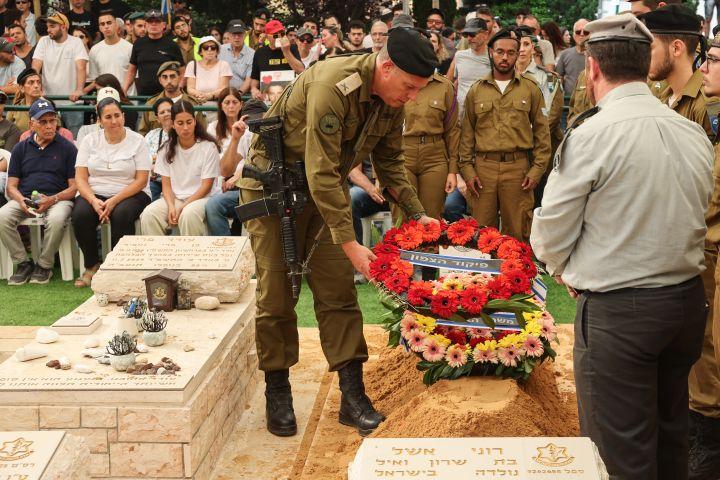
The Israeli army announced on Monday that it had recovered in the Gaza Strip the body of Staff Sergeant Ran Gvili, the last Israeli hostage whose remains were still held in the Palestinian enclave, and said that with the operation all hostages abducted in the Gaza Strip have now been returned, alive or dead. The Ici Beyrouth report frames the recovery as part of an Israeli doctrine of repatriation, stating that the commitment to repatriate all its nationals, including after their death, is a priority rooted in religious, historical, and strategic considerations.
Within that framing, the report says the retention of bodies is used as a political weapon, citing The Times of Israel’s note that Hamas has made the retention of bodies a deliberate strategy. It also links the practice to a broader logic of cognitive warfare, quoting the Washington Institute that hostage-taking — alive or dead — fits into a logic intended to paralyze Israeli decision-making and influence international perceptions by exploiting emotion and empathy.
Doctrine, burial, and doctrine
Ici Beyrouth says the Israeli doctrine of repatriation is treated as a non-negotiable red line, adding that yielding on this point would amount to accepting the transformation of the dead into instruments of political and informational blackmail. The report also grounds the issue in Jewish burial obligations, citing Deuteronomy through a passage that says a body must not remain unburied, lest the land be profaned.
It further cites Rabbi Doron Korbluth, explaining that the body enables the fulfillment of commandments and preserves dignity even after death. The report then connects the doctrine to the land of Israel, citing Aish HaTorah’s emphasis on being buried in the biblical sense in the land of Israel and describing how symbolic earth from the land of Israel is placed in the tomb for Jews buried abroad.

Closure and ongoing debate
While the Gaza-focused recovery was described as completing the return of hostages, the same Ici Beyrouth report says the debate over repatriation is controversial, recalling the case of Yahya Sinouar released during the Gilad Shalit exchange in 2011 who later became one of the architects of the October 7 attacks.
In parallel, Israeli reporting on a separate 1948 case described how the IDF located the remains of Pvt. Yaakov Zrihann after a 15-year investigation, with the IDF saying the grave contained the remains of seven additional IDF soldiers.
The Jerusalem Post quotes IDF Chief Human Resources Officer and Casualty Brigade Chief Brig.-Gen. Edna Ilya telling the family, "It is our privilege to continue to act out of a deep moral obligation to bring comfort and accompany the bereaved families," and it quotes Yvonne Cohen describing the discovery as meaning "the world."
The Jerusalem Post also says a state ceremony will be planned for the late private, noting the significance of the findings 78 years after his disappearance, and it places the remains in Kiryat Enavim, with the investigation including locating and analyzing documents, interviewing witnesses, conducting soil analyses, and conducting archaeological surveys.