
Israeli Attacks Continue Six Months After Gaza Ceasefire, UN Human Rights Chief Volker Türk Says
Key Takeaways
- Six months into Gaza ceasefire, Israeli strikes persist and humanitarian access remains severely constrained.
- Territory effectively divided by Israeli control, with expanding military dominance over Gaza.
- Ceasefire is described as fragile; recovery, governance, and disarmament efforts remain incomplete.
Ceasefire, but no safety
Six months after Gaza’s ceasefire deal took effect, Palestinians across the strip are still unsafe as Israeli attacks continue routinely, the UN Human Rights Chief Volker Türk said, describing “the unrelenting pattern of killings” as reflecting “continuing disregard for Palestinian lives, enabled by sweeping impunity.”
“Gaza marks 6 months of a ceasefire that may offer lessons for the Iran war Gaza marks 6 months of a ceasefire that may offer lessons for the Iran war DEIR AL-BALAH, Gaza Strip (AP) — Friday marks six months since Gaza’s ceasefire deal took effect, a milestone largely lost in the confusion over the new and even more fragile ceasefire in the Iran war”
AP reports that Gaza’s ceasefire has largely stopped the most intense fighting between Israeli forces and Hamas-led militants, but that “most of the ceasefire work remains to be done,” including disarming Hamas, ending its two-decade rule, deploying an international stabilization force, and beginning vast reconstruction.
Türk said that “For the past 10 days, Palestinians are still being killed and injured in what is left of their homes, shelters and tents of displaced families,” and he pointed to killings in places including “a medical facility and a classroom.”
AP put the death toll from Israeli attacks at 738 people “in the six months since the ceasefire,” citing Gaza’s Health Ministry, and the OHCHR press release similarly said the number had reached 738 since the ceasefire came into effect on 10 October 2025.
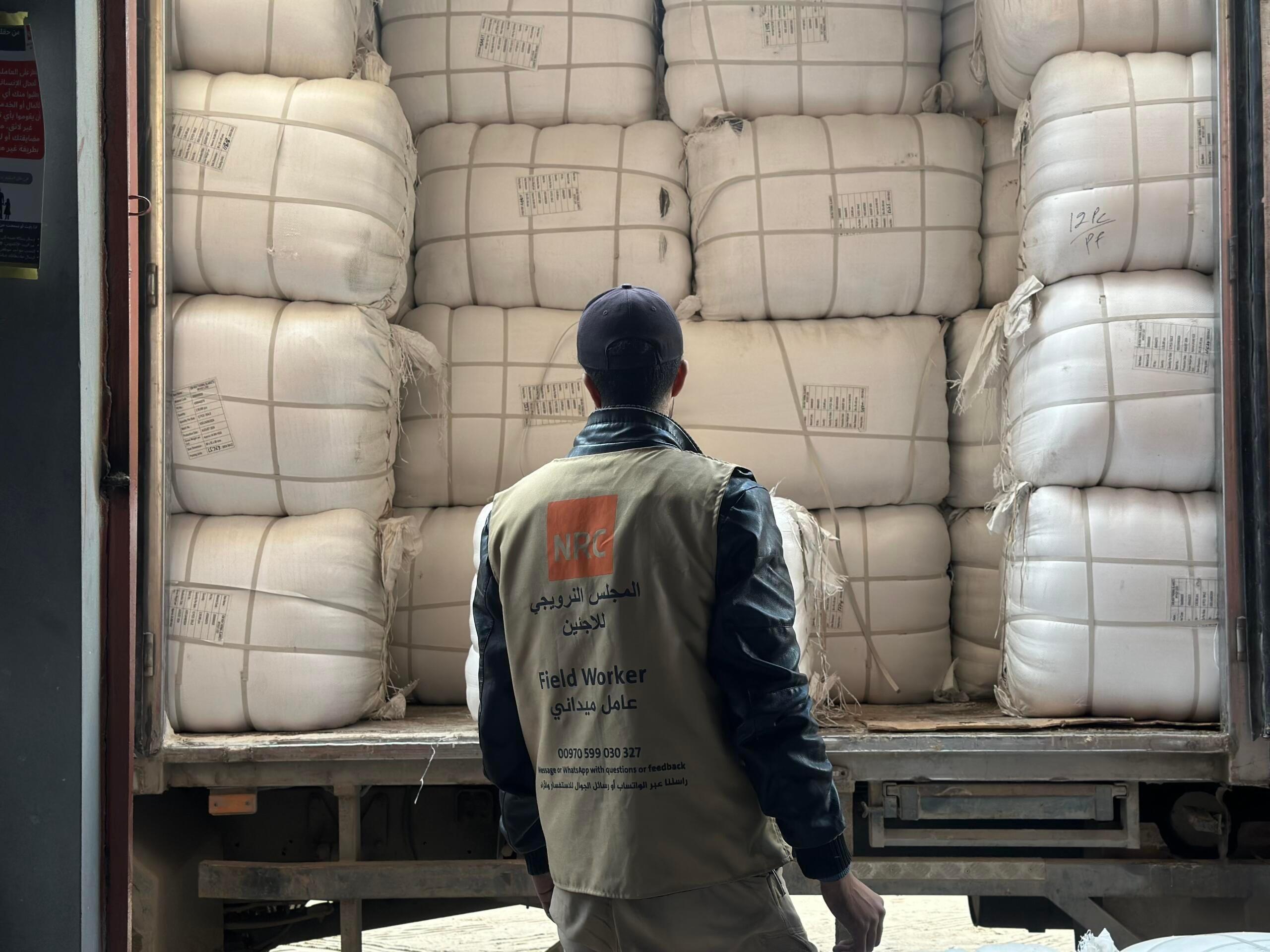
The AP account also described how Gaza residents are in limbo with limited aid entering through “a single, Israeli-controlled border post,” while Türk said persistent Israeli restrictions on humanitarian aid and the destruction of civilian infrastructure have compounded harm.
In parallel, Doctors Without Borders described the ceasefire as “not a ceasefire,” saying Gaza has been effectively divided along the “yellow line” under full Israeli military control, with gunfire, airstrikes, and shelling happening daily along its perimeter.
Aid, borders, and the “yellow line”
While the ceasefire reduced some fighting, multiple organizations described a shrinking humanitarian and geographic space that kept civilians exposed.
AP said Gaza residents are in limbo, with limited aid entering through “a single, Israeli-controlled border post,” and it reported that the U.S. 20-point ceasefire plan for Gaza is “largely failing on the humanitarian front,” with five international aid groups saying conditions deteriorated further since the Iran war began.

In that scorecard, AP reported that “During the first two weeks of March 2026, trucks entering Gaza declined by 80%, and the price of basic goods increased dramatically,” and it said medical evacuations have stalled.
The OHCHR press release tied ongoing insecurity to restrictions on aid and to the destruction of civilian infrastructure, stating that “The suffering has been further exacerbated by persistent Israeli restrictions on the entry and flow of desperately needed humanitarian aid.”
Doctors Without Borders said the “yellow line” divides Gaza along an area under full Israeli military control, “(58 percent of the territory), pushing Palestinians into only 42 percent,” and it described the “perimeter of the ‘yellow line’” as “a kill zone” where gunfire, airstrikes, and shelling happen daily.
MSF UK similarly said “This is not a ceasefire” and described “an ever-expanding military control of the Strip,” while also saying Israel has continued “conditions intended to destroy conditions of life” and “systematically restrict the entry of humanitarian aid.”
MSF UK added that since 1 January 2026, MSF has been blocked from bringing “any medical or humanitarian supplies into Gaza,” and it said that Israel is preventing most medical evacuations, leaving “over 18,500 people in Gaza” on the medical evacuation list, including “4,000 children.”
Specific killings and targeting
OHCHR documented specific incidents during the six months since the ceasefire announcement, describing a pattern of killings across Gaza.
“MSF GAZA: "This is not a ceasefire" - Life in Gaza continues to be suffocated six months on Six months since the fragile and ineffective ceasefire was implemented in Gaza on 10 October 2025, Médecins Sans Frontières (MSF) is raising the alarm on continued violent attacks by Israeli forces and an ever-expanding military control of the Strip”
It said that at least 32 Palestinians have been killed by Israeli forces since early April, and it described how “For the past 10 days” people were being killed and injured in “what is left of their homes, shelters and tents of displaced families.”
The press release reported that on 9 April, “Ritaj Rihan, a third grade schoolgirl, was killed as Israeli military forces opened fire on the crowded tent encampment housing her makeshift classroom, in Beit Lahiya, North Gaza.”
It also said that on 8 April, “the Israeli military used a drone to target and kill Al Jazeera journalist Mohamed Washah in Gaza City,” and it noted that Israel later issued a statement claiming he had been a Hamas operative.
OHCHR said this was “the same basis Israel has invoked in many similar killings of journalists in Gaza, with no independently verifiable evidence to substantiate the claim,” and it stated that Washah was “the 294th Palestinian journalist to be killed by Israeli forces since 7 October 2023 as verified by UN Human Rights Office.”
The OHCHR release further said that on 6 April, “Israeli forces shot at a car transporting World Health Organisation workers, killing the driver,” and it reported that “As of early April, 589 aid workers have been killed in Gaza since 7 October 2023, including 397 UN staff and team members.”
Doctors Without Borders also described an incident near Maghazi refugee camp on April 6, saying “at least 10 people were killed and several others wounded” after armed clashes and an Israeli strike, and it said MSF teams treated 16 patients at their field hospital in Deir al-Balah, “half of them with critical injuries.”
MSF UK added that its teams have responded to “multiple mass casualty incidents on a monthly basis,” treating at least 244 patients for injuries caused by Israeli attacks, including many children.
Voices from Gaza and aid groups
AP and the humanitarian organizations quoted civilians and aid workers describing a ceasefire that feels absent in daily life.
AP included the words of Maysa Abu Jedian, a displaced woman from Beit Lahiya, saying, “There is pollution and disease. It’s as if there’s no ceasefire at all,” and it quoted Eyad Abu Dagga, also sheltering in a camp in Khan Younis, saying, “The war is still ongoing and life is still terrible as it is.”
The OHCHR press release echoed the same theme of insecurity and lack of protection, with Türk saying, “It is hard to square this with a ceasefire,” and pointing to “the killing of over 700 Palestinians and injuries to over 2,000 others in the last six months.”
Doctors Without Borders framed the same reality as a shrinking living space under violence, describing people as “Violently trapped by a constantly shifting ‘yellow line’,” and it called on world leaders and governments, including “the United States, Arab states, and the European Union and its member states,” to use political means to “urgently allow unhindered humanitarian aid into Gaza.”
MSF UK quoted Claire San Filippo, Emergency Manager for MSF, saying, “Six months on, the ceasefire has failed to end the genocide against Palestinians in Gaza,” and it added that Israeli authorities continue to impose conditions intended to destroy conditions of life.
MSF UK also included direct testimony from within its patient cohort and staff, with Rami Abu Anza, an MSF nurse in Gaza, saying, “All the elderly people in our family have unfortunately passed away during this catastrophic war,” and Mohammed Abo Zaina, a 69-year-old patient, saying, “We can’t find blood pressure medication, nor diabetes medication, nor heart medication.”
In the same MSF UK account, Mohammed Abo Zaina said, “Nothing is available. No living, no dignified life, no shelter, no livelihood,” while MSF UK described shortages of clean water, food, electricity, and access to healthcare.
The Norwegian Refugee Council described the ceasefire as “in name only,” saying “Six months into the ceasefire, civilians in Gaza remain trapped amid attacks on civilians, restricted aid, and an uncertain political process that is now shaping whether recovery will begin or collapse.”
What comes next in negotiations
Beyond the battlefield, the sources describe a ceasefire process that remains incomplete and potentially unstable, with recovery tied to political and military steps.
“Skip to main content Press releases Office of the High Commissioner for Human Rights Palestinians across Gaza unsafe six months on from ceasefire announcement, says Türk 10 April 2026 Share”
AP says “most of the ceasefire work remains to be done,” including disarming Hamas and ending its two-decade rule, and it reports that the U.S.-created and Trump-led Board of Peace has not met again since its initial meeting, while it is “still waiting for Hamas to respond to its proposal on disarming.”
AP also reports that a U.S. official said Hamas has not been given a definite deadline to respond, adding that “patience is not unlimited,” and it links the lack of a deadline to weaker pressure to act.
The AP account says Board of Peace director Nickolay Mladenov told the U.N. Security Council last month that “The choice in Gaza is between “a renewed war, or a new beginning; the status quo, or a better future,”” and it added, “There is no third option.”
The Norwegian Refugee Council warned that “Ongoing talks led by the Board of Peace have introduced new conditions that link reconstruction, the lifting of restrictions, and the withdrawal of Israeli forces to the disarmament of Hamas,” and it said “Failure of these negotiations could trigger renewed large-scale hostilities.”
MSF UK similarly described the ceasefire as “fragile and ineffective,” saying “the intensity of the conflict has decreased, the reality in Gaza remains catastrophic,” and it pointed to “conditions intended to destroy conditions of life” alongside “systematically restrict the entry of humanitarian aid.”
OHCHR urged the international community to move beyond words, with Türk saying, “After two-and-a-half years of repeated crimes under international law, committed with sweeping impunity, and tens of thousands of Palestinian civilians killed, the international community must move beyond words,” and it called for “meaningful actions to end Israel’s ongoing violations of international law, ensure accountability for crimes committed by all parties, and guarantee that Palestinians are able to start the recovery and rebuilding of their homes and community.”
In the same OHCHR release, Türk said “Movement itself has become a life-threatening activity,” and it warned that incidents of Palestinians killed by Israeli forces while walking, driving, or standing outside are recorded nearly every day.
More on Gaza Genocide
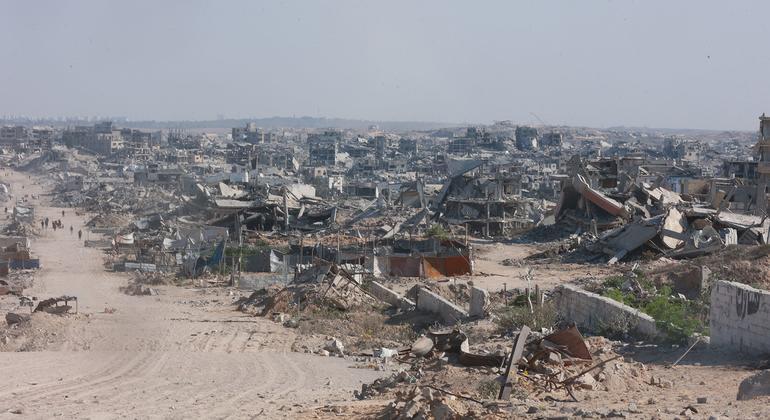
RDNA Finds Gaza Needs More Than $71 Billion Over Next Decade for Recovery
11 sources compared
EU, UN Estimate Gaza Recovery Needs $71.4 Billion Over Next Decade
24 sources compared
Northern Israel Residents Shut Schools And Shops To Protest Lebanon Ceasefire
11 sources compared
Israeli Attacks Push Gaza Death Toll to 72,551, Injuries Reach 172,274
13 sources compared