Israeli Authorities Approve Or Somayach Jewish School in Sheikh Jarrah, East Jerusalem
Key Takeaways
- Israel approves an 11-story ultra-Orthodox yeshiva in Sheikh Jarrah, East Jerusalem.
- The plan spans about 5,000 square meters and would house hundreds of students.
- Palestinian Authority and OIC condemn the move as Judaization and demographic alteration.
Sheikh Jarrah school approved
Israeli authorities approved the establishment of a hardline Jewish religious school in the Sheikh Jarrah neighborhood of East Jerusalem, a project described by Palestinian and rights groups as a settlement instrument and part of a broader “Judaization” drive.
The plan, named “Or Somayach,” is presented in the sources as a multi-storey complex intended to house hundreds of settlers, with Al-Jazeera Net describing it as “a massive settlement instrument comprising 11 floors to house hundreds of settlers.”

Multiple outlets tie the approval to a Jerusalem district planning process, with Ir Amim saying that “Jerusalem's planning committee officially approved on Monday the plan to establish a school named 'Or Somayach' in the Palestinian neighborhood of Sheikh Jarrah.”
The same reporting says objections were rejected, including that “The objections submitted by Ir Amim, in conjunction with the Sheikh Jarrah Community Association, were rejected.”
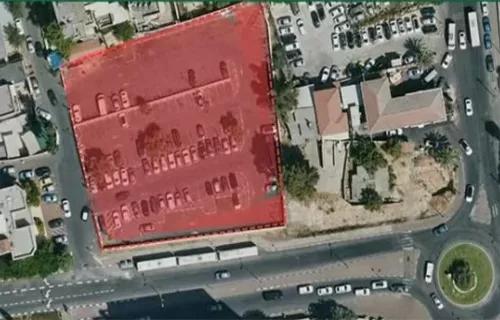
The project is described as covering “an area of 5 dunams (the dunam equals 1,000 square meters)” along the southern entrance of Sheikh Jarrah, “directly opposite the Sheikh Jarrah Mosque,” according to Al-Jazeera Net.
WAFA, as carried by multiple outlets, similarly frames the approval as a municipal decision, saying the “district planning committee of the Israeli municipality approved on Monday the construction of the yeshiva, named Or Somayach.”
The Egyptian Gazette and Arab News both describe the same core physical footprint—“an 11-story building” and “approximately five dunums”—and place it “opposite the Sheikh Jarrah Mosque,” while warning that it could “significantly alter the demographic and geographic character of the area.”
Legal path and escalation
The sources describe the approval as the latest step in a longer legal and administrative sequence tied to land-use changes in Sheikh Jarrah.
Al-Jazeera Net says the neighborhood’s “original plan allocated it for the construction of buildings and public educational institutions,” but that “the municipality relinquished it in 2007 in favor of the Israel Land Authority, with the aim of changing its use and legalizing the construction of a Jewish religious school (yeshiva).”

It adds that the land was “transferred to 'Or Somayach' without any transparent bidding procedures,” and that this prompted rights groups to submit the plan to build the school.
Middle East Monitor similarly reports that the land “had originally been designated for public use, including educational facilities,” but that in “2007 the municipality transferred it to the Israel Land Authority to allocate it for the construction of a religious school.”
The same reporting says the land was “handed over to the Ohr Somayach institutions without a transparent tender process,” and that the current construction plan advanced after that.
Al-Jazeera Net places the decision in a broader escalation timeline, stating that “Since October 8, 2023, Israeli assaults in the West Bank and Jerusalem against Palestinians have escalated, including killings, demolitions of homes and facilities, displacement, and settlement expansion.”
It also frames Sheikh Jarrah as a recurring target, noting that “Sheikh Jarrah is among the most prominent neighborhoods targeted by settlement in East Jerusalem, as settler groups have previously seized a number of Palestinian homes after evicting their residents.”
Condemnations and warnings
Palestinian officials and allied organizations condemned the approval as an attempt to change Jerusalem’s identity and impose “new facts on the ground.”
The Palestinian Ministry of Foreign Affairs is quoted in Al-Jazeera Net rejecting the Israeli approval, emphasizing that it is “a violation of international law and an attempt to impose new facts on the ground,” and reaffirming that Israel “has no sovereignty over the city of Jerusalem, and sovereignty belongs to the State of Palestine.”
The same outlet says the ministry urged the international community to take a “firm international stance” that compels Israel to comply with international law and UN resolutions.
SadaNews reports that the General Secretariat of the Organization of Islamic Cooperation “strongly condemned the decision of the Israeli occupation authorities,” warning it is part of “a policy of Judaization aimed at changing the demographic, geographic, cultural, and historical character of the city and erasing its Arab identity.”
SadaNews also says the OIC warned of “the dangers of the continuation of the occupation's policies based on settlement, displacement, property confiscation, and demolition,” and called on the international community to “pressure the Israeli occupation to halt all these illegal actions.”
Yaffa News Network similarly reports a statement from the Palestinian Ministry of Foreign Affairs and Expatriates, saying it rejected “all systematic Israeli measures and violations aimed at Judaizing Jerusalem and altering its Palestinian identity.”
It adds that the ministry called on international organizations “including UNESCO and the Organization of Islamic Cooperation” to take “a firm stance obliging Israel to comply with international law and UN resolutions.”
Different frames across outlets
While the core facts of the approval are consistent across the sources, the framing differs between outlets that emphasize legal-identity arguments, those that stress settlement mechanics, and those that focus on institutional oversight.
Al-Jazeera Net and WAFA-based reporting foreground “Judaization” and identity, with Al-Jazeera Net describing the project as “an attempt to impose new facts on the ground” and warning that it “will significantly increase the presence of the settlers in the neighborhood, raising security concerns for Palestinian residents and changing the character of the area.”
Middle East Monitor, while also quoting Palestinian condemnation, emphasizes the planning committee approval and the project’s scale, saying the complex will include “an 11-story building with housing for hundreds of ultra-Orthodox Jewish students.”
It also highlights the land-use and tender narrative, stating that the land was “handed over to the Ohr Somayach institutions without a transparent tender process,” and it warns that authorities use such mechanisms “to bypass legal protections granted to Palestinian tenants under protected lease arrangements.”
The Jaffa News Network and Egyptian Gazette both present the Palestinian Authority’s position as a direct response to Israeli municipal action, with the Egyptian Gazette warning that Israel is “using the current regional turmoil to push forward settlement initiatives designed to cement new realities in occupied Jerusalem.”
Arab News adds additional geographic specificity by describing the site as a parking lot near the “Green Line” and placing it on “Pierre van Paassen Street, close to Road 60.”
By contrast, Senego—citing Haaretz—frames the development as part of a shift in Israeli settlement policy linked to “Donald Trump's return to the White House,” and it says Haaretz reported that the Israeli government intends to launch “about 9,000 housing units for Jews on the site of the Atarot airport.”
Evictions and regional implications
Several sources connect the approval to a wider pattern of displacement and eviction threats in East Jerusalem, including in Silwan, and they describe deadlines and figures for families facing removal.
Jazeera Net and other outlets warn that the project’s location and the settlement mechanisms around it “threatens dozens of Palestinian families with eviction and settlers seizing their homes,” and it says “urban renewal” plans include “demolishing existing buildings, and building new ones in their place,” a mechanism used to “evict entire families at once.”

The Jazeera Net account also says the land’s legal path shifted in 2007 and that the transfer to “Or Somayach” occurred without transparent bidding, tying this to “ongoing eviction threats against Palestinian families” and “moving ahead with new settlement plans.”
The jريدة القدس report adds a related enforcement context by stating that “teams from the Israeli 'Execution and Enforcement Department' stormed the Batn al-Hawa neighborhood in Silwan” and that they “handed the head of the neighborhood committee, Zuhair al-Rajabi, eviction notices targeting seven siblings from his family, giving them a deadline until mid-May to leave their homes.”
It says the homes are threatened with confiscation for the benefit of the “Ateret Cohanim” settlement association and that Zuhair al-Rajabi “mentioned that his family has already lost 30 homes since 2015, and they only have 10 homes left out of 41 that the family owned in the neighborhood.”
The same report describes earlier displacement, stating that “11 homes belonging to the al-Rajabi family were evacuated last March, displacing about 65 Jerusalemites.”
On the diplomatic front, the jريدة القدس report says “foreign ministers of eight Arab and Islamic countries issued a joint statement condemning the ongoing Israeli violations in occupied Jerusalem,” and it lists “Saudi Arabia, Egypt, Qatar, Turkey” among the countries named in the joint statement.
More on Gaza Genocide

Israel Detains Jerusalem Grand Mufti Sheikh Muhammad Hussein, Bans Him From Al-Aqsa for One Week
15 sources compared

Israeli Security Forces Kill Four Bani Odeh Family Members Near Tubas in West Bank
14 sources compared

Haley Stevens And Abdul El-Sayed Clash In Michigan Senate Debate Over Israel And Gaza Policy
12 sources compared

Settlers Attack Hawara, Injuring 13 Palestinians South of Nablus
13 sources compared