Europe · 06 May, 2026 · 3 min read
Israeli Defence Companies Draw International Delegations At Eurosatory 2026 Despite French Ban
Israeli defence firms drew international delegations at Eurosatory 2026 despite a French ban. Delegations from defence ministries, armed forces, and security organisations attended Israeli booths.
Responsibility for Iranian strikes claimed near Tehran University/Natanz retaliation.
3 of 4 outlets skipped it: iran hit Dimona and Arad with missile volleys.
11outlets compared
Same story, two versions
tap a side to read it in full
Shifts focus between attribution and retaliatory targeting.
Eurosatory and Israeli firms
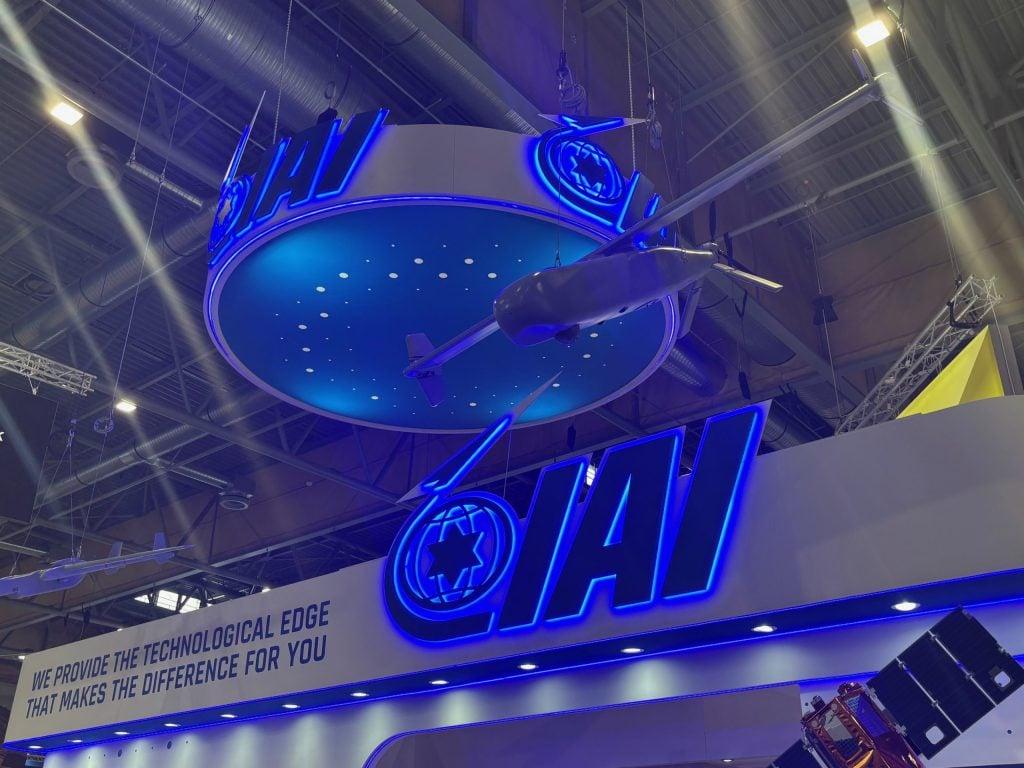
At Eurosatory 2026, representatives from defence ministries, armed forces, security organisations and defence companies visited Israeli booths despite the French government’s decision to ban the establishment of an Israeli national pavilion.
“The Ministry said France also prohibited the participation of official Israeli representatives”
The Ministry said France prohibited the participation of official Israeli representatives and restricted the display of Israeli products, while Col. Sagi Fink, Defense and Military Attaché of Israel to France, said, “Despite the restrictions imposed on Israeli defense companies and the arbitrary blocking of some of them, the Israeli pavilions drew very active foot traffic throughout the exhibition.”

The Ministry said meetings and discussions focused on defence cooperation, technological innovation and commercial partnerships, and it cited senior officials, chiefs of staff, generals, and defense ministers from various countries visiting the Israeli pavilions.
It also said the engagement reflected Israel’s position in defence technology and innovation and that Israeli-developed systems are used by armed forces, security organisations and emergency responders worldwide.
The Ministry added that demand for Israeli technologies during Eurosatory underlined the industry’s reputation and aligned with its strategy to expand Israeli defence exports.
Universities, protests, and funding
In Italy, the Informazione senza filtro article describes student protests against the militarization of Europe and against agreements with Israeli institutions, including a wave nicknamed the Student Intifada that began at the University of Bologna and later spread across Italy.
It says rectors of several Italian universities oppose calling for police intervention to clear the tents of students camping on campuses in solidarity with the Palestinian people, and it reports a sit-in in the Physics Department of Sapienza University in Rome after the vandalism of a plaque in memory of Rector Sufian Tayeh, killed by the Israeli army.
The article also ties university research to arms production through “80 active research agreements between Italian and Israeli universities,” and it names Leonardo S.p.A. among arms manufacturers connected to academic collaborations.
It quotes union representative Vincenzo Quaranta of FILCAMS CGIL and Alfredo Terlizzi in the context of porter contracts at the Politecnico di Milano, and it frames the broader debate around the question “is there really a link between research in Italy and arms production in Israel?”
The article says by late January 2024, hundreds of figures across Europe signed an open letter calling on the European Union to suspend funding collaborations, and it cites that the text had been signed by nearly 500 people.
Iran strikes and Europe risk
In a Europe-focused escalation described by La Croix, Donald Trump announced the death of Iran's Supreme Leader Ali Khamenei and the article says about 500 targets have been hit in Iran since Saturday morning, February 28.L
“more than 200 deaths, with two-thirds of the country’s provinces 'affected by the attacks.'”
It reports that the Iranian Red Crescent said more than 200 deaths, with two-thirds of the country’s provinces “affected by the attacks,” and it says Iranian missiles struck Bahrain while explosions were reported in Dubai, Abu Dhabi, Qatar, as well as in Kuwait and in Saudi Arabia, Jordan, and Iraq.
Europe 1 says Iran, in retaliation for strikes against its Natanz nuclear infrastructure, bombed the cities of Dimona and Arad, wounding more than 80 and 30 people respectively, and it adds that Paris is now threatened by Iranian missiles.E
Europe 1 also quotes that the Israeli army's Chief of Staff said last night that the capitals of Western Europe—Paris, London, and Berlin—were now at risk of direct targeting.E
In parallel, La Croix says Tehran called on the UN Security Council to “act immediately,” with Iran’s Foreign Minister Abbas Araghchi urging the UN Security Council to act after the Israeli and U.S. strikes against his country.L