Europe · 01 August, 2026 · 3 min read
Spain Condemns EU Response as Ceuta Migrant Crossings Kill at Least 67
At least 67 people died during the Ceuta border crossing crisis. Between 50,000 and 60,000 migrants crossed into Ceuta, most returning to Morocco.
Possible root cause: court ruling vs coordinated planning/role of Morocco.
10 of 12 outlets skipped it: spain claimed the barrier allows “hot returns” per law.
24outlets compared
Same story, two versions
tap a side to read it in full
Al Jazeera
“Was it coordinated and planned in advance, and if so, by whom and for what purpose?”Read the original ↗
Al Jazeera adds coordination suspicions; BBC focuses on EU fallout and official positions.
Ceuta rush and deaths
Spain condemned the "selfish, polarising and unlawful" reaction of some EU countries to an influx of about 60,000 migrants from Morocco into the Spanish enclave of Ceuta, as Spain said almost all those who reached Ceuta on 30 July have returned.
“the death toll from the surge in crossings had risen to at least 67”
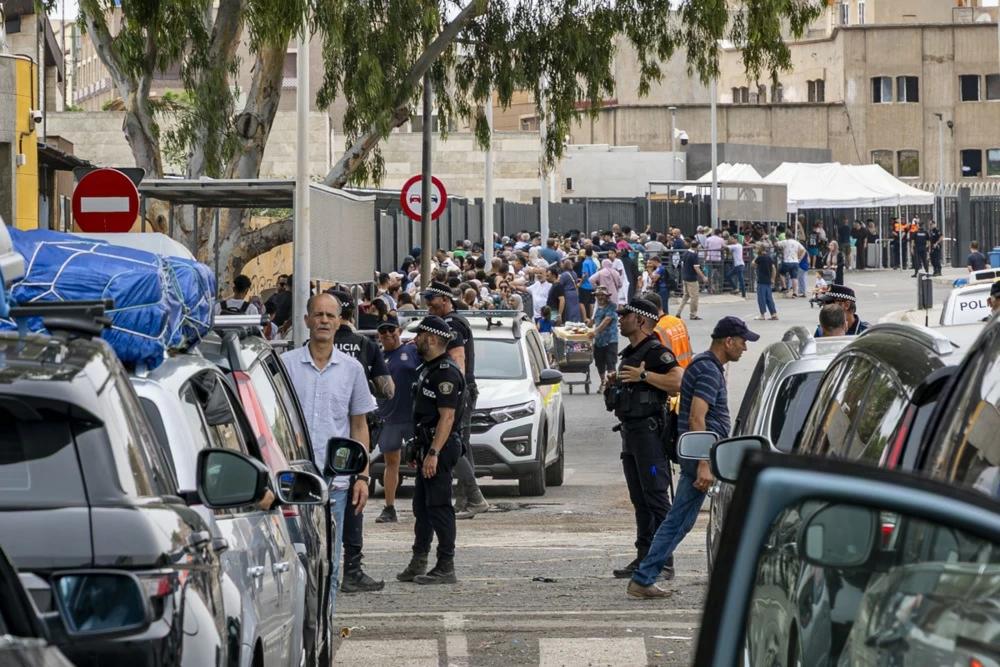
Spanish officials said the death toll from the surge in crossings had risen to at least 67, and the crisis followed chaotic scenes in Ceuta when border controls in the North African enclave apparently broke down.

The Italian government temporarily suspended the EU's border-free Schengen arrangement with Spain, while Spanish Prime Minister Pedro Sanchez urged an urgent meeting to "reaffirm that the security of our external borders is a shared responsibility of all Member States".
Spain said it sent troops, more police, drones, divers and boats to Ceuta, and it also deployed its armed forces to bolster security in Melilla, where hundreds of crossings were also reported.
In parallel, Spanish Interior Minister Fernando Grande-Marlaska told reporters that "Almost all of [the migrants] have already left Ceuta," adding that businesses had reopened and that the situation had been "almost entirely reversed."
EU fallout and competing frames
EU interior ministers were set to meet on Tuesday by video conference to discuss the issue, after 22 of the EU's 27 countries called for emergency talks in an open letter citing "serious concerns" regarding the developments in Ceuta.
In Rome, Italy's Prime Minister Giorgia Meloni called the scenes "shocking" before suspending Schengen arrangements with Spain for a month, and Finland and Denmark backed Italy's move while Czech PM Andrej Babiš urged a temporary suspension of Spain's Schengen membership.
Spanish Prime Minister Pedro Sanchez said other European governments had chosen to attack Spain, "driven by prejudice, fake news, ignorance, or political interest," and he said Ceuta was not part of the Schengen area.
Ursula von der Leyen said the images from Ceuta were "unacceptable" and that "We cannot allow anyone to come to our Union without abiding by our rules," while German Chancellor Friedrich Merz demanded that Morocco "take back illegal migrants immediately."
The dispute also played out in the Schengen debate, with Spain summoning the Italian ambassador to Madrid after its foreign minister said he expected "European solidarity and not partisan demagoguery."
Floating barrier and next steps
Spain deployed a floating barrier to stop further arrivals, with Spanish security forces installing a pneumatic barrier of about 500 meters of length along the Tarajal breakwater between Ceuta and Castillejos.
“Las fuerzas de seguridad españolas han desplegado una barrera neumática de unos 500 metros de longitud”
El País said the installation was meant to help Spain return to Morocco those who were able to cross without violating a Supreme Court ruling, and it quoted the court's conclusion that rejection in hot returns cannot be executed with those who enter by swimming in Ceuta and Melilla.
The same reporting described the barrier's dimensions, saying it had a surface height of 30 to 70 centimeters and a submerged part of up to one meter, and it said the presence of the Army and maritime deployments had already stopped new entries by Saturday afternoon.
Spanish Interior Ministry sources told EFE that installation began at 7.50, and the NPR account said Spain announced it was installing a 500-meter-long containment barrier after between 50,000 and 60,000 migrants breached the frontier earlier in the week.
Ceuta President Juan Jesus Vivas said "Life in this city has been disrupted as a result of the border incident," while also warning that "The city has not yet returned to normal" as the return process continued.