Europe · 01 August, 2026 · 3 min read
Pedro Sánchez Warns EU Over Ceuta Migrant Crisis, Urges Interior Ministers’ Emergency Videoconference
Sánchez requests urgent extraordinary EU interior ministers meeting over Ceuta migrant crisis. Twenty-two EU leaders demanded emergency videoconference; Italy at forefront of criticism.
Whether Ceuta crisis was linked to Spanish regularisation as a pull factor.
11 of 12 outlets skipped it: sánchez defended a 500-meter floating barrier off Ceuta.
28outlets compared
Same story, two versions
tap a side to read it in full
Adnkronos
“tale posizione deriva da "pregiudizi, notizie false, ignoranza o interessi politici"”Read the original ↗
NPR and Hungarian Conservative stress Moroccan/regularisation causes; others stick to EU meeting and Sánchez’s letter.
Ceuta sparks EU clash
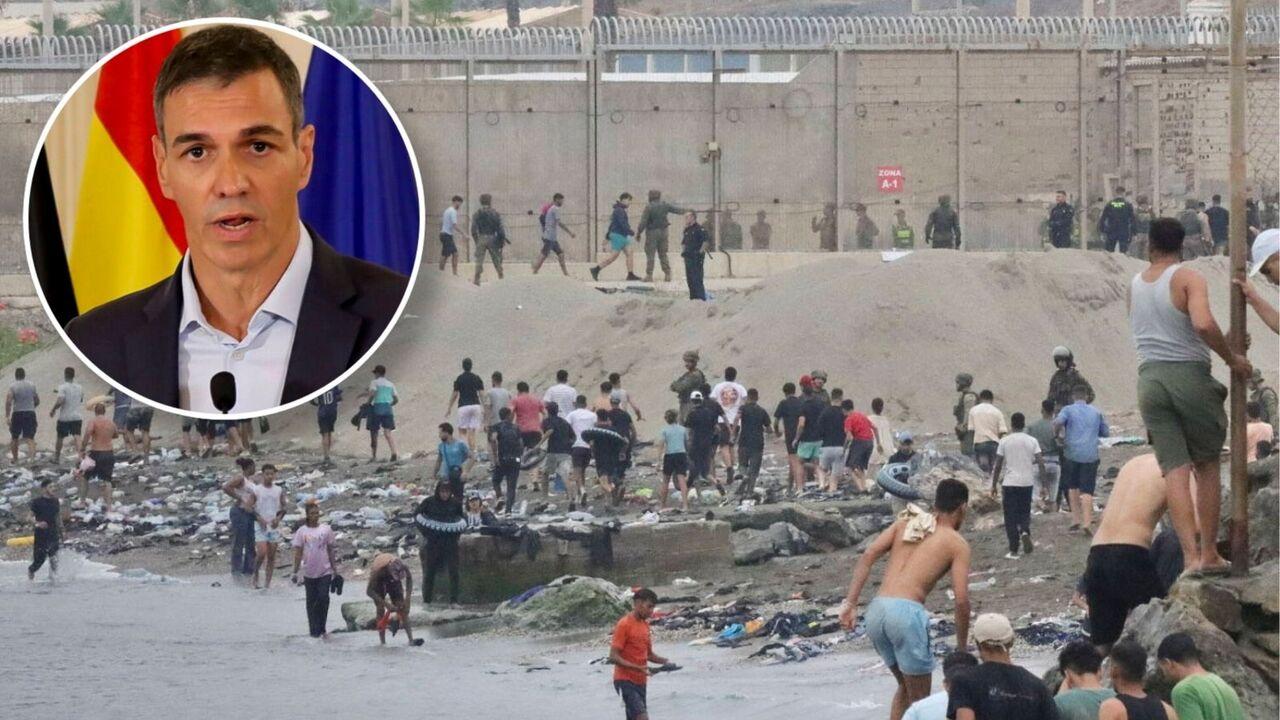
Spain’s Prime Minister Pedro Sánchez sent a letter to EU institutions after the Ceuta migrant crisis, warning of “seria preoccupazione” over the “reazione” of some European countries and urging an urgent videoconference of interior ministers of the 27 states.
“Nella missiva indirizzata alla presidente della Commissione europea, Ursula von der Leyen”
Sánchez argued that Spain restored border control, provided humanitarian assistance, repatriated “praticamente tutti” migrants who entered illegally, and prevented unauthorized movement toward other European countries within 48 hours, while saying the actions were taken in coordination with Morocco and with “pochissimo supporto” from other EU states.
The BBC reported that the European Union would hold emergency talks on Tuesday after tense exchanges between Spain and other member states, following a joint letter from 22 member states after “some 60,000 migrants entered the Spanish enclave from Morocco.”
The BBC also said officials reported almost all those who reached Ceuta on 30 July had returned, while deaths from the surge in crossings had risen to at least 67, and it quoted the EU letter’s concern about “hybrid threats to create the perception that illegal entry into the European Union is possible.”
In the same BBC coverage, Sánchez told the EU in a separate letter that Spain had fully restored control over the border and prevented any “unauthorised onward movement towards continental Europe” in less than 48 hours, while he said other governments chose to attack Spain “driven by prejudice, fake news, ignorance, or political interest.”
Quotes and competing frames
Sánchez’s letter to EU leaders accused some governments of reacting in a “selfish, polarising and unlawful” way to the Ceuta crisis, and the BBC said Spain condemned that response after Italy suspended the EU’s border-free Schengen arrangement with Spain, a move backed by Finland and Denmark.
In the BBC account of the EU’s position, the joint letter warned that the perception of possible illegal entry would “encourage further attempts, undermine confidence in our common migration policy and have repercussions for all Member States.”
El Mundo described the diplomatic fallout as “Europe revolts against Sánchez for putting its borders at risk,” saying Italy’s Giorgia Meloni threatened to suspend the Schengen treaty with Spain and tighten controls, and it quoted Meloni writing on X: “Italy will not stand idly by.”
El Mundo also quoted Finland’s interior minister Mari Rantanen saying, “Spain has completely failed in protecting the outer border of the Schengen area against irregular migration,” and it reported that Rantanen argued “Countries that do not fulfill their obligation to protect the outer border cannot be members of Schengen.”
In the same El Mundo narrative, Sánchez responded to the reproaches with a post warning that “solidarity and empathy are optional,” while “respect for European treaties and data is not,” as the dispute over Schengen cooperation widened across multiple capitals.
Next steps and what’s at stake
The BBC said the EU members’ letter to EU President Antonio Costa, Commission President Ursula von der Leyen, and Taoiseach Michael Martin called for coordinated action and strengthening of the EU’s external borders, while it reported that leaders of the Netherlands, Finland and Belgium were among the 22 signatures.
“We cannot allow anyone to come to our Union without abiding by our rules.”
The BBC also reported that Von der Leyen said the images from Ceuta were “unacceptable,” and it added that she wrote on social media, “We cannot allow anyone to come to our Union without abiding by our rules.”
Newsweek reported that Sánchez asked the Irish presidency to convene an urgent videoconference of interior ministers to establish “a common response to situations of this kind,” and it said Sánchez told von der Leyen that “the security of our external borders is a shared responsibility of all Member States.”
NPR described the political stakes inside Spain, saying Sánchez faced his biggest challenge after Ceuta as images of tens of thousands of migrants crossing from Morocco went around the world, and it reported that Italian Prime Minister Giorgia Meloni “temporarily suspended Italy’s open-border Schengen agreement with Spain.”N
NPR also reported that authorities said at least 67 people died, “most of them drowned as they tried to swim around a breakwater,” and it quoted Riccardo Fabiani of the International Crisis Group saying, “this was a manufactured crisis.”N