Lebanon · 31 July, 2026 · 3 min read
Israeli Forces Detonate 700 Tons Near Lebanon’s Beaufort Castle, Netanyahu and Katz Say
Israel detonated Hezbollah tunnels under Beaufort Castle in southern Lebanon using about 700 tonnes. Netanyahu and Katz said the operation destroyed Beaufort tunnels in response to a drone strike.
Why Israel says it detonated 700 tons.
8 of 9 outlets skipped it: french outlet reports theft of 600 olive trees.
New York Post was read line by line by the Watchdog: 4.3. See the score →
61outlets compared
Same story, two versions
tap a side to read it in full
Ynetnews
“The blast was carried out overnight between Thursday and Friday in response to Hezbollah launching”Read the original ↗
شفق نيوز
“condemned the massive Israeli explosion at the UNESCO-listed Beaufort Castle ... saying it breached the ceasefire”Read the original ↗
Lebanon-focused outlets frame it as a ceasefire breach and heritage threat; Ynet frames it as retaliation.
Beaufort blast despite ceasefire
Israeli forces carried out powerful detonations near Lebanon’s UNESCO-listed Beaufort Castle in southern Lebanon despite a United States-brokered “ceasefire” agreement, with Israeli Prime Minister Benjamin Netanyahu and Defence Minister Israel Katz saying the army blew up a tunnel system in the Beaufort area.
“Israeli forces triggered very powerful explosions around midnight”
Al Jazeera reported that the blasts were triggered “around midnight” near the “Beaufort fortress,” and Lebanon’s official National News Agency (NNA) said the explosions shattered windows in homes in the town of Qlayaa.
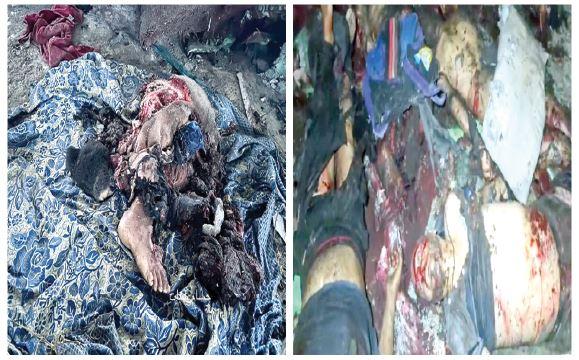
The operation used about “700 tons of explosives” to destroy a tunnel network Israel said belonged to Hezbollah near Beaufort Castle, according to Asharq Al-Awsat.
Lebanon’s Health Ministry figures cited by Al Jazeera said that since March 2, Israeli attacks on Lebanon have killed 4,333 people and injured 12,236 others.
Al Jazeera also reported that these developments came despite the signing of a US-sponsored framework agreement between Israel and Lebanon in Washington on June 26.
Aoun, Salam condemn escalation
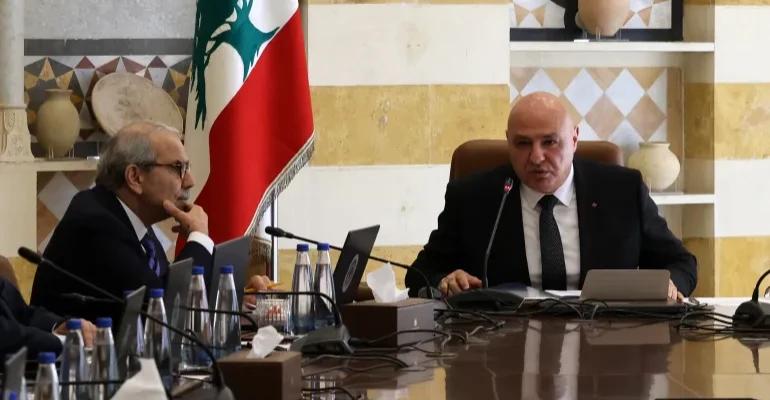
Lebanese President Joseph Aoun condemned the detonations near Beaufort Castle as a “direct threat” to the framework agreement, with his office saying the blasts were “an extremely dangerous escalation” and “a direct threat” to the process launched as part of the framework agreement.
Prime Minister Nawaf Salam said the repeated explosions and systematic destruction amounted to a “clear ceasefire breach” and violated Lebanon’s sovereignty and international law, according to Shafaq News.

Al Jazeera said Aoun visited Turkish President Recep Tayyip Erdogan in Ankara and told a joint news conference that Lebanon was determined to achieve “an Israeli withdrawal from all Lebanese territory, the return of our displaced people to their villages.”
In the same coverage, Erdogan said “our support for the Lebanese Armed Forces will continue uninterrupted,” and he added that “we are ready to assist in the reconstruction of southern Lebanon.”
Asharq Al-Awsat quoted military expert Hassan Jouni describing the operation as reflecting a broader strategy, saying “Israel works to completely destroy the infrastructure in any area it controls because it does not want to withdraw and leave behind facilities or positions that could be restored or used again.”
What’s at stake next
Lebanon’s National Center for Geophysics was cited in multiple reports as recording seismic waves equivalent to a magnitude 3.8 earthquake, with Shafaq News saying Aoun cited those waves and warned the timing sent “negative messages” ahead of Lebanese-Israeli talks in Rome.
“generated seismic waves equivalent to a magnitude 3.8 earthquake”
Shafaq News said the blast altered the landscape around Arnoun and neighboring areas, flattening rocky hills, farmland, and dozens of homes while blanketing large stretches of land with limestone debris, and it said the full extent of damage to the historic fortress had yet to be determined.
Al Jazeera reported that Israeli forces advanced more than 10km (6.2 miles) into Lebanese territory in their latest operations in the south, and it said the UNESCO-listed Beaufort Castle was added last week to UNESCO’s List of World Heritage in Danger.
Asharq Al-Awsat quoted retired Brigadier General Saeed Qazah saying the aim was to remove any infrastructure Hezbollah could use if Israeli forces withdrew, listing “tunnels, operations rooms, command-and-control centers, ammunition depots, logistical warehouses or combat equipment.”
Asharq Al-Awsat also quoted Qazah saying Israel aimed to prevent Hezbollah from rebuilding military capabilities it developed between 2006 and 2023, while Jouni said the demolition could be read in the context of “pilot zones.”