Israeli Military Urges Evacuation From 11 Southern Lebanon Towns Amid Strikes Against Hezbollah
Key Takeaways
- IDF warns 11 southern Lebanon towns to evacuate at least 1,000 metres to open areas.
- Israeli airstrikes hit southern Lebanon towns amid ongoing operations against Hezbollah.
- Actions occur despite a ceasefire with Hezbollah, amid reported violations.
Evacuation orders and strikes
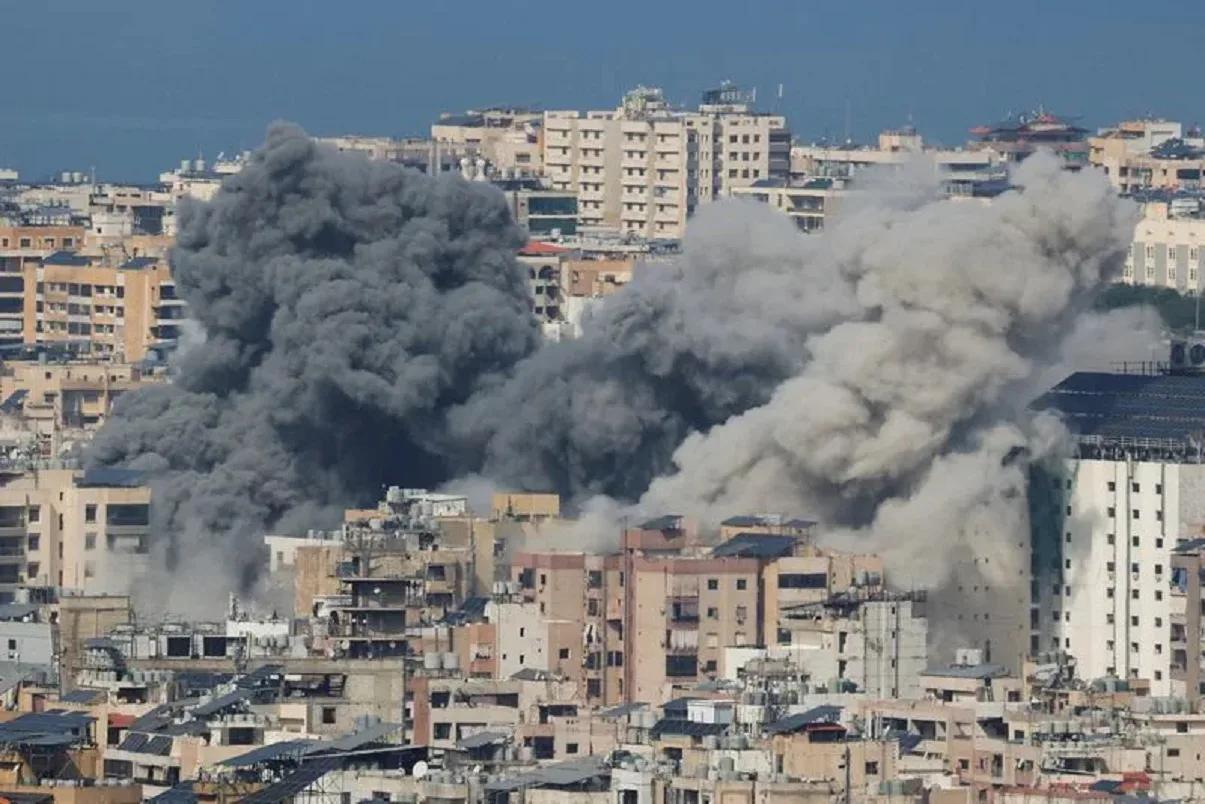
Israeli forces issued urgent evacuation warnings to residents of southern Lebanon towns and villages while continuing operations against Hezbollah, according to multiple outlets describing the same displacement push.
“Israel’s military has issued new displacement orders to residents in towns and villages in southern Lebanon, including areas beyond its current zone of occupation, despite a truce meant to halt fighting with the armed group Hezbollah”
The Express Tribune reported that the Israeli military urged residents of 11 towns and villages to evacuate and move at least 1,000 metres away to open areas, saying it was conducting operations against Hezbollah after what it described as a violation of their ceasefire agreement.

Al Jazeera reported that Israel’s military issued new displacement orders despite a truce meant to halt fighting, quoting an Arabic-language post by the Israeli military’s spokesman Avichay Adraee on X: “For your safety, you must evacuate your homes immediately and move away from the villages and towns by at least 1,000 metres [0.6 miles] into open areas.”
i24NEWS similarly said the IDF issued an evacuation warning to 11 towns in southern Lebanon, warning that anyone remaining near Hezbollah facilities “exposes their life to danger,” while describing the warning as tied to the presence of Hezbollah infrastructure.
The Straits Times, citing Reuters, also described the May 3 warning to residents of 11 towns and villages, urging them to evacuate and move “at least 1kmaway to open areas.”
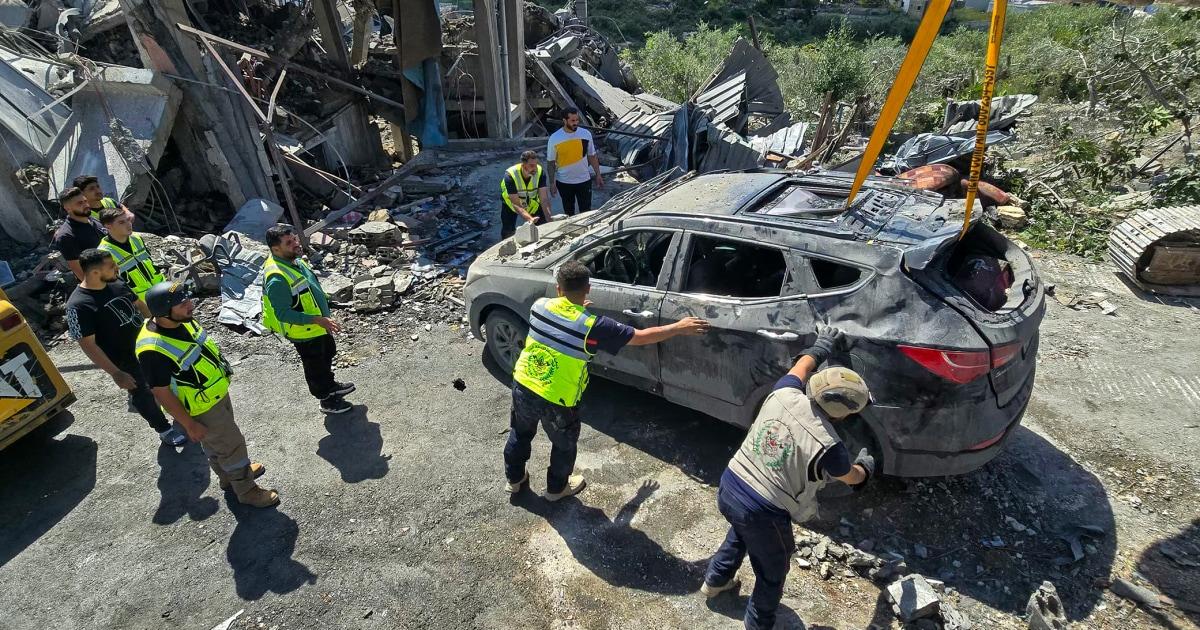
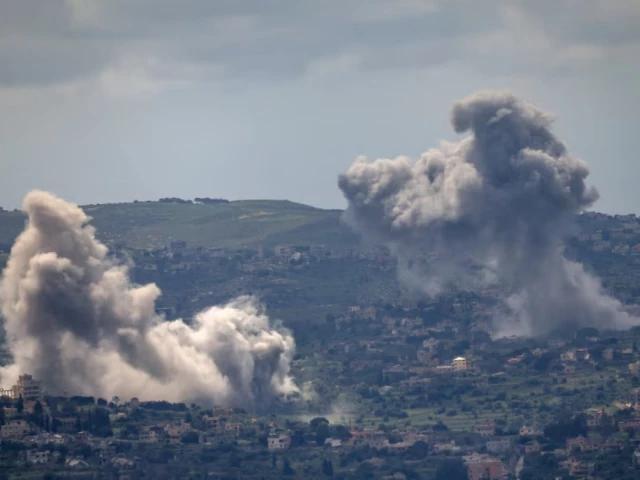
In parallel, Los Angeles Times and NBC News reported that Israeli airstrikes killed at least seven people in southern Lebanon on Saturday, even as the ceasefire remained in place since April 17.
The Los Angeles Times added that Israeli bulldozers demolished parts of a Catholic convent in the border village of Yaroun, while the NBC News account described the same pattern of airstrikes and evacuation warnings for nine southern villages.
Ceasefire timeline and escalation
The displacement warnings and strikes were framed by outlets against a specific ceasefire timeline and a broader escalation narrative.
Al Jazeera said that “Since April 17, a fragile United States-brokered ceasefire has been in place between Israel and Lebanon,” aimed at halting violence between Hezbollah and Israel’s military, and it added that on Wednesday Israel’s military chief of staff, Eyal Zamir, had threatened to strike Hezbollah “beyond the Yellow Line”, which marks the area of Israeli control.
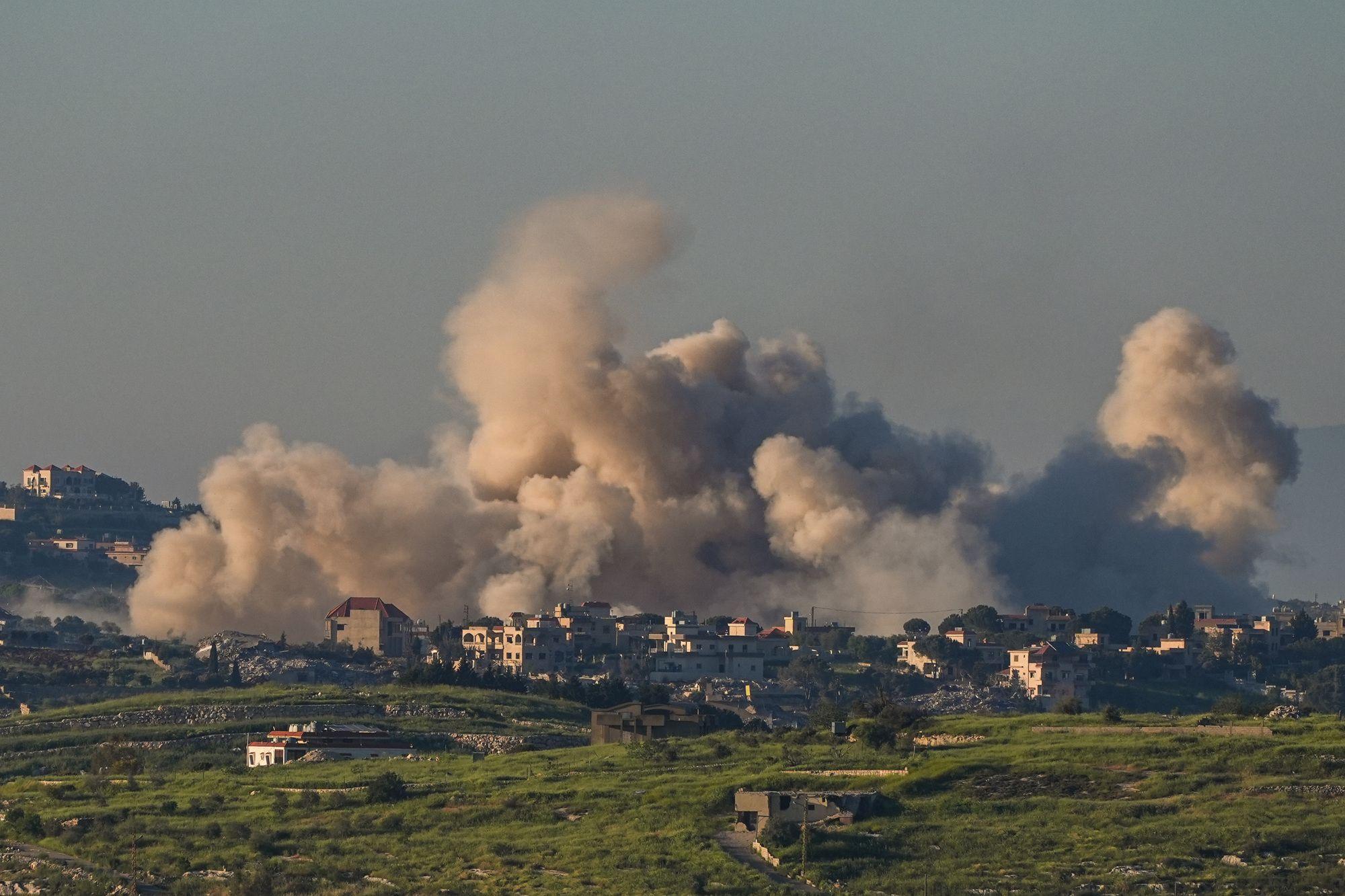
The Express Tribune described the ceasefire text as granting Israel the right to act against “planned, imminent or ongoing attacks,” while also reporting that Israel’s troops were occupying a strip of the country’s south and destroying homes it described as infrastructure used by Hezbollah.
NBC News and the Los Angeles Times both anchored the ceasefire in dates, saying a 10-day ceasefire declared in Washington went into effect on April 17 and was later extended by three weeks, while still reporting killings from Saturday airstrikes.
NBC News also tied the current war to a start date, stating that “The latest war between Israel and Hezbollah began on March 2,” when Hezbollah fired rockets into northern Israel, two days after the United States and Israel launched a war on Iran.
The Express Tribune reported that Israel set a two-week deadline for reaching an agreement with Lebanon during US-mediated negotiations, warning of renewed military escalation if talks fail, according to Israeli media.
i24NEWS added that Israel limited operations under US-backed understandings despite continued Hezbollah rocket fire, saying the IDF was operating within a “forward defense zone,” limited to areas up to the “Yellow Line,” and it reported that Israel’s Security Cabinet was set to convene on Sunday evening but the meeting was cancelled Sunday morning.
Deaths, targets, and disputed convent
Accounts of casualties and specific targets in southern Lebanon were reported alongside the evacuation warnings, with outlets describing both strikes and the destruction of religious property.
“- i24NEWS - Israel - Defense News - IDF issues evacuation warning to 11 towns in southern Lebanon IDF issues evacuation warning to 11 towns in southern Lebanon Israel limits operations under US-backed understandings despite continued Hezbollah rocket fire The IDF issued an urgent evacuation warning on Sunday to residents of 11 towns in southern Lebanon, citing the presence of Hezbollah infrastructure in the area”
The Los Angeles Times said Israeli airstrikes killed at least seven people and wounded others Saturday while the military bulldozed portions of a Catholic convent in the border village of Yaroun, and it quoted Gladys Sabbagh, the superior general of the Basilian Salvatorian Sisters, saying, “What we heard is that it was destroyed with bulldozers.”
The article reported that Israel’s military claimed Hezbollah used the convent to fire rockets toward Israel, while the Catholic Church rejected the assertion, with Rev. Abdo Abou Kassm, director of the Catholic Center for Information, saying, “These are not military bases.”
NBC News described the same casualty pattern and locations, saying Lebanon’s state-run National News Agency reported an airstrike on a car in Kfar Dajal killed two people, while another hit a home in Lwaizeh killing three, and it said two others were killed in a strike on Shoukin.
NBC News also reported that Israel’s military Arabic-language spokeswoman, Lt. Col. Ella Waweya, posted on X that the Israeli air force carried out about 50 airstrikes over the past 24 hours targeting Hezbollah infrastructure and members.
Both NBC News and the Los Angeles Times described Hezbollah’s response, with NBC News saying Hezbollah attacked with a drone Israeli troops who gathered Saturday inside a house in the coastal village of Bayed.
The Los Angeles Times added that the escalation came despite a ceasefire agreement in place since April 17 and that Israel issued new evacuation warnings for nine southern villages while continuing targeting Hezbollah positions.
Voices, threats, and positions
The reporting also included direct statements and characterizations from multiple sides about the ceasefire, operational boundaries, and the meaning of the truce.
Al Jazeera said Lebanese President Joseph Aoun told reporters on Wednesday that Israel should fully implement the ceasefire before talks can take place, and it also quoted Al Jazeera’s Rory Challands reporting from Beirut that the US-brokered ceasefire “exists only in name.”
In the same Al Jazeera account, it reported that Israel’s military chief of staff Eyal Zamir threatened to strike Hezbollah “beyond the Yellow Line”, and it included his statement: “Any threat, anywhere, against our communities or our forces – including beyond the Yellow Line and north of the Litani – will be eliminated,” he said during a visit to Israeli troops.
The Express Tribune described Hezbollah’s reaction to US President Donald Trump’s announcement of a three-week extension of the Israel-Lebanon ceasefire, saying Hezbollah reacted with contempt and called the truce “meaningless.”
i24NEWS reported that Israel’s Security Cabinet was expected to discuss whether to maintain current restrictions or consider broader military action against Hezbollah targets beyond southern Lebanon, and it said the issue was expected to feature in potential diplomatic discussions between Prime Minister Benjamin Netanyahu and US President Donald Trump.
i24NEWS also said Israeli officials noted that any such meeting could depend on developments related to Iran, and it described ongoing US-Iran negotiations as part of regional de-escalation efforts along the Israel-Hezbollah front.
Across the accounts, the same set of themes recurred: Israel’s operational threats tied to the “Yellow Line,” Hezbollah’s rejection of the truce’s value, and Lebanon’s insistence on full ceasefire implementation before negotiations.
Numbers, toll, and next steps
The outlets also provided casualty totals and described what comes next in the immediate political and military cycle.
“BEIRUT — Israeli airstrikes on southern Lebanon killed at least seven people and wounded others on Saturday despite a ceasefire between Israel and Hezbollah, officials said”
Al Jazeera reported that Lebanon’s Ministry of Public Health said at least 10 people were killed in Israeli attacks across the country on Saturday, and it gave a broader war toll since escalation on March 2, saying the total death toll was 2,659 with 8,183 injured.
The Express Tribune similarly referenced Lebanon’s health ministry, saying 13 people were killed on Friday in Israeli strikes in the south, including in a town where Israel’s army had issued an evacuation order despite the ceasefire.
i24NEWS said Israel limits operations under US-backed understandings and described internal scrutiny over the effectiveness of the current framework, noting that the Security Cabinet meeting was cancelled Sunday morning and that ministers were expected to present positions on whether to maintain restrictions or consider broader military action.
i24NEWS also said the issue was expected to feature in potential diplomatic discussions between Prime Minister Benjamin Netanyahu and US President Donald Trump, and it reported that Israeli media previously reported Trump intends to invite Netanyahu to the White House in the second week of May, though no formal invitation has been issued.
The Express Tribune reported that Israel set a two-week deadline for reaching an agreement with Lebanon during US-mediated negotiations, warning of renewed military escalation if talks fail, according to Israeli media.
Meanwhile, Al Jazeera described the forced evacuation orders as expanding Israel’s area of operations, with its Beirut correspondent saying “three of [the towns] are receiving them for the first time” and that “Some of them are even north of the Litani River.”
More on Lebanon
Iran Submits Truce Proposal to U.S. via Pakistani Mediators To End War, Including Lebanon
17 sources compared

Gold Slips as Oil Prices Rise, Keeping Interest Rates Elevated in Lebanon-Linked Tensions
17 sources compared

US Pushes Joseph Aoun To Meet Benjamin Netanyahu As Hezbollah Rejects Israel Talks
18 sources compared
China Urges UN Security Council To Reconsider UNIFIL Troop Withdrawal From Lebanon
12 sources compared