Full story
Exams Behind Bars
Al Jazeera Net describes a Tawjihi exam hall in the Fawar Camp, south of Hebron, where student Salah al-Azza was “forcibly kept behind the occupation's bars,” leaving “suspended dreams and unanswered questions” for hundreds of Palestinian students.
“An empty seat, closed books, and a seating card turned into a picture hanging on the wall of the waiting hall”
The article says the targeting of school and university students reflects a “systematic and fixed policy,” citing a report prepared for Al Jazeera by Muntaser Nassar and adding that Amjad al-Najjar of the Palestinian Prisoners Club says the occupation has followed the approach “since 1967 to the present day.”

It also quotes psychologist Monira Al-Shariha describing how “the sudden arrest of a student at this decisive stage triggers a sharp trauma,” with post-traumatic stress symptoms that intensify when the student is later released.
In Gaza, France Palestine Solidarité ties education to resistance through UNRWA teachers using “every possible place as a classroom,” while also describing Sara’s despair after the July 29 Tawjihi results because her university entrance exam was disrupted by Israeli bombardments.
The same France Palestine Solidarité account says Sara is among the “39,000 Palestinian students in Gaza” who were supposed to take the university entrance exam this year but could not, and it adds that “at least 450 have been killed” among those who were to complete secondary education.
Arrests During Tawjihi
Al-Markaz al-Filastini lil-I'lam reports that the Palestinian Prisoners’ Club says Israeli occupation authorities escalated targeting of students during the General Secondary Examinations, including the arrest of four high school students.
The Prisoners’ Club statement says that “forces had arrested, before and during this year, 65 male and female high school students,” and it lists detainees including Fajr Ahmed al-Mashni (17) from al-Shuyukh, Salah al-Din Muhammad al-Ezza (18) from the Fawar refugee camp, and Asid Mustafa Amour (17) from Rummanah.
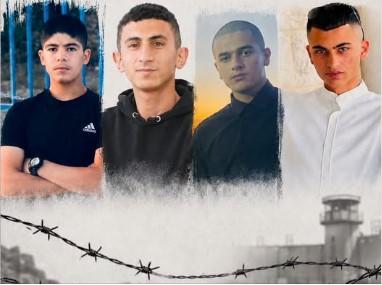
It adds that the club says the arrests transformed the exam period into “a station of mistreatment by arresting them and depriving them of sitting their exams,” and it calls for international human rights organizations and United Nations bodies to pressure the occupation authorities to stop the policy.
WAFA, in a separate account, says that on July 20, 2023, Israeli occupation forces detained at least 10 Palestinians during attacks across Palestinian regions, including arrests of three students in occupied Jerusalem as they celebrated Tawjihi success in the Old City.
WAFA also says that in Bethlehem, “the occupation forces arrested four young Palestinians” after raiding and searching homes, and that clashes followed in which forces fired “bullets, tear gas, and stun grenades.”
Schools Turned to Death
France Palestine Solidarité says Israel bombed schools 21 times since July, and it describes the al-Tabin School in the city of Gaza becoming “the cemetery for more than 100 people, the majority of whom were women and children.”
“Photo: Amid displacement and brutal warfare, UNRWA teachers are using every possible place as a classroom to provide education to thousands of children in Gaza, May 17, 2024 © UNRWA”
The same account cites United Nations figures that “93% of Gaza’s 560 schools have been destroyed or damaged since October 7,” and it adds that about 340 were directly bombed by the Israeli army.
It also states that dozens of final-year students were likely killed in schools that had been turned into shelters for Palestinians displaced since the start of the Gaza war, and it frames the destruction of education as “scholasticide.”
Al-Jazeera Net, meanwhile, describes the consequences of arrests for students’ families and educational environments, saying forced separation leaves “psychological devastation that extends beyond the prison walls.”
It quotes Monira Al-Shariha that when a student is later released and sees peers advance, “his own life has stalled,” while the article says the question remains about “their stolen right to return to the classrooms.”