Israeli Settlers and Soldiers Kill Aws Al-Naasan, 14, and Jihad Abu Naim in al-Mughayyir
Key Takeaways
- Two Palestinians, including 14-year-old Aws al-Naasan, were killed in al-Mughayyir.
- The casualties occurred during a joint attack by Israeli settlers and soldiers near a school.
- The other victim was Jihad Abu Naim, 32, killed in the same incident.
School Attack in al-Mughayyir
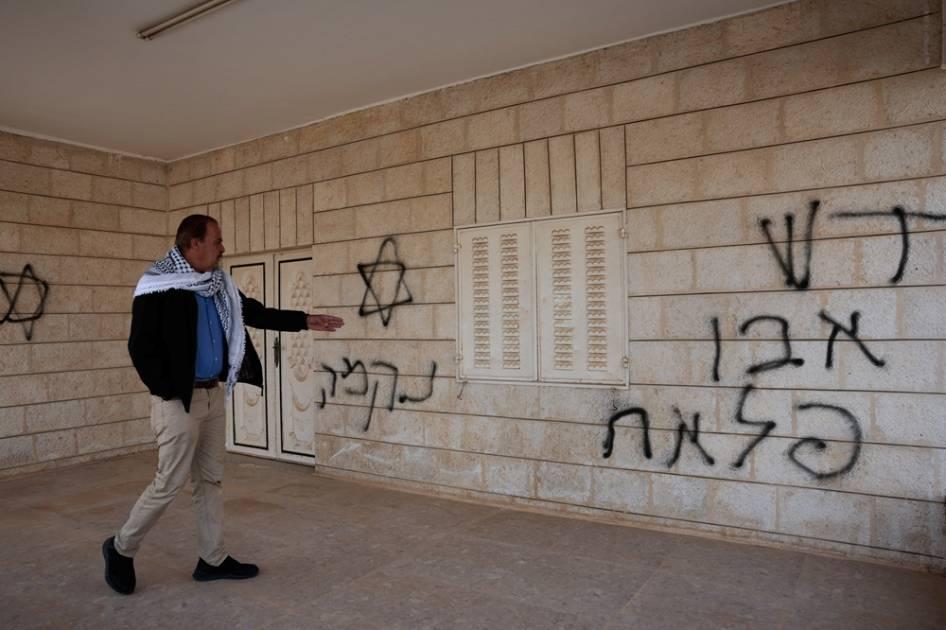
In the occupied West Bank village of al-Mughayyir, northeast of Ramallah, two Palestinians were shot and killed near a school after an attack involving Israeli settlers and Israeli soldiers.
CNN reported that the Palestinian Health Ministry and multiple eyewitnesses said the victims were a 14-year-old boy and a 32-year-old parent at the school, naming Aws Al-Naasan, 14, and Jihad Abu Naim, 32.

CNN described a video showing “a man in military fatigues armed with a rifle” advancing toward the village before firing “at least eight rounds toward the school.”
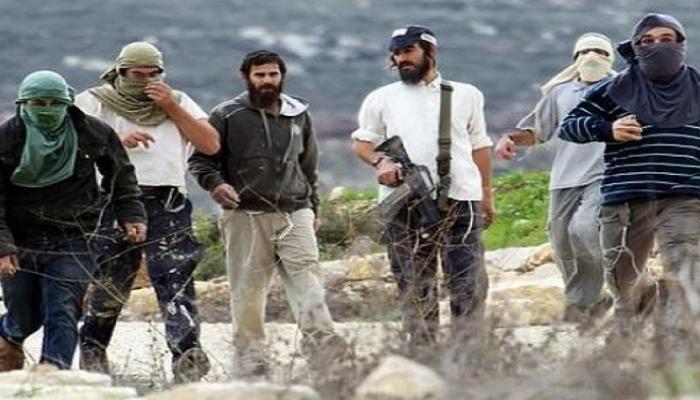
The BBC similarly said the Palestinian health ministry identified Aws al-Naasan, 14, and Jihad Abu Naim, 32, and that the mayor of al-Mughayyir, Amin Abu Alia, told the BBC that “around 10 settlers approached the village along with soldiers and started shooting towards a school.”
The Guardian added that footage seen by the Guardian showed “a settler in military fatigues” carrying a rifle as he advanced slowly and fired “at least eight rounds in the direction of the school.”
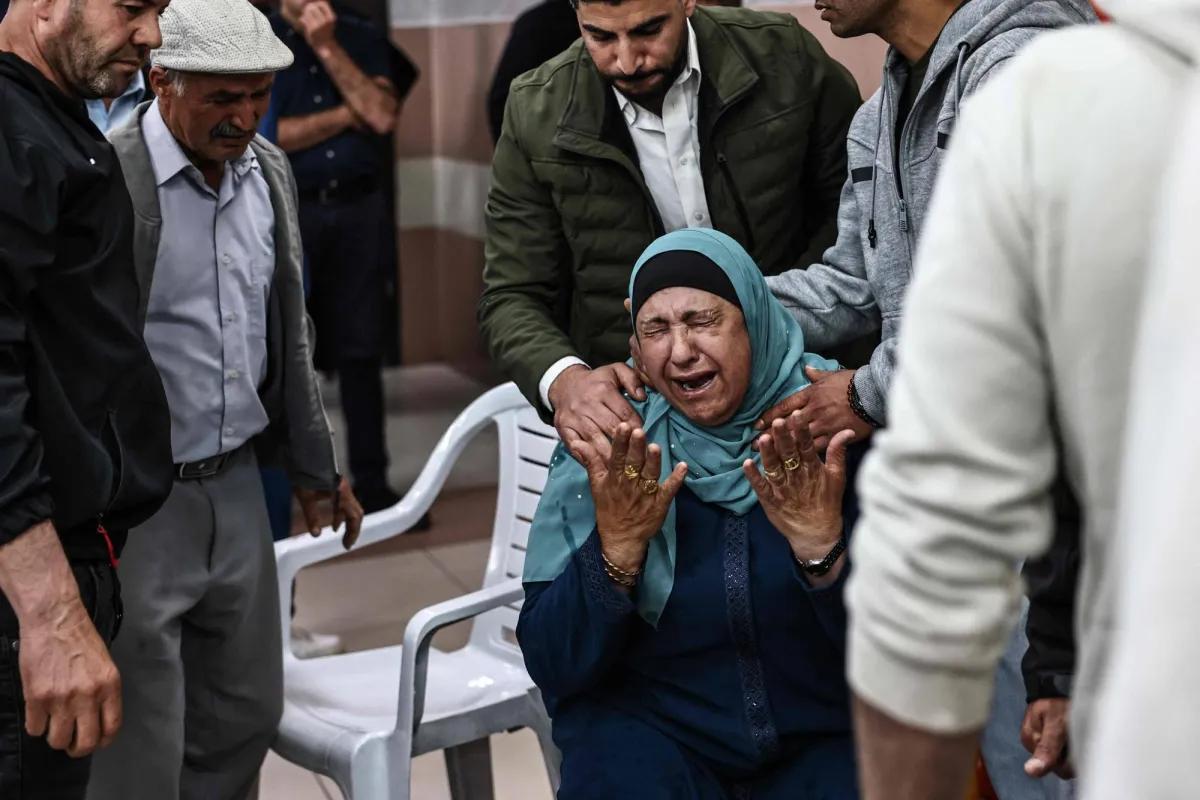
Multiple outlets also described panic and injuries outside the school gates, with CNN saying the streets were “splattered with blood” and the BBC describing panic as medics and parents tried to reach the dead and injured.
What Israel Said Happened
Israel’s military account, as reported by CNN, the BBC, and the Guardian, centered on a trigger involving stones thrown at a vehicle carrying Israeli passengers, including a reserve soldier.
CNN said the Israeli military claimed the incident had started after rocks were thrown at a vehicle carrying several Israeli passengers, including a reserve soldier, and that the military said the reserve soldier “exited the vehicle and opened fire at suspects in the area.”
CNN added that the Israeli military deployed soldiers to the scene and said it was “aware of the claim” that two Palestinians were killed and others injured, saying “the incident is under review.”
The BBC likewise reported that Israel’s military said it dispatched soldiers after a report of stones being thrown towards an Israeli car carrying civilians, including a reservist who got out and “opened fire at suspects in the area,” and that the soldiers then “acted to disperse the violent confrontation.”
The Guardian described the same sequence, saying the Israel Defense Forces said troops were sent to al-Mughayyir after reports that stones had been thrown at an Israeli vehicle carrying civilians and a reservist, who left the car and opened fire at what the military described as “suspects.”
In parallel, the Times of Israel reported that “the reservist was later suspended from duty amid a Military Police investigation,” and that the IDF said troops were required to “disperse the violent riot” it claimed had erupted there.
Eyewitnesses and Competing Narratives
Eyewitness accounts described the attack as a coordinated assault on the village school, with settlers arriving first and then soldiers following.
The Guardian quoted a witness, Kathem al-Haj Ahmed, saying, “This is our reality in al-Mughayyer village; they aim to displace us, and both the army and the settlers are exchanging roles among them,” and it also reported that a witness told Reuters the settlers arrived first, attacking the village school.
The BBC similarly quoted Kathem al-Haj Ahmed, 57, saying, “The school was surprised by herds of settlers, who attacked the school along with the army.”
Democracy Now! identified Kathem al-Haj Ahmed as a witness and included his description: “This is a reality in our village. It’s a displacement operation. They aim to displace us.”
The Times of Israel added detail about how the incident began, reporting that Imran Abu Awliya said five settlers, “some in civilian clothing and others in uniform,” were spotted herding livestock near the village school, and that “students went outside to see who they were, at which point the settlers opened fire at the windows of the building.”
The Times of Israel also reported that “the security forces used tear gas to disperse the crowds around the school,” while CNN and the BBC described the Israeli military’s claim that soldiers acted to disperse a confrontation.
Broader Pattern: Attacks on Education
The al-Mughayyir shooting was presented by CNN and the Guardian as part of a wider pattern of attacks on Palestinian schools and schoolchildren in the West Bank.
CNN said the killings were “among a spate of attacks on Palestinian schools or schoolchildren in the West Bank in recent days,” and it described a separate incident in Hammamat al-Maleh in the northern Jordan Valley where activists said settlers bulldozed a school on Monday evening.
CNN also reported that activists said the demolition occurred even though the school was “within sight of an Israeli military base,” and that “soldiers there made no attempt to prevent the demolition.”
In a third incident, CNN said settlers from the Karmiel settlement set up razor wire near the village of Umm al-Khair in the South Hebron Hills, blocking young students’ route to school, citing community leader Khaleel Alhathaleen.
CNN quoted Alhathaleen saying, “This road is the main artery upon which the village’s students depend, making its closure a clear violation of their freedom of movement and a direct impediment to the educational process.”
The Guardian similarly described the razor wire incident, adding that residents said soldiers fired teargas and stun grenades when children tried to pass.
Stakes and Political Reactions
The incident triggered sharp political and legal reactions, with outlets reporting condemnations and calls for accountability alongside claims of coordinated violence.
The BBC reported that the Palestinian foreign ministry condemned what it called the “terrorist attack and massacre carried out by settler gangs, in full co-ordination with the Israeli occupation army.”

It also framed the shooting as part of a surge in settler violence, citing the UN’s characterization of a “surge in settler violence” and reporting that “at least 10 Palestinians had been killed and 385 others injured by settlers across the West Bank since the start of 2026.”
In parallel, the Guardian reported that Ahmad Tibi called the attack a “massacre” and wrote that “It seems to me that if it were the other way around, the Israeli media would immediately publish: 'Terrorists carried out a massacre of students and residents,'”
Anadolu Ajansı reported Hamas’s response, quoting the movement’s press statement that the crimes reflect a “criminally lawless state of these groups, under the direct sponsorship of the Israeli government,” and it said Hamas urged Palestinians to “escalate the confrontation.”
Across the coverage, the Israeli military’s posture remained consistent that the incident was under review, with CNN saying “the incident is under review,” and the BBC reporting that the incident was “under review” as well.
More on Gaza Genocide
Spain, Ireland, and Slovenia Push to Suspend EU-Israel Deal as Germany and Italy Block
10 sources compared

Amnesty International Says US and Israel’s Gaza War Undermines International Rights Order
14 sources compared
RDNA Finds Gaza Needs More Than $71 Billion Over Next Decade for Recovery
11 sources compared
EU, UN Estimate Gaza Recovery Needs $71.4 Billion Over Next Decade
24 sources compared