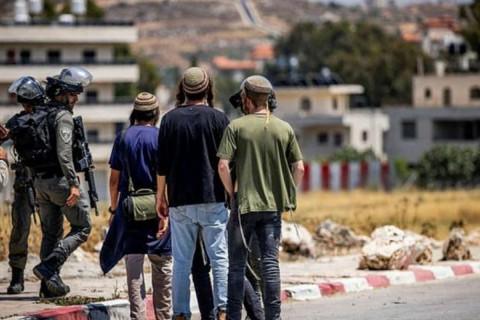
Israeli Settlers Attack Palestinians South of Hebron, Injure Activist and Burn Vehicles
Key Takeaways
- Two vehicles burned in a predawn settler attack south of Hebron.
- Hebron activist Issa Amro's home attacked; rocks thrown; soldier watched.
- Attack occurred in Masafer Yatta, south of Hebron.
Settler attacks in Hebron
Israeli settler attacks in the occupied West Bank continued south of Hebron, with multiple reports describing assaults on Palestinian civilians and property.
“Toggle Play Israeli settler attacks Hebron activist’s home as soldier looks on An Israeli settler was filmed throwing rocks and trying to break into the home of Palestinian activist Issa Amro while an Israeli soldier watched”
Anadolu Ajansı said that settlers from the Ma’on settlement east of Yatta attacked shepherds from the Ahmed Burghash al-Shawahīn family in the Wadi al-Jawiya area of Masafer Yatta, south of Hebron, beating brothers Hamza and Saddam al-Shawahīn and injuring a foreign female activist whose name was not disclosed.

Anadolu Ajansı also reported that the settlers damaged and stole Hamza al-Shawahīn’s phone and the foreign activist’s phone, as well as stealing a phone from another foreign activist, and that the injured were transported to Yatta Government Hospital for treatment.
In a separate report, Al Jazeera said that Israeli settlers burned two vehicles during an attack on Palestinian homes in the area south of Hebron, with activist Osama Makhamrah describing armed settlers infiltrating from the settlement of Etaniel into the area of Mjad al-Baa, west of the town of Yatta, south of Hebron.
Al Jazeera reported that the fires completely consumed the two vehicles belonging to the brothers Khaled and Yasser Abu Ali.
Al Jazeera also described settlers storming the Khalil al-Louz area southeast of Bethlehem and stationing themselves in the Bir al-Ma’ area to provoke residents, and it added that settlers attacked the Bedouin al-Malihāt displaced in the Balqa region north of Jericho and chased the herders.
The same Al Jazeera report tied the attacks to a broader pattern of raids and arrests by Israeli occupation forces, including raids in Yatta and arrests in Nablus, and it said assaults by both settlers and occupation forces have escalated recently.
Hebron’s long memory
As violence and restrictions intensified in the West Bank, Middle East Eye framed the current Hebron reality through the 25th anniversary of the Ibrahim Mosque massacre, describing how residents say the aftermath continues to shape daily life.
The outlet said the anniversary falls on Monday, marking 25 years since February 25, 1994, when Baruch Goldstein, a Jewish-American settler, opened fire on Palestinian worshipers in the Ibrahim Mosque, also known as the Tomb of the Patriarchs, in the center of Hebron’s Old City.

Middle East Eye reported that Goldstein killed 29 people in an instant and wounded over a hundred more, and it added that six other Palestinians were killed by Israeli security forces in the chaos that followed.
The article quoted Izzat Karaki, a Youth Against Settlements activist, saying, "We are not seen as human beings; we are numbers," and it described Karaki’s claim that "An American settler came and killed Palestinians" and that "afterward they punish the victims."
It also quoted Jamal Fakhoury, 40, recalling that "every day is difficult for Hebron" and describing how, before the massacre, he felt "a sense of peace in the old city."
Middle East Eye said that after the massacre, the mosque was closed for six months and Israeli forces closed Shuhada Street, and it described how Palestinian residents lived under a curfew for almost three months during construction of military checkpoints in the old city.
The report described the Hebron Protocol’s division of the city into H1 and H2, and it said that in H2, which represents about 20 percent of Hebron, around 40,000 Palestinians currently live under Israeli military rule while the 800 Israeli settlers in H2 are subject to Israeli civil law.
Masafer Yatta killing
In the south Hebron hills, Le Club de Mediapart described the killing of Palestinian activist Awdeh Al-Athaleen in Um al-Kheir, presenting it as part of what it called repeated attacks by Israeli settlers protected by Israeli police and army forces.
“Jewish settlers who have become a threat to Palestinians in the West Bank - Author: Reha Kansara and Mohanad Hashim - Role: BBC Global Religion and World Service Issa Amro is barricaded inside his house in Hebron, in the occupied West Bank”
The outlet said Awdeh al-Hathaleen was killed last night by Yinon Levi, a settler who it said was sanctioned by the United States and the European Union in 2024 for violent attacks against Palestinians and their property, before Trump recently lifted the U.S. sanctions.
Le Club de Mediapart reported that in videos Levi was seen in front of a construction vehicle to build a new caravan right behind Awdeh's house, threatening residents of Um al-Kheir with his pistol.
It quoted Awdeh’s last words in English: "Kill me! Kill me!" and said Levi shot him, with a bullet from the settler ending the life of the young activist who died during the night from his injuries.
The outlet said Awdeh was 30 years old and left behind a grieving community, including a wife, Hanady, and three children, all under ten, and it described him as an English teacher, a writer, and a footballer in the local Masafer Yatta club.
Le Club de Mediapart also said Awdeh was not the first to be assassinated by settlers in his family, adding that his uncle Soleiman, the community leader, had been crushed by a bulldozer just three years earlier.
The article included WhatsApp messages Awdeh sent after incidents with settlers, including an "URGENT CALL" saying, "If they cut the pipeline, the community will literally be without water."
Restrictions and demolitions
Le Devoir described how Palestinians in Masafer Yatta, south of Hebron, face restrictions imposed by the Israeli army and violence by settlers, with residents saying access to villages is blocked and that repeated demolitions force them to rebuild.
The outlet quoted Nasser Nawajaa describing Susya, saying, "There is no longer any road to enter the village," and it reported that on October 20, two weeks after the war began, the Israeli army closed access to his village, Susya, with enormous blocks of stone.

Le Devoir said Susya has 300 Palestinians living in makeshift facilities described as "a living room with a kitchen, a bedroom, and a bathroom," and it said residents cannot build real houses because they would be immediately demolished by the Israeli army.
It reported that although Palestinian presence in Susya has been established since the early 19th century, the village is not recognized by the State of Israel, and it quoted the 50-year-old man saying, "Since the 1980s, our village has been destroyed seven times" and that the last demolition was in 2014 when three houses were razed.
Le Devoir described how residents installed tarps on roofs to hide from Israeli drones and quoted Nasser Nawajaa explaining, "This is to hide us from Israeli drones."
The outlet also described the Oslo Accords division into Area A, Area B, and Area C, and it said Susya is in Area C, where Israeli authorities fully control, accounting for 60% of the occupied territory where illegal settlements under international law are located.
It added that the Israeli army seized 3,000 hectares of land to create a "restricted military zone," called 'zone 918,' where Palestinians' movements are limited.
Gaza calls and West Bank fear
While reports focused on Hebron and Masafer Yatta, Mediapart and BBC described how Palestinians in the occupied West Bank live under fear and how settler demands intersect with calls to recolonize Gaza.
“Since October 7, restrictions by the Israeli army and violence by settlers have multiplied in the south of Hebron, in the Masafer Yatta region of the West Bank”
Mediapart said that in Hebron, H2 area, West Bank, in December 2023, Ahmed, a pseudonym, wanted to testify about the "life in a cage" of Palestinians but was afraid of reprisals from the Israeli army and Israeli settlers, whispering, "Here you are at the heart of hatred. The situation has worsened again since October 7," before locking his door.

Mediapart described graffiti and banners around Ahmed’s home, including the phrases 'Death to Arabs' and 'We must recolonize Gaza now,' and it said that thousands of Israelis, including about a dozen ministers, called to recolonize Gaza on Sunday, January 28, at a festive rally in Jerusalem.
The outlet also said that in the occupied West Bank, in the Hebron area under Israeli control, settlers are demanding it with violence.
In parallel, the BBC described Issa Amro in Hebron as barricaded inside his house, with his garden fenced off and windows covered with bricks so that "neither light nor bullets can penetrate."
The BBC reported that on October 7, the day Hamas attacked Israel, Issa Amro said he was abducted in his garden, detained for ten hours, and assaulted by Israeli soldiers, some of whom, according to him, are his neighboring settlers.
The BBC quoted Amro saying, "Most Palestinians do not go out because they are afraid," and it said the BBC presented his claims to the Israeli Defense Forces, where a spokesperson told the BBC that their mission was to "maintain the security of all residents of the region" and that they were reviewing his case.
More on Gaza Genocide
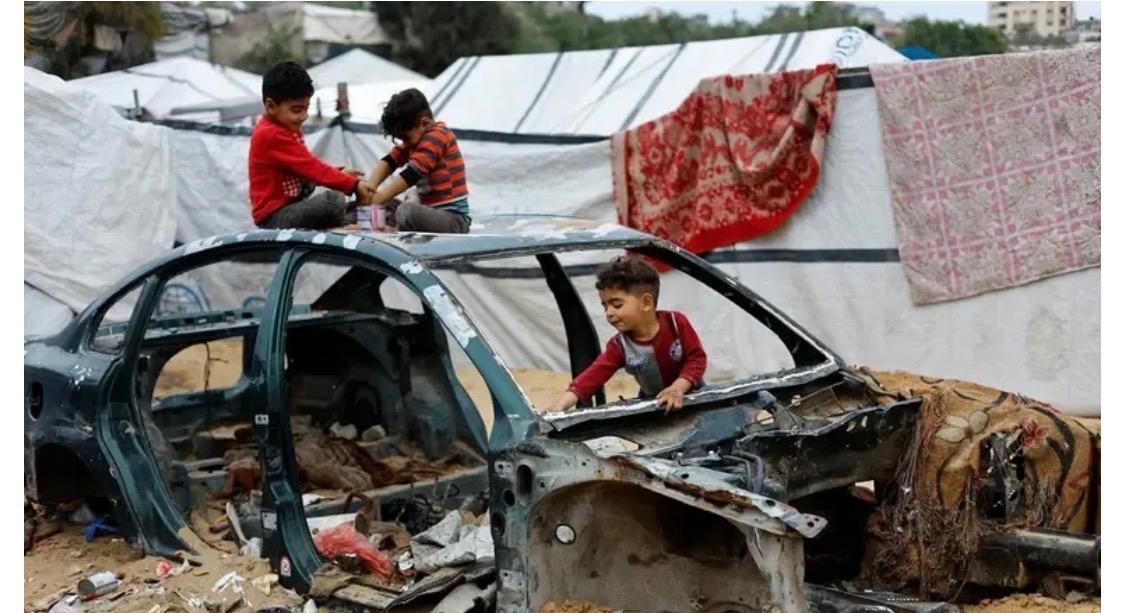
Rats and Weasels Overrun Gaza Displacement Camps, Spreading Disease to 1.45 Million
18 sources compared
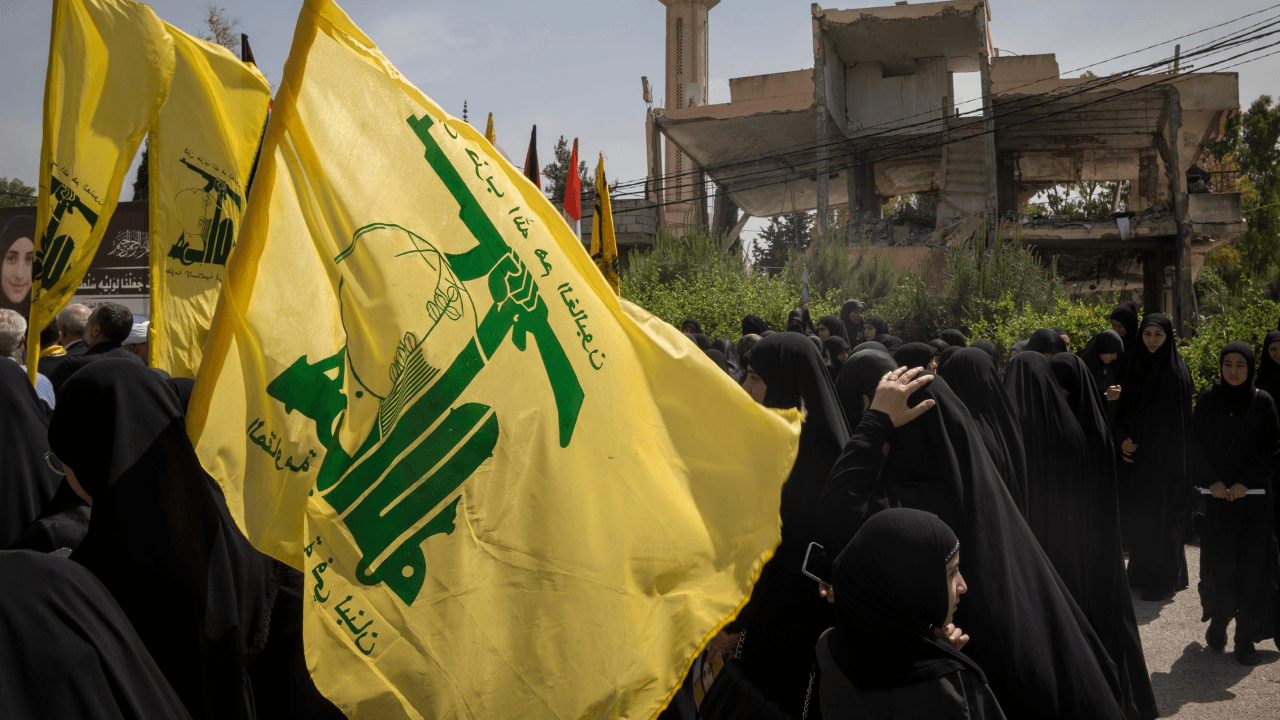
RFI Traces Gaza War History From UN Partition Vote on November 29, 1947
10 sources compared
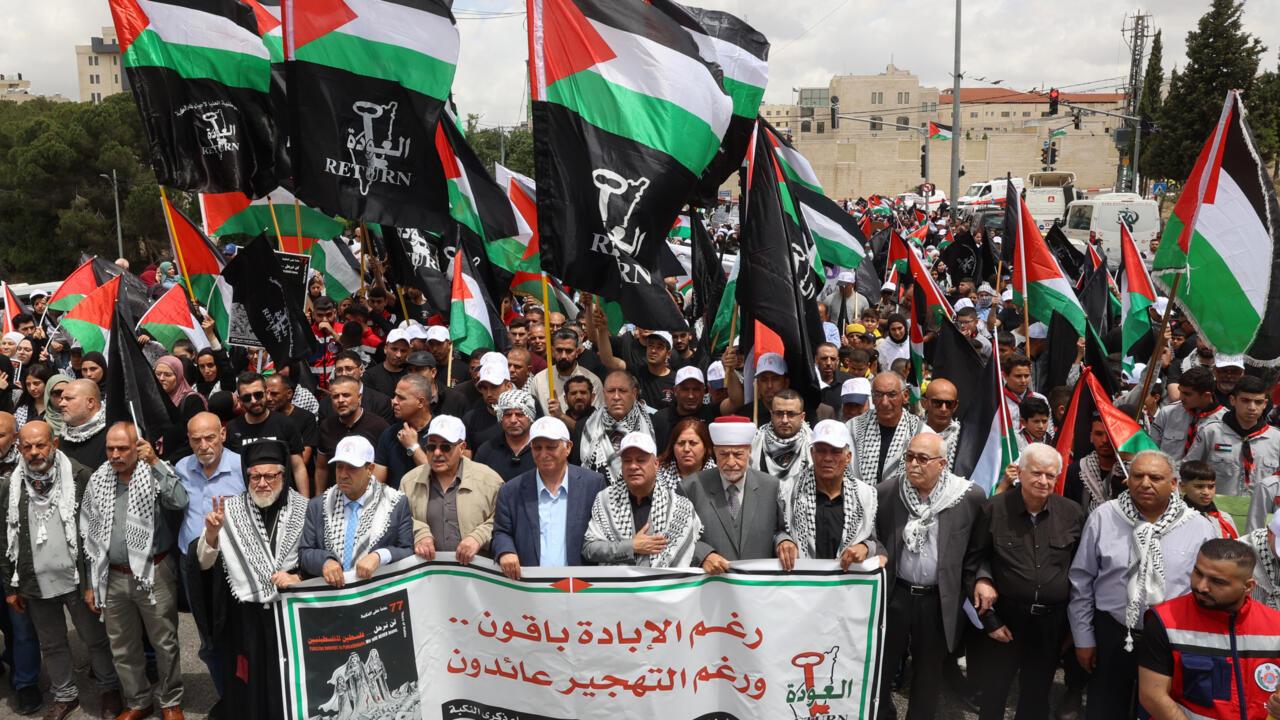
Palestinians Mark Nakba in Ramallah, Denounce Israel’s Gaza Conquest Operation and UNRWA Ban
13 sources compared
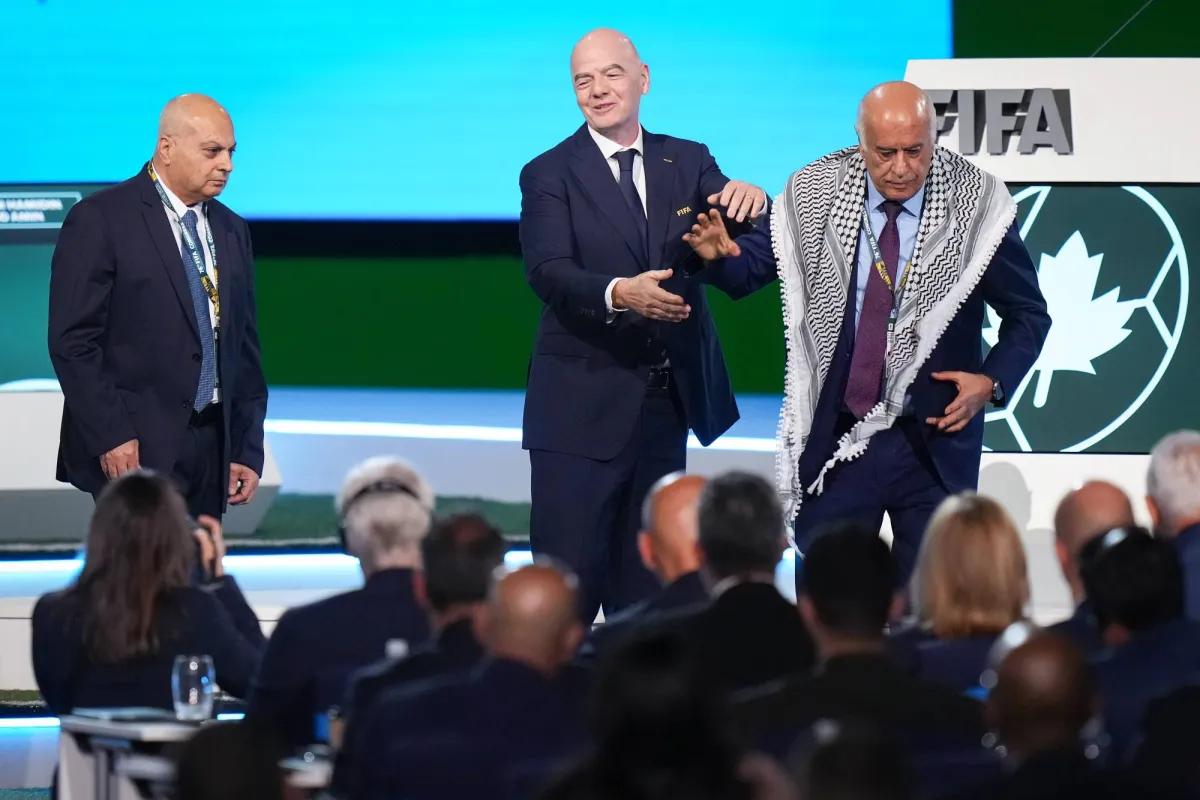
Gianni Infantino Fails To Orchestrate Handshake Between Israel And Palestine Football Chiefs
12 sources compared