
Israeli Strikes Kill At Least Two Palestinians in Gaza After 10 October Ceasefire
Key Takeaways
- Five Palestinians killed in Israeli strike in northern Gaza, including three children.
- Beit Lahia in northern Gaza hit by Israeli drone strike.
- Attacks occurred despite the 10 October ceasefire, signaling ongoing hostilities.
Ceasefire, then strikes
Israeli attacks continued across Gaza after a ceasefire took effect on 10 October, with multiple outlets describing deaths and injuries from air and drone strikes in different parts of the territory.
Middle East Eye reported that on Monday “at least two people have been killed in Israeli attacks across Gaza,” citing Wafa news, including a strike on the central Bureij refugee camp where “a drone attack killed one person and wounded several others.”

The same report said “a separate air strike hit an area southeast of Gaza City, killing another person and injuring multiple civilians,” and it added that the “latest attacks come despite the 10 October ceasefire.”
WAFA Agency reported a specific incident on Monday evening: “A civilian was killed on Monday evening in an Israeli airstrike southeast of Gaza City,” and it said medical sources told WAFA that “one citizen was killed and several others were injured” in an airstrike targeting “Street 10 in the al-Zeitoun neighborhood, southeast of Gaza City.”
WAFA also described an earlier strike the same day, saying “a young man was killed, and others were injured after an Israeli drone strike hit land belonging to the Abu Shaaban family north of the Bureij refugee camp.”
In the same WAFA report, the toll since the ceasefire came into effect was updated, stating “the toll of those killed in the Israeli aggression since the ceasefire came into effect on October 11 has risen to 834, while the number of those injured has reached 2,354,” and it added that “767 bodies have been recovered from under the rubble.”
TRT Français similarly described continued violence as “yet another violation of the ceasefire in effect since October 10,” saying Israeli forces wounded civilians in the Zeitoun neighborhood and carried out airstrikes in Rafah while artillery bombed areas east of Jabalia and the Tuffah neighborhood.
Numbers and localities
Beyond the Monday incidents, the WAFA-linked reporting and other outlets described a broader pattern of bombardment and casualties across Gaza’s neighborhoods and refugee camps, including deaths of people waiting for aid.
وكالة الانباء والمعلومات الفلسطينية (WAFA) said that “In 24 hours, 85 Palestinians were killed by Israeli bombardments in Gaza,” adding that the toll included “at least 31 of those waiting for aid,” and it stated that “dozens more were injured.”

That same report described a massacre in Gaza City after the “bombardment of a house inhabited by the Mushtaha family, in the northwest of the city,” saying “In Gaza City, 15 people died in a massacre,” and it specified that “6 children and an ambulance driver were among the victims.”
It also said that “tents housing displaced people were located near the targeted house” and that “The strike also destroyed an ambulance parked in front of the bombed house.”
The report then moved through multiple locations, including the An-Nasr neighborhood west of Gaza City where “5 people were killed,” the Az-Zaytoun neighborhood southeast of the city where “7 Palestinians, including 3 children, were killed,” and the Ash-Shati refugee camp west of Gaza City where “16 people, including women and children, were killed and more than 25 injured.”
In addition to air and drone strikes, it described artillery and ground offensive activity, saying “Israeli army continued destroying residential buildings in eastern Gaza City” and that “Eight more people were killed in a massive bombardment across different sectors of Deir al-Balah.”
It also described deaths tied to waiting for humanitarian aid, stating that “five people were killed by Israeli fire as they waited for aid near the Ash-Shuhada junction,” and it said “Two other victims were among those waiting for aid west of Rafah.”
TRT Français, meanwhile, reported that “More than 460 people have been killed since the ceasefire,” and it said Palestinian officials claimed Israel had “repeatedly violated the ceasefire negotiated by the United States,” killing “more than 460 Palestinians and wounding more than 1,200 since it took effect on October 10.”
Ceasefire violations framed
Amid reporting on strikes, TRT Français and Amnesty International framed the ceasefire’s limits and the broader conflict’s impact in different ways, while still centering the same core claim of ongoing harm to civilians.
“Overview: In Gaza, Palestinians remain shocked by the genocide orchestrated by Israel against them, despite the signing of a fragile ceasefire”
TRT Français described “a series of attacks in almost all localities of the besieged Gaza Strip” and said the attacks were “in yet another violation of the ceasefire in effect since October 10.”
It cited medical sources telling Wafa that “Israeli drone strikes on Sunday wounded civilians in the Zeitoun neighborhood, south of Gaza City,” and it added that “two people, including a girl, were wounded by Israeli fire in al-Mawasi, in the western part of Khan Younis.”
TRT Français also said Israel “continues to restrict the entry of food, medical aid and shelter materials into Gaza,” and it described the humanitarian situation as “about 2.2 million people face acute humanitarian needs in cold weather, barely protected by makeshift tents.”
Amnesty International’s overview, by contrast, described the ceasefire as “fragile” and said Palestinians remain “shocked by the genocide orchestrated by Israel against them, despite the signing of a fragile ceasefire.”
Amnesty International stated that “Tens of thousands of Palestinians have been killed or seriously injured in the occupied Gaza Strip since October 7, 2023,” and it added that “In Gaza, 90% of the population has been displaced.”
Amnesty International also tied the situation to long-running policies, saying Israel maintained an “illegal blockade for 16 years” and that it “tightened further since October 9, 2023.”
The Amnesty text further referenced international legal determinations, stating “In July 2024, the ICJ ruled that Israel’s presence in the OPT was illegal,” and it said “in September 2024, the United Nations General Assembly called on Israel to end the occupation within one year.”
Pattern of crushing attacks
One report in the source set described a specific incident of violence involving heavy machinery and medical access, presenting it as part of a broader pattern.
Association France Palestine Solidarité said an “Israeli military bulldozer deliberately crushed a wounded Palestinian child, cutting him in two while he was still alive,” after “firing on him and preventing medical rescuers from assisting him.”

It identified the child as “Zaher Nasser Shamia, 16, from the Jabalia Camp in the northern Gaza Strip,” and it said the field team of “Euro-Med Human Rights Monitor documented the injuries” “in the afternoon of Wednesday, December 10, 2025.”
The account described the child lying “in his blood, with no one able to reach him because of the ongoing gunfire,” and it said “A few minutes later, a military bulldozer moved toward him and deliberately crushed him while he was still alive on the ground.”
The report included testimony from the child’s uncle, stating that Shamia was “near the Jabalia Services Club, about 50 meters from the yellow line,” and that “Israeli army vehicles arrived around 9 a.m. near the yellow concrete blocks, under heavy fire.”
It also said the forces fired at him “probably from a quadcopter drone,” and it described subsequent steps including that “Israeli forces then fired tear gas and advanced toward the place where Zaher was.”
The same source broadened the narrative by citing other cases it said Euro-Med Monitor documented, including “Jamal Hamdi Hassan Ashour, a 62-year-old Palestinian,” “crushed in the Zeitoun neighborhood, southeast of Gaza City, on February 29, 2024,” and a “family consisting of a mother and her four children” in “the Shuja’iyya neighborhood, east of Gaza City” on “June 27, 2024.”
It further referenced “On January 23, 2024, Euro-Med Monitor documented an Israeli tank crushing a caravan serving as temporary shelter in the Tayba Towers area of Khan Younis,” and it said “On December 16, 2023, Israeli tanks and bulldozers crushed displaced people who had taken shelter in tents in the courtyard of Kamal Adwan Hospital in Beit Lahia.”
What comes next
The sources’ descriptions of the Gaza war’s trajectory emphasize continuing casualties, ongoing restrictions, and the legal and humanitarian framing that follows from the ceasefire’s breakdown.
“An Israeli military bulldozer deliberately crushed a wounded Palestinian child, cutting him in two while he was still alive, after firing on him and preventing medical rescuers from assisting him”
WAFA Agency’s May 4, 2026 report updated the post-ceasefire toll and recovery figures, stating “the toll of those killed in the Israeli aggression since the ceasefire came into effect on October 11 has risen to 834,” while “the number of those injured has reached 2,354,” and “767 bodies have been recovered from under the rubble.”
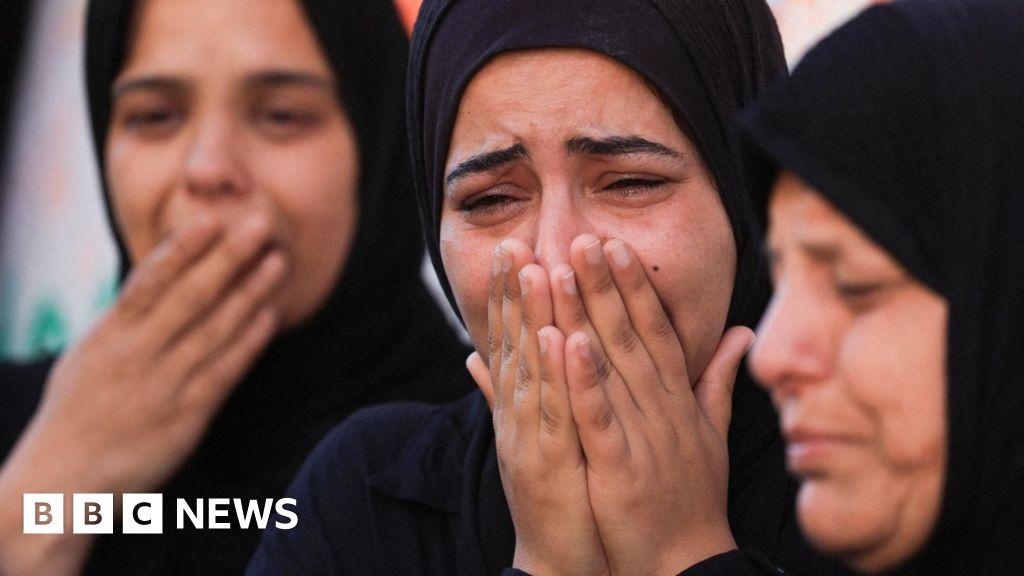
It also tied the latest incidents to specific targeting, saying the airstrike hit “Street 10 in the al-Zeitoun neighborhood, southeast of Gaza City,” and that a drone strike hit “land belonging to the Abu Shaaban family north of the Bureij refugee camp.”
TRT Français described that the violence continued “in yet another violation of the ceasefire,” while also stating that “Israel continues to restrict the entry of food, medical aid and shelter materials into Gaza,” with “about 2.2 million people face acute humanitarian needs in cold weather, barely protected by makeshift tents.”
Amnesty International’s overview argued that the ceasefire did not change the underlying conditions, saying Palestinians remain “shocked by the genocide orchestrated by Israel against them, despite the signing of a fragile ceasefire,” and it asserted that “In Gaza, 90% of the population has been displaced.”
Amnesty International also pointed to international legal context, stating “In July 2024, the ICJ ruled that Israel’s presence in the OPT was illegal,” and that “in September 2024, the United Nations General Assembly called on Israel to end the occupation within one year.”
In the same Amnesty text, the organization described how it gathers evidence, saying “we conduct on-the-ground research and documentary studies, in addition to interviews with victims and witnesses,” and it said it “use remote sensing, among other remote research methods, to reveal the atrocities committed.”
Meanwhile, the WAFA-linked report of “In 24 hours, 85 Palestinians were killed” described continuing strikes across Gaza’s neighborhoods and refugee camps, including “at least 31 of those waiting for aid,” and it said “During Tuesday's day and night, at least 70 more Palestinians were killed in various parts of Gaza.”
More on Gaza Genocide

Hamas Calls Israel’s Jerusalem Demolition Notices a War Crime Targeting Palestinian Presence
10 sources compared

Israel’s Boeing KC-46 Pegasus “Gideon” Completes Maiden Test Flight in the United States
16 sources compared

Itamar Ben-Gvir Marks 50th Birthday With Golden Noose Cake for Palestinian Death Penalty
11 sources compared

Palestinian Journalists Syndicate Says Israel Killed 262 Journalists Since October 2023
11 sources compared