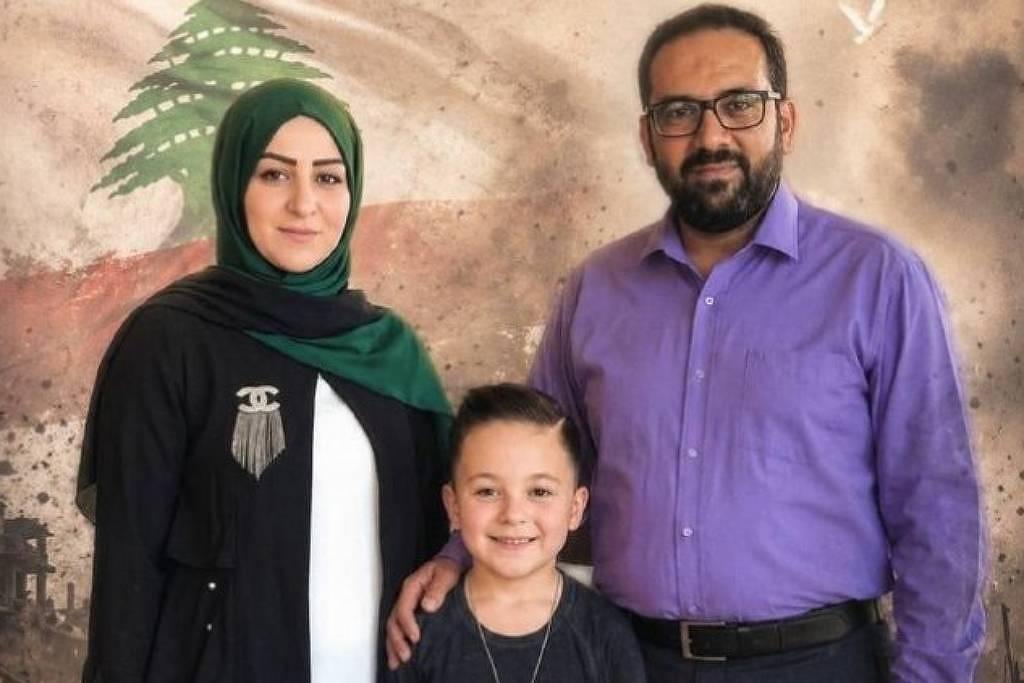
Israeli Strikes Kill Brazilian Family in Lebanon’s Bint Jbeil During Ceasefire
Key Takeaways
- Brazilian family killed in Israeli attack in Lebanon's Bint Jbeil during ceasefire.
- Victims were visiting their home to inspect the residence and retrieve belongings when struck.
- The incident occurred amid broader Israeli strikes on Lebanon, with casualties reported elsewhere.
Brazilian family during ceasefire
A Brazilian family killed in an Israeli attack in Lebanon on Sunday (26) had returned home to the Bint Jbeil district in southern Lebanon during the ceasefire between the two countries to see how the residence was and to retrieve belongings.
“The family of Brazilian nationals killed in an Israeli attack in Lebanon on Sunday (26) had returned home to the Bint Jbeil district in southern Lebanon during the ceasefire between the two countries to see how the residence was and to retrieve belongings”
The victims were preparing to leave the area when the bombing occurred, according to Folha de S.Paulo.
Brazilian Manal Jaafar and her son, Ali Nader, 11, who was also Brazilian, died alongside the family’s father, the Lebanese Ghassan Nader.
Another son of the couple survived and is recovering, while Bilal Nader, Ghassan’s brother, said the family had breakfast and were packing a bag to leave when the attack occurred.
Folha de S.Paulo reports that the family’s house was in Burj Qalaway, a town in the Bint Jbeil district that is part of Nabatieh Province.
Residents reportedly received, this Tuesday (28), alerts issued by the Israeli Army to leave the region.
In an interview with TV Globo, the father’s brother said that the nephews were outside the house and were blown away by the explosion, and the youngest did not survive and has already been buried in Lebanon.
Folha de S.Paulo adds that the bodies of his brother and sister-in-law have not yet been located, and that the three-story house was left in pieces, according to Bilal.
Ceasefire, escalation, and timeline
Folha de S.Paulo frames the Sunday (26) deaths as occurring during a ceasefire that “however, has never truly stopped the fighting,” describing it as active since Hezbollah attacked the Jewish state in support of Iran.
The article says Washington mediates the talks between the two countries and notes that the truce was initially established on the 16th of the month and then extended for three weeks after President Donald Trump announced the extension on Thursday (23).
It also reports that while the ceasefire reduced the intensity of Israeli attacks across Lebanon, “the ceasefire has not been enough to prevent the offensive.”
The same source describes Israel’s position that attacks are covered by the terms of the truce because Hezbollah continues to attack their troops, and it links the negotiation attempt to the Shiite faction supported by Iran.
Folha de S.Paulo further states that Hezbollah is “a political party and holds positions in the national government,” and that it has strong predominance in southern Lebanon, areas in the southern part of Beirut, and throughout the Beqaa Valley.
It adds that Israel’s demands include disarming the faction and withdrawing the group from southern Lebanon, and it cites a United Nations Security Council Resolution from 2006 that “also prohibits the occupation of Lebanese territory by foreign forces without the authorization of the local government.”
L'Orient-Le Jour, meanwhile, provides a separate snapshot of Israeli strikes in Lebanon on Thursday (December 24, 2025), including a claim that it killed a Hezbollah fighter and a “member of the al-Quds Force,” showing how strikes continued across different periods.
In that L'Orient-Le Jour account, the Israeli army claimed responsibility for bombardments and said it killed “a Hezbollah fighter 'involved in rebuilding the party’s infrastructure.'”
Official statements and accusations
Folha de S.Paulo reports that the Brazilian Ministry of External Relations expressed condolences to the family and condemned the attack, describing it as “yet another example of the repeated and unacceptable violations of the ceasefire announced on April 16.”
“Editorial of An-Nahar: The exposure of Iranian involvement deepens the open war”
The ministry statement, as quoted by Folha de S.Paulo, says the violations “have already resulted in the deaths of dozens of Lebanese civilians, including women and children, as well as a journalist and two French members of the United Nations Interim Force in Lebanon (UNIFIL).”
The same article includes a response from Rafael Rozenszajn, spokesman for the Israeli Army, who released a note that “operations targeted only military targets” and that “concrete measures to mitigate damage” had been adopted.
Rozenszajn is also quoted saying that in “scenarios of armed conflict, the occurrence of civilian casualties, even though tragic, cannot be equated with deliberate intentionality,” and that Israeli forces “reaffirm their commitment to international humanitarian law and to the protection of civilian lives.”
In the broader political framing of the conflict, the Lebanese Forces Official Website editorial quotes Israeli Prime Minister Benjamin Netanyahu warning the Lebanese government to disarm Hezbollah and implement the ceasefire “under the threat that Lebanon would face harsh consequences.”
The editorial also quotes Netanyahu’s message to Hezbollah: “those who lay down their weapons will save their lives, while those who do not will have their blood shed.”
It further quotes defense minister Yisrael Katz telling President Joe (Joseph) Aoun that “Lebanon is not the United Nations; you and your government undertook to implement the ceasefire and disarm Hezbollah, and this has not happened.”
The editorial then quotes Katz saying, “We will not allow Hezbollah to operate from Lebanese territory or Lebanese infrastructure to harm our civilians and soldiers.”
How outlets frame the same war
The Folha de S.Paulo account centers on a specific family—Brazilian Manal Jaafar, her son Ali Nader, 11, and Lebanese Ghassan Nader—killed during a ceasefire period in the Bint Jbeil district, and it emphasizes the Brazilian government’s condemnation and the Israeli Army spokesman’s claim that “operations targeted only military targets.”
In contrast, L'Orient-Le Jour’s reporting on December 24, 2025 frames the conflict through a series of strike-by-strike updates, including Israeli fire targeting journalists from the al-Mayadeen channel in Dhaïra and an Israeli drone strike on a minibus at the entrance to Hoch Sayyed Ali in Hermel.
L'Orient-Le Jour also highlights Israeli claims about killing a “member of the al-Quds Force,” identifying Hussein Mahmoud Morched al-Jawhari and describing him as “one of the most important members of the Quds Force’s 840 Operations Unit.”
The Lebanese Forces Official Website editorial shifts framing again, describing the war as an “Israeli-Iranian war, direct and indirect,” and it argues that the “exposure of Iranian involvement” deepens the conflict.
That editorial asserts that Israel’s dawn assassination of senior IRGC officials at the Ramada Hotel in Raouche coincided with “the “evacuation” of a large Russian transport plane” carrying “more than 150 Iranian diplomats with their families and the bodies of Iranian officers killed in Beirut.”
It also quotes Israeli threats to Lebanon, including Netanyahu’s line that “those who do not will have their blood shed,” and Katz’s warning that “If matters reach direct confrontation, the price will be borne entirely by the Government of Lebanon.”
Taken together, the sources show different emphases: Folha de S.Paulo on a ceasefire-time family tragedy and diplomatic statements, L'Orient-Le Jour on tactical strike updates and named individuals, and the Lebanese Forces editorial on strategic interpretation and political threats.
Casualties, displacement, and next risks
The Lebanese Forces Official Website editorial describes a rapid rise in casualties and displacement, stating that “The toll of martyrs, casualties, the wounded, and the displaced has risen since dawn on Monday, March 2, to record numbers within less than a week.”
“A Lebanese soldier inspecting the debris of a car hit by the Israeli army near Mazraat al-Quneitra, in southern Lebanon, on December 22, 2025”
It says “The number of displaced is estimated at more than half a million,” and specifies that “most of them from the south and the southern suburbs of Beirut, in addition to Beqaa towns.”
The editorial adds that “the Ministry of Public Health reported up to yesterday 394 deaths, including 83 children and 42 women, and 1,130 others injured in raids that hit more than 60 Lebanese cities and towns.”
It also reports that “Israel announced it struck more than 600 targets across Lebanon during the week, killing about 200 Party members and revealing that it used more than 820 shells in Lebanon during the week.”
In the same editorial, Israeli Prime Minister Benjamin Netanyahu is quoted threatening the Lebanese government with “harsh consequences” if it does not disarm Hezbollah and implement the ceasefire, while the editorial quotes Katz saying “If matters reach direct confrontation, the price will be borne entirely by the Government of Lebanon.”
The editorial also claims that Israeli operations included “Israel’s dawn assassination of a group of senior IRGC officials at the Ramada Hotel in Raouche,” and it ties this to the “evacuation” of a Russian transport plane with “more than 150 Iranian diplomats with their families and the bodies of Iranian officers killed in Beirut.”
L'Orient-Le Jour’s strike report, though focused on a different date, similarly underscores ongoing risk by describing Israeli fire directed at al-Mayadeen journalists in Dhaïra and a drone strike on Hermel that killed a man identified as Ali Abdelamir Salmane.
In that L'Orient-Le Jour account, cameraman Ali Hanqir said he had been “targeted by direct fire, and the bullets passed very close to us,” and he added, “Thank God, we were not injured.”
More on Lebanon
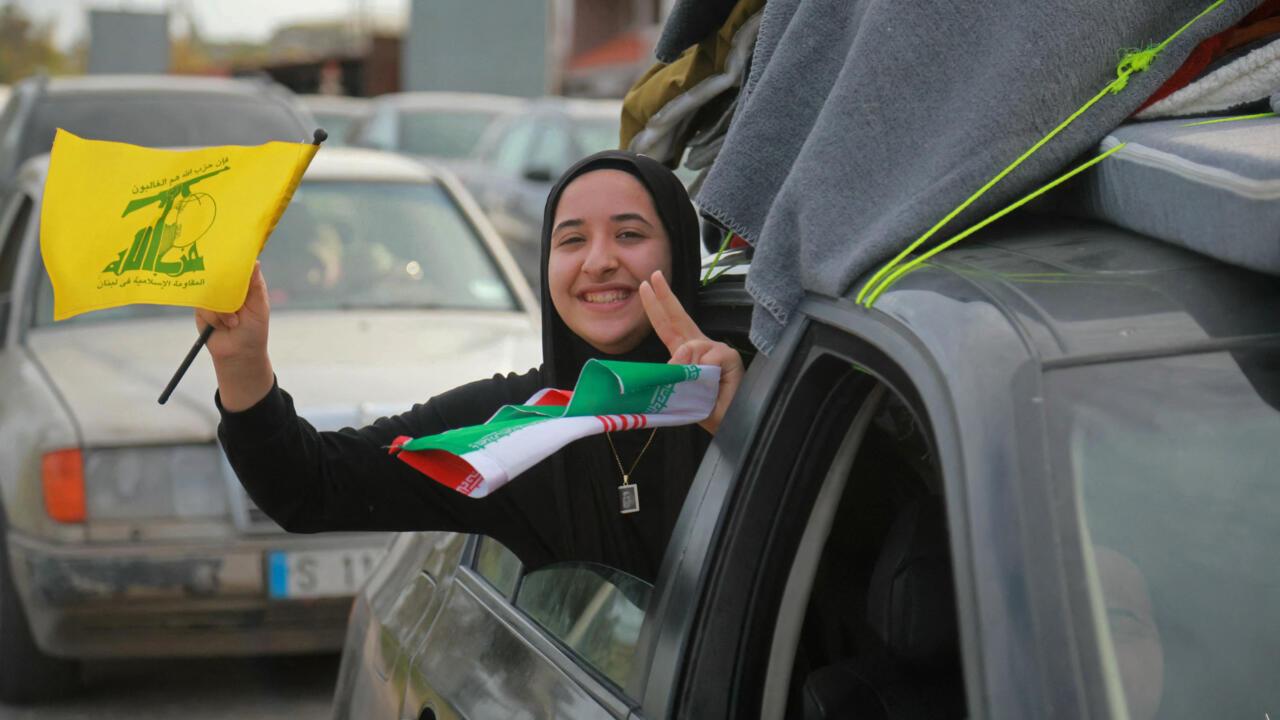
Hezbollah Lawmaker Ibrahim Al-Moussawi Says Joseph Aoun Remarks Would Be a Catastrophe
12 sources compared

Trump Tells Netanyahu To Limit Lebanon Strikes As Ceasefire Stalls
10 sources compared
UNICEF Warns Darfur Children Face Acute Crisis After April 2024 Violations
15 sources compared
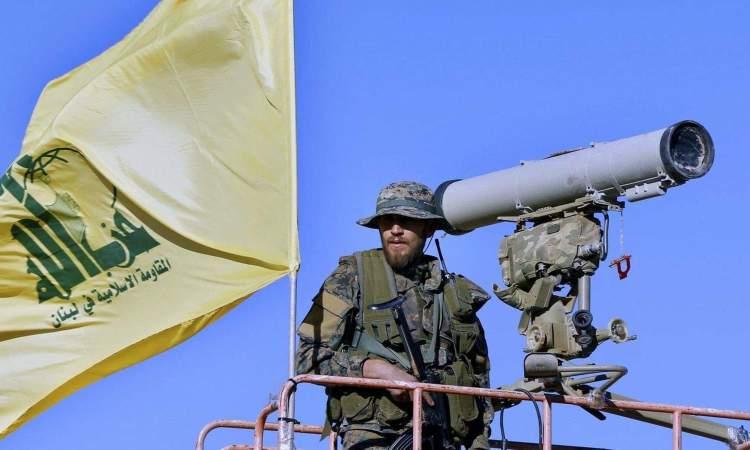
Hezbollah Fires Missiles and Drones, Striking Merkava Tanks in Al-Qantara and Kherbet Salam
14 sources compared