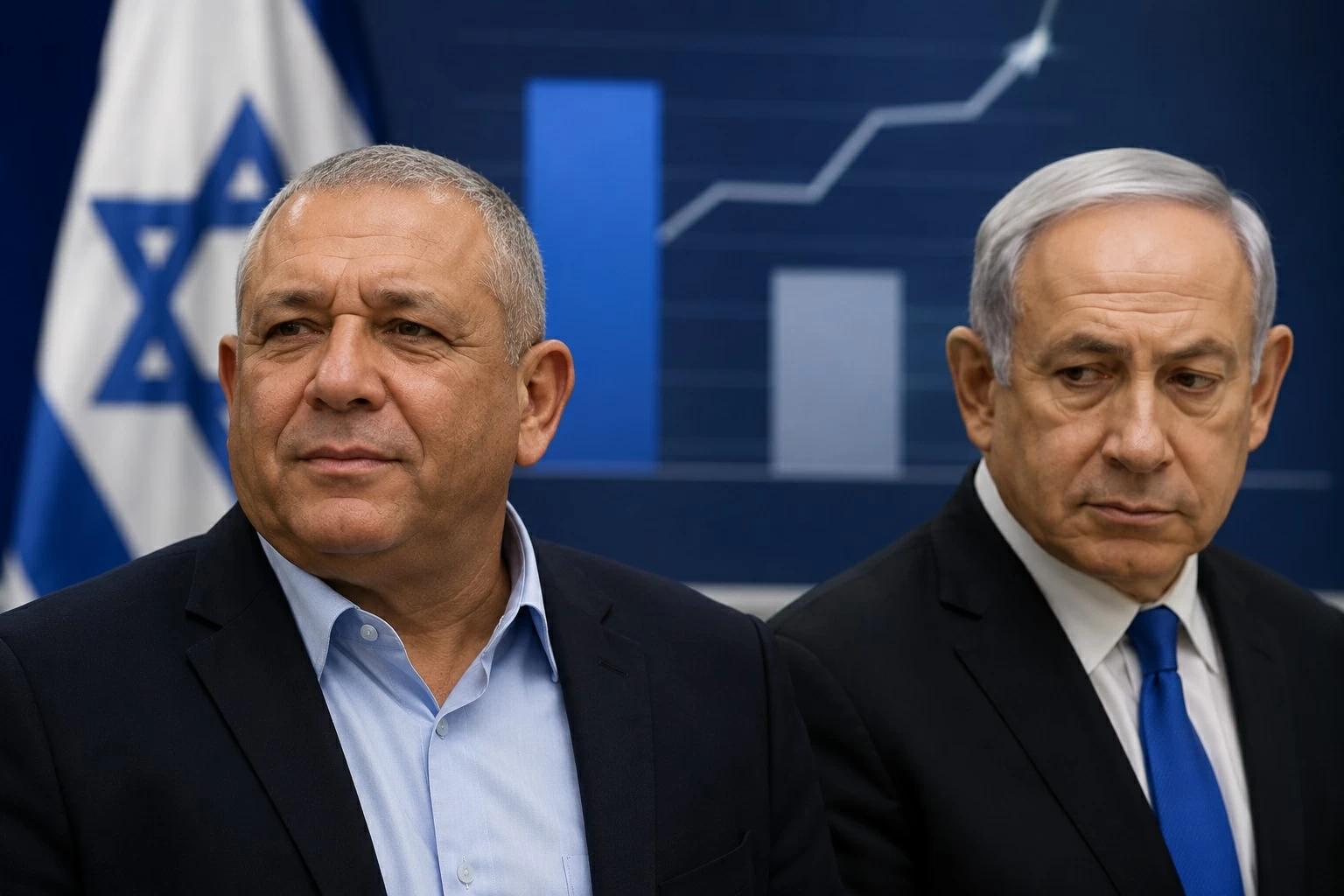
Israel Holds October 27 Elections, Viewed As Referendum On Prime Minister Benjamin Netanyahu
Key Takeaways
- Election date set for October 27, the last date allowed by law.
- Election widely viewed as referendum on Netanyahu's leadership amid Gaza war.
- Current coalition says the election will complete its four-year term.
Election Set for Oct 27
Israel’s Knesset announced that national elections will be held in Israel on October 27, the latest date legally allowed, with the vote widely viewed as a referendum on Prime Minister Benjamin Netanyahu’s leadership since the Gaza war began on October 7, 2023.
“National elections will be held in Israel on October 27, the latest date legally allowed, with the vote widely viewed as a referendum on Prime Minister Benjamin Netanyahu’s leadership since the start of the genocidal war on Gaza”
The Knesset said there was “no need to enact a Knesset Dissolution Law in the usual sense,” because the current Knesset is expected to serve its full term and the next general election is already set by law for October 27.

The Knesset is set to hold the final session of its current term on Friday, and the decision makes Netanyahu’s far-right coalition government the first in half a century to complete a full four-year term.
Netanyahu, Israel’s longest-serving prime minister, confirmed in June that he would run in the upcoming elections, and critics blame him for security failures that allowed armed groups from Gaza to breach Israel’s advanced border defences and take 251 people hostage.
Rivals, Polls, and Quotes
Former Israeli army chief of staff Gadi Eisenkot emerged as Netanyahu’s main rival, and a poll published on Thursday by Channel 13 said Eisenkot’s Yashar party was narrowly ahead of Netanyahu’s Likud.
Eisenkot had previously served in Netanyahu’s war cabinet, resigning in June 2024 after saying that the government “had completely failed” to achieve any of its objectives in Gaza.
Yossi Mekelberg, a senior consulting fellow at Chatham House in London, told Al Jazeera that October’s election will be the most consequential in Israel’s history, saying, “This will be the most consequential election in my view since the founding of Israel in 1948.”
Mekelberg added that “Every day, the government is introducing legislation that fatally undermines the democratic foundations of the state of Israel,” linking the election’s stakes to both domestic and international challenges.
Bills, Term, and Consequences
As the Knesset prepares to dissolve on July 17, the coalition is seeking to pass legislation before parliament enters recess on Friday, with the election date remaining October 27 as established by law.
Knesset Legal Adviser Sagit Afik said the current Knesset will complete its full term and will not be dissolved, adding that “The election date remains as established by law — October 27,” during a Knesset House Committee discussion.
The Straits Times said Netanyahu has declared his intention to run again and that he “intends to win” the election, while noting that a majority of Israelis want him out of office and that Eisenkot is emerging as his main rival.
The Times of Israel reported that Netanyahu’s current government was formed on December 29, 2022, and said that if elections were held today, Netanyahu and his allies would fall well short of a majority in the 120-seat Knesset, with the Zionist opposition bloc “teetering on the edge of a majority itself.”
More on Other

Former Emir of Qatar Sheikh Hamad Bin Khalifa Al Thani Dies At 74
26 sources compared

Netanyahu Cabinet Approves Ignoring Supreme Court Order on Israel’s Second Broadcasting Authority
23 sources compared

Overcrowded Bus Plunges Into Ravine In Dana Sar, Pakistan, Killing 40
12 sources compared

Vatican Excommunicates Lefebvrite Bishops After Écône Ordinations, Including Alfonso De Galarreta
15 sources compared