Technology and Science01 July, 20263 min read
Italy Roundtables Put Ethics at Center of AI, Healthy Aging, and Research Rules
This article is an automated aggregation of coverage from news outlets. Our editorials offer in-depth analysis curated by the NewsCord team.
Italian roundtables stress ethics in AI and scientific research. Universities promote governance and ethics training in institutions.

Ethics in science
A series of discussions across Italy has put ethics at the center of scientific and technological questions, from artificial intelligence to healthy aging and the moral rules that guide research. In Venice, the Fondazione Cini at San Giorgio hosted a roundtable moderated by Roberto Papetti, where Luciana Lamorgese said that in scientific research "l'etica deve mettere al centro l'uomo, la persona." Monsignor Vincenzo Paglia, president of the Fondazione Età Grande, said "Non ho paura dell'IA, ma della stupidità umana sì," and linked the need for rules to the risk of "disastri giganteschi" if technologies are not managed correctly.
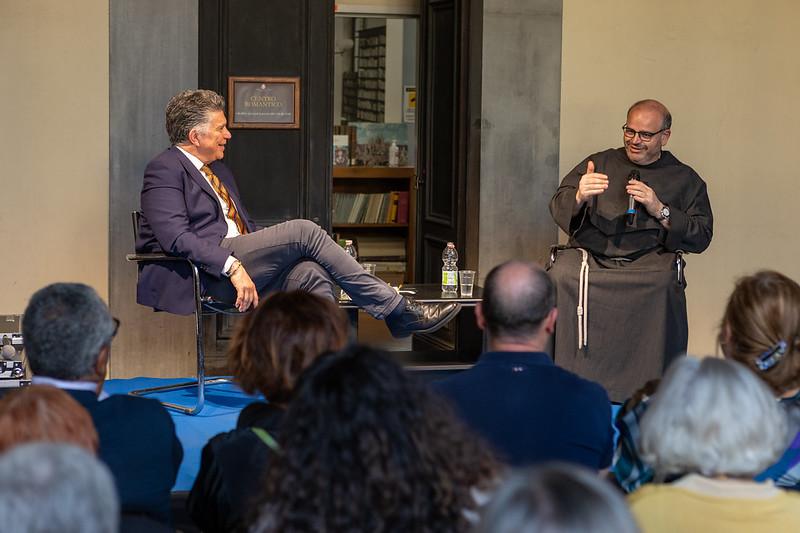
In Florence, Father Paolo Benanti opened the meeting "In Praise of Science" by arguing that AI development requires an "algorithmic ethics" that "always places the human being at the center," and he warned that AI models are "not neutral" because they select content and steer narratives. The same event said sovereign states must define clear rules so society is not left to "technological arbitrariness," while Benanti also framed AI as an educational challenge for young people and the most vulnerable.
Longevity and access
A Vatican summit scheduled for May 25 and 26 in Rome is set to address healthy aging through science, ethics, and society, with the second edition of the Vatican Longevity Summit taking place at the Pontifical Athenaeum Regina Apostolorum. The forum is promoted by the International Institute of Neurobioethics in collaboration with Brain Circle Italia and under the patronage of the Pontifical Academy for Life, and it is structured around four major thematic areas: biology of aging, neuroscience, regenerative medicine, and ethics. Organizers said the cultural question is not merely to live longer but "la qualità di living," emphasizing that it is "adding life to years" rather than simply adding years to life.
The summit also frames equitable access as a core goal, saying the secrets of longevity or healthy aging should be for everyone, and it describes the event as a space where science "does not promise simple solutions" but helps interpret a change already underway. The program’s emphasis on interdisciplinary dialogue is tied to ethics arising from the scientist’s question, with Father Carrara concluding that ethics must be guided and that an interdisciplinary dialogue is essential.

From fake news to rules
Beyond AI and longevity, Italian science communication and governance themes also returned to the need for method, evidence, and institutional responsibility in how knowledge is presented and tested. A profile of Piero Angela, who died on 13 agosto at the age of 93, described him as a founder in 1989 in Padova of the CICAP, the Comitato Italiano per il Controllo delle Affermazioni sulle Pseudoscienze, aimed at promoting "un'indagine scientifica e critica" against pseudosciences. The same account said Angela insisted that "quanto tu affermi qualcosa la devi provare," and it described his approach to disinformation as a matter of scientific method and good sense.
It also described Angela’s view that the way to counter false health claims is to create institutional portals where people can find "le informazioni vere nel campo della salute," naming the ministero della Salute and the Istituto Superiore di Sanità and the Ordine dei Medici. Separately, a historical ethics discussion referenced the Latin maxim "Fiat experimentum in corpore vili" and described it as a principle that, if experimentation is necessary, should be conducted on those considered least valuable or least consequential to society.