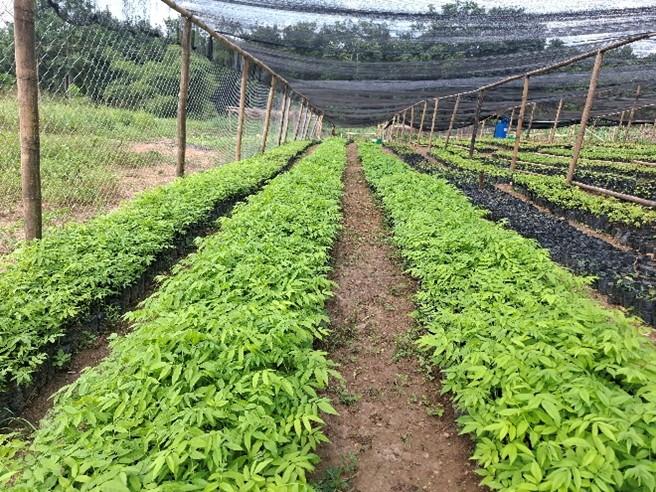
IUCN Leads Ghana’s Nature-Based Climate Adaptation, Restoring Guinean Forests With Community Nurseries
Key Takeaways
- IUCN leads Nature-based Climate Adaptation in Ghana's Guinean Forests.
- 2024 marked a significant advance in NbS implementation with national partners.
- Forests are central to the climate fight and carbon sinks.
Ghana’s restoration push
In Ghana, the year 2024 marks a significant advance in the implementation of the project "Nature-based Climate Adaptation in the Guinean Forests of West Africa" (NbS), led by IUCN in collaboration with national partners. The project has intensified capacity-building activities, community support, and monitoring of restoration activities, including tree and vegetable seedling nurseries in the Pensanom community. In partnership with the Ministry of Agriculture and CSIR-FORIG, 47 local operators were trained in the creation and sustainable management of community nurseries, enabling the production of more than 73,500 plants of indigenous and fruit tree species. To ensure monitoring, IUCN mapped over 1,300 hectares restored in the Wassa Amenfi landscapes and the Bosomtwe Lake area over a one-month period, and 30 hectares of forests were restored in the Bura and Bosomtwe reserves through the modified Taungya system.
“Skip to main content Reports, case studies and assessments Effects of air pollution on forests Published 2023 Share SHARE Copy link Download Download Article 9b ECE_EB”
Air pollution’s pressure
A report from the Coordination Centre of the International Cooperative Programme on Effects of Air Pollution on Forests (ICP Forests) says air pollution, particularly nitrogen deposition and tropospheric ozone, continues to affect forest ecosystems. The same document frames the impact as reduced growth and increased vulnerability to climate change and other stressors despite significant changes since the 1980s. It also points to ongoing monitoring efforts, scientific research, and cooperation among various countries and organizations to address these environmental challenges. The report is presented through the Climate and Clean Air Coalition (CCAC) as "Effects of air pollution on forests" and is dated as published 2023.
Digital tools and cooperation
IUCN’s Ghana work also includes training for monitoring with a digital tool, with 21 graduates trained in the use of the Regreening Africa app. The app is described as a digital tool developed by CIFOR-ICRAF to track the evolution of agroforestry plantations, buffer zones, and forest reserves. In parallel, CNN’s coverage of a Regional Ecological Summit in Astana highlights a view from Jin Seon-pil of the Asian Forest Cooperation Organization on why forests are central to the climate fight. The CNN segment ties that argument to regional cooperation, positioning forests as vital carbon sinks in the summit discussion.
“In Ghana, the year 2024 marks a significant advance in the implementation of the project 'Nature-based Climate Adaptation in the Guinean Forests of West Africa' (NbS), led by IUCN in collaboration with national partners”
More on Technology and Science

Mukesh Ambani Announces Reliance $110 Billion AI Investment in New Delhi and Jamnagar
15 sources compared

US Commerce Secretary Howard Lutnick Pressures ASML Over Possible EUV Machine in China
16 sources compared

Saudi Doctors Successfully Separate Filipino Conjoined Twins Olivia and Gianna in Riyadh
11 sources compared
FDA Advisers Recommend Approving Moderna’s mFlusiva mRNA Flu Vaccine for Older Americans
11 sources compared