Technology and Scienceupdated 28m ago3 min read
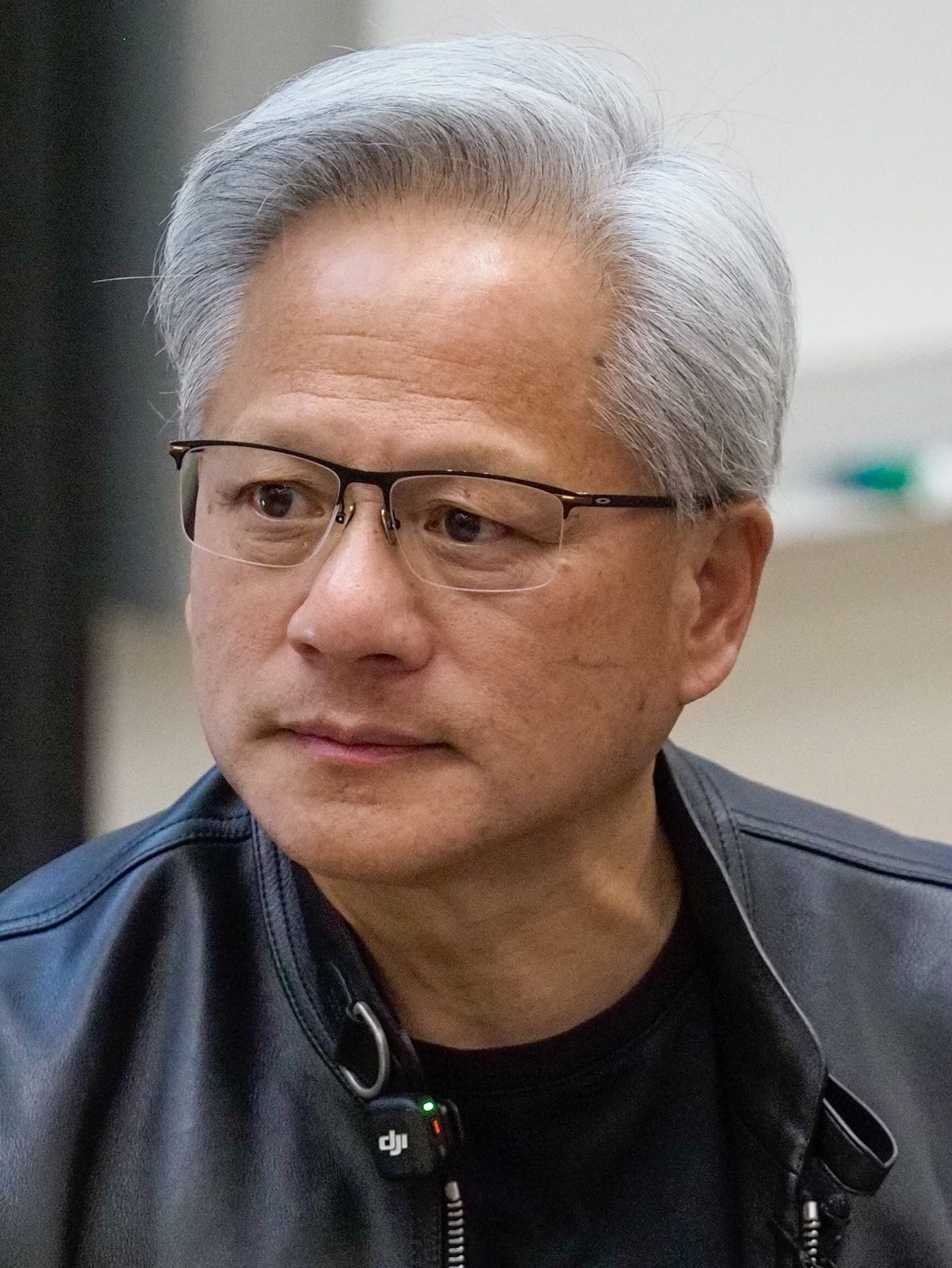
Archive photo · 30 April 2026Jensen Huang Resigns as Nvidia CEO After Board Cites Extramarital Affairs Reports
“Nothing public connects Reber’s or Zdjelar’s role changes to the Megaspeed matter”
“But last weekend, facing new revelations about the relationship, Mr. Huang finally came clean to Nvidia’s general counsel.”
Photo: Anderseidesvik, CC BY-SA 4.0 · Cropped for layout
This article is an automated aggregation of coverage from news outlets. Our editorials offer in-depth analysis curated by the NewsCord team.
Jensen Huang resigns as Nvidia CEO and steps down from president and board. Revelations of extramarital affairs, including one with a woman linked to Chinese espionage, prompted resignation.
Save coverage image
Resignation and the Megaspeed link
Jensen Huang resigned as Nvidia’s chief executive after the company’s board said he stepped down from his roles as president, chief executive officer, and board member, with immediate effect, following reports of two extramarital affairs. The New York Times reported that U.S. officials suspected a Singapore data center firm called Megaspeed had been led by a Chinese woman named Alice Huang, or Huang Le, and the Times said Huang had a close relationship with her. The BBC said Huang came under fire when he was linked to having a romantic relationship with Alice Huang, identified as a supposed Chinese spy, and the BBC reported that Beijing warned the United States not to use espionage allegations as a pretext to restrict technology sales to China once again.
The New York Times described how Huang, in September 2025, wanted to know what The New York Times was insinuating after the paper called Nvidia about Megaspeed, and it said Huang finally came clean to Nvidia’s general counsel about having an affair with the woman. The TechCrunch report said David Reber stepped down as Nvidia’s longtime chief security officer and head of product security in August, and it said Reber wrote on LinkedIn that he was leaving for health reasons after being diagnosed with young-onset Parkinson’s more than two years ago.
Congress, FBI, and security questions
Howard Lutnick agreed to appear before the Senate Banking Committee regarding the Nvidia scandal, and the Infobae report said he would have to respond to questions about national security concerns related to Nvidia’s advanced chip exports to China. Kristen Eichamer, the spokesperson, said, "Secretary Lutnick has proactively agreed to voluntarily appear before the Banking Committee to answer its questions," and the chair of the Senate Banking Committee, Tim Scott, asked Lutnick and Huang to testify voluntarily on December 10 and December 3, respectively. Nvidia is already investigating the relationship that Huang acknowledged, and the FBI is also conducting its own inquiries.
TechCrunch quoted retired senior intelligence officer Nicholas Eftimiades saying, "Too many companies still approach security primarily as a matter of protecting facilities," and it said Eftimiades argued that security teams need to pay greater attention to insider threats. TechCrunch also said it was unclear whether any of the reported knowledge about Huang’s relationships reached security, and it quoted Eftimiades warning that security teams are often underfunded and that CEOs sometimes answer warnings with "not a nickel more than compliance," he said.
Interim leadership and export scrutiny
Nvidia’s board confirmed that Colette Kress, the company’s chief financial officer, would serve as interim CEO while the board evaluated internal and external candidates for a permanent replacement, according to AFP via Grupo Animal and also via ITSitio.
Huang, who the article said had led the group for more than 30 years, stepped down from his roles as president, chief executive officer, and board member, with immediate effect, and the board would evaluate internal and external candidates for a permanent replacement.
Nvidia launched an independent investigation on November 8 to determine whether Huang had been the target of a foreign intelligence operation, and the company stated at that time there was no reason to believe corporate secrets or information related to national security had been compromised.
The summons came amid bipartisan pressure for the Trump administration to clarify what it knew about alleged ties of Jensen Huang with a supposed Chinese spy, and lawmakers sought to determine whether those relationships could have compromised the security of U.S. technology exports.
U.S. President Donald Trump authorized the sale to China of Nvidia H200 chips at the end of 2025 in exchange for the state receiving 25% of the revenue derived from those operations, and Beijing accused the United States of using the espionage accusation to justify restrictions on Chinese access to Nvidia’s most advanced chips.