
Jerusalem Governorate Says Settlers Made Eight Passover Attempts to Bring Animal Sacrifices to Al-Aqsa
Key Takeaways
- Jerusalem Governorate reports eight attempts; other outlets cite seven.
- Two attempts reportedly brought sacrifices to the Old City.
- Authorities describe the incidents as dangerous escalation and incitement by extremist Temple Mount groups.
Passover Sacrifice Attempts
Jerusalem Governorate officials say the Al-Aqsa Mosque has faced a record number of Passover-season attempts to introduce animal sacrifices into the compound, with the highest tally “since 1967.”
“An Israeli extremist campaign calls for practicing animal sacrifice rituals to celebrate the Jewish Passover inside the Al-Aqsa Mosque, defying the status quo in force since 1967 at this holy site”
WAFA reported that “seven documented attempts” were recorded this year during Jewish Passover, and said settlers in “two separate attempts” managed to introduce the sacrifice into “the Old City of occupied Jerusalem.”

The Jerusalem Governorate framed the efforts as “an escalation aimed at imposing new colonial religious rituals during the Jewish Passover,” while insisting that “the Al-Aqsa Mosque remains closed by the Israeli occupation for 37 consecutive days.”
In a separate WAFA report dated May 1, 2026, the Governorate said the number of attempts had risen to “eight documented attempts since the beginning of the year during the ‘First and Second Passover’ periods,” again calling it “the highest number recorded since 1967.”
WAFA also said settlers succeeded “on three occasions” in reaching “the vicinity of the mosque with sacrificial offerings before being prevented from completing their attempts.”
The Palestine Information Center similarly described “seven attempts” during Passover and said the occupation had continued to close Al-Aqsa “for the 38th day in a row,” under a “pretext of a state of emergency and security conditions.”
Across the reports, the Governorate and related Jerusalem-based bodies tied the attempts to efforts to “Judaize the Al-Aqsa Mosque” and to “designating it as the site of the so-called Temple” through sacrifice rituals.
How the Attempts Were Stopped
Multiple reports describe how Al-Aqsa guards and police barriers disrupted attempts tied to Passover.
WAFA said the Governorate had warned against “attempts by groups of settlers to introduce animals for sacrifice in the Old City,” describing them as “acts an escalation aimed at imposing new colonial religious rituals.”

In Mena FN’s account, the Al-Aqsa Mosque guards “thwart an attempt by extremist settlers to raid it with offerings,” with the Jerusalem Governorate saying a group tried to storm through “the Hatā Gate” carrying “a live offering.”
Mena FN reported that the extremists “managed to pass the first iron barrier placed by the police at the entrance to the Hatā Gate corridor,” before “the Al-Aqsa guards promptly closed the door and prevented them from entering the mosque.”
The same Mena FN report explained that the “offering refers to an animal sacrifice,” and said Temple groups sought to “bring it in and slaughter it inside the courtyards of the Al-Aqsa.”
WAFA’s May 1 update described a new attempted incursion “through Bab Hutta,” where settlers attempted to bring “a live sacrificial animal into Al-Aqsa Mosque on the occasion of the so-called ‘Second Passover.’”
WAFA said they “managed to cross the first iron barrier placed by the occupation police at the entrance of the corridor,” but that “Al-Aqsa Mosque guards immediately intervened, closed the gate, and prevented their entry.”
Voices, Mobilization, and Claims
The reports also include direct calls for mobilization and competing characterizations of the events.
The Islamic Resistance Movement (Hamas) called for “general mobilization and mass demonstrations in various squares” in support of “Al-Aqsa Mosque” and in solidarity with “Palestinian prisoners,” and it linked the escalation to “ongoing aggression and serious violations and the arbitrary closure of the mosque.”
In the same account, Hamas said “the escalation of occupation crimes against prisoners” and “the latest being the approval of a death penalty law” constitutes “a systematic crime and a dangerous escalation,” and it urged “the Palestinian people and the Arab and Islamic nations and free peoples of the world to take broad action in marches of anger and solidarity during Friday, Saturday, and Sunday (April 3, 4, 5).”
The Jerusalem Governorate’s messaging repeatedly emphasized that the mosque’s closure was being used to intensify pressure, with WAFA saying the closure was “for 37 consecutive days” and that Israeli authorities were “citing a 'state of emergency' and security reasons.”
WAFA also said the Governorate warned that Temple groups were exploiting the prolonged closure to run “intensive propaganda campaigns” using “AI-generated images and videos to mobilize their extremist audience.”
In a separate Jerusalem-focused report, the Palestine Media Agency described an Israeli extremist campaign calling for “practicing animal sacrifice rituals to celebrate the Jewish Passover inside the Al-Aqsa Mosque,” and it cited the Temple Movement’s use of an “AI-generated video” by Elkana Wolfson linked to the “Temple Mount yeshiva.”
L’Humanité quoted Marouf Alrefai, adviser to the governor of East Jerusalem, describing restrictions since 2018 and saying: “For twenty years now, personally, I have not been able to go to pray...”.
Competing Narratives and Media Framing
While the Jerusalem Governorate and allied outlets describe the Passover sacrifice efforts as “dangerous escalation” and “Judaization” attempts, other reporting focuses on how language and framing shape public understanding.
Association France Palestine Solidarité criticized BBC coverage of Al-Aqsa violence, arguing that the broadcaster’s framing “chooses the side of the oppressor” and that it used “language and terminology that misleads its audience.”

The group pointed to a BBC headline described as “Clashes erupt at a contested holy site,” and it argued that the six-word sentence “manages to insert three supposedly neutral terms” and that “Describing Al‑Aqsa as a contested holy site repeats an Israeli propaganda argument.”
The same critique said the BBC’s framing implies “a violent encounter between two sides,” with Palestinians described as “agitators,” and it argued that “unarmed Palestinians praying can be beaten.”
WAFA and other Jerusalem-based outlets emphasize the closure and the “state of emergency” rationale, saying Israeli authorities maintain the closure “for the 37th consecutive day” and that they are “exploiting the pretext of the 'state of emergency' and security conditions to strengthen their control over the Al-Aqsa Mosque.”
The Palestine Information Center likewise described “intensive promotional campaigns” using “AI-generated images and clips,” and said the occupation continued to close Al-Aqsa “for the 38th day in a row.”
The sources diverge on the count of attempts, with WAFA citing “seven documented attempts” and other WAFA text citing “eight documented attempts,” while the Palestine Information Center described “seven attempts” and said the closure had reached “38th day.”
Upcoming Dates and Risks
The sources lay out specific upcoming dates that Jerusalem Governorate-linked reporting says could bring further escalation.
WAFA warned that Temple groups were exploiting the closure to run “intensive propaganda campaigns” and called for “urgent action at local and international levels” to end the attempts and lift the closure.
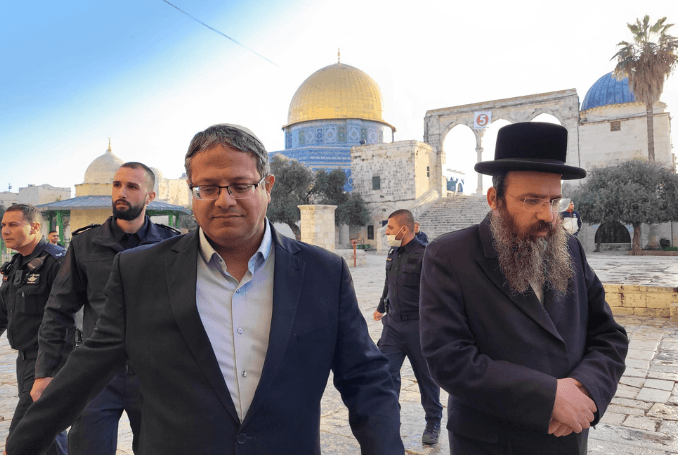
In the Palestinian Press Agency report, the Jerusalem Governorate warned of “two highly dangerous occasions in the coming period,” naming “Friday May 15, 2026” as coinciding with “Jerusalem Day.”
The same report named “On Friday May 22, 2026,” coinciding with “the 'Feast of Weeks' in the Torah,” and said there would be an “anticipated pre-emptive raid on Thursday May 21.”
WAFA’s May 1 update similarly warned of “two highly dangerous upcoming occasions,” listing “Friday, 15/5/2026” and “Friday, 22/5/2026,” and it said the second would be preceded by an expected “compensatory incursion” on “Thursday, 21/5.”
The Jerusalem Governorate also called for “sustained presence and mobilization (Ribat) at Al-Aqsa Mosque,” describing it as “the first line of defense.”
The Shabab News report adds a broader mobilization timetable, quoting Hamas’s call for “Friday, Saturday, and Sunday (April 3, 4, 5),” and it frames the escalation as a threat to “ignite tensions in the holy city.”
More on Gaza Genocide

Israel Detains Jerusalem Grand Mufti Sheikh Muhammad Hussein, Bans Him From Al-Aqsa for One Week
15 sources compared
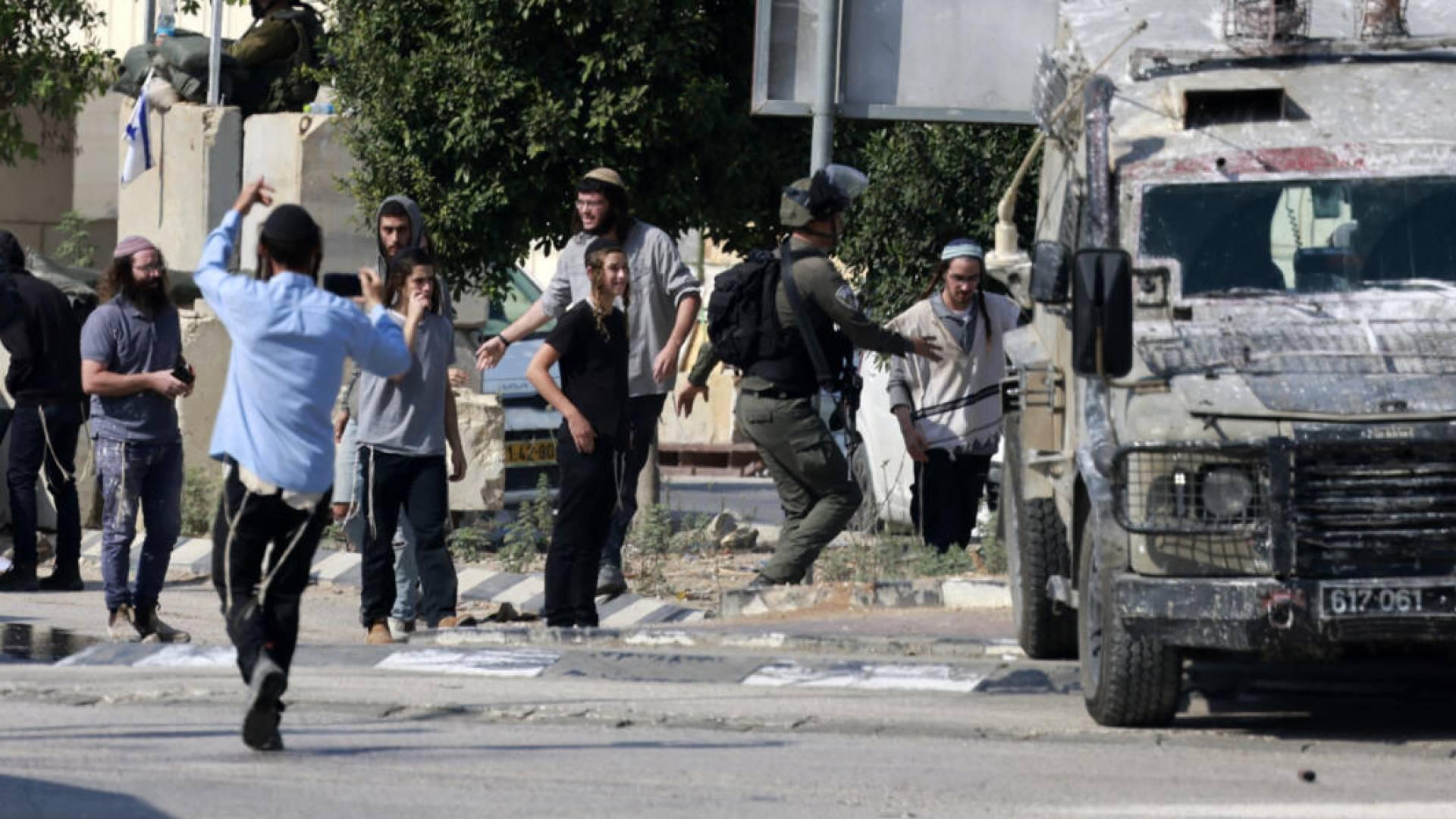
Israeli Security Forces Kill Four Bani Odeh Family Members Near Tubas in West Bank
14 sources compared
Haley Stevens And Abdul El-Sayed Clash In Michigan Senate Debate Over Israel And Gaza Policy
12 sources compared
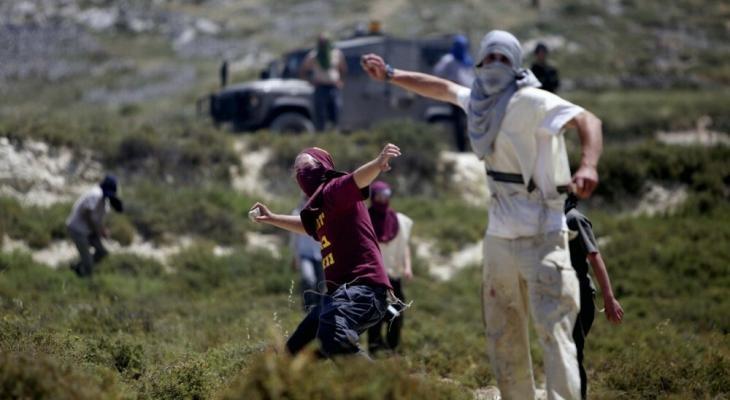
Settlers Attack Hawara, Injuring 13 Palestinians South of Nablus
13 sources compared