
John F. Kennedy Launches U.S. Moon Race, Calls for Satellites and Apollo Funding
Key Takeaways
- May 25, 1961, Kennedy officially launched the Moon race in a Congressional speech.
- The launch followed Yuri Gagarin's orbital flight and Alan Shepard's suborbital flight.
- Coverage frames the speech as pivotal to U.S. Moon program victory.
JFK and the Moon
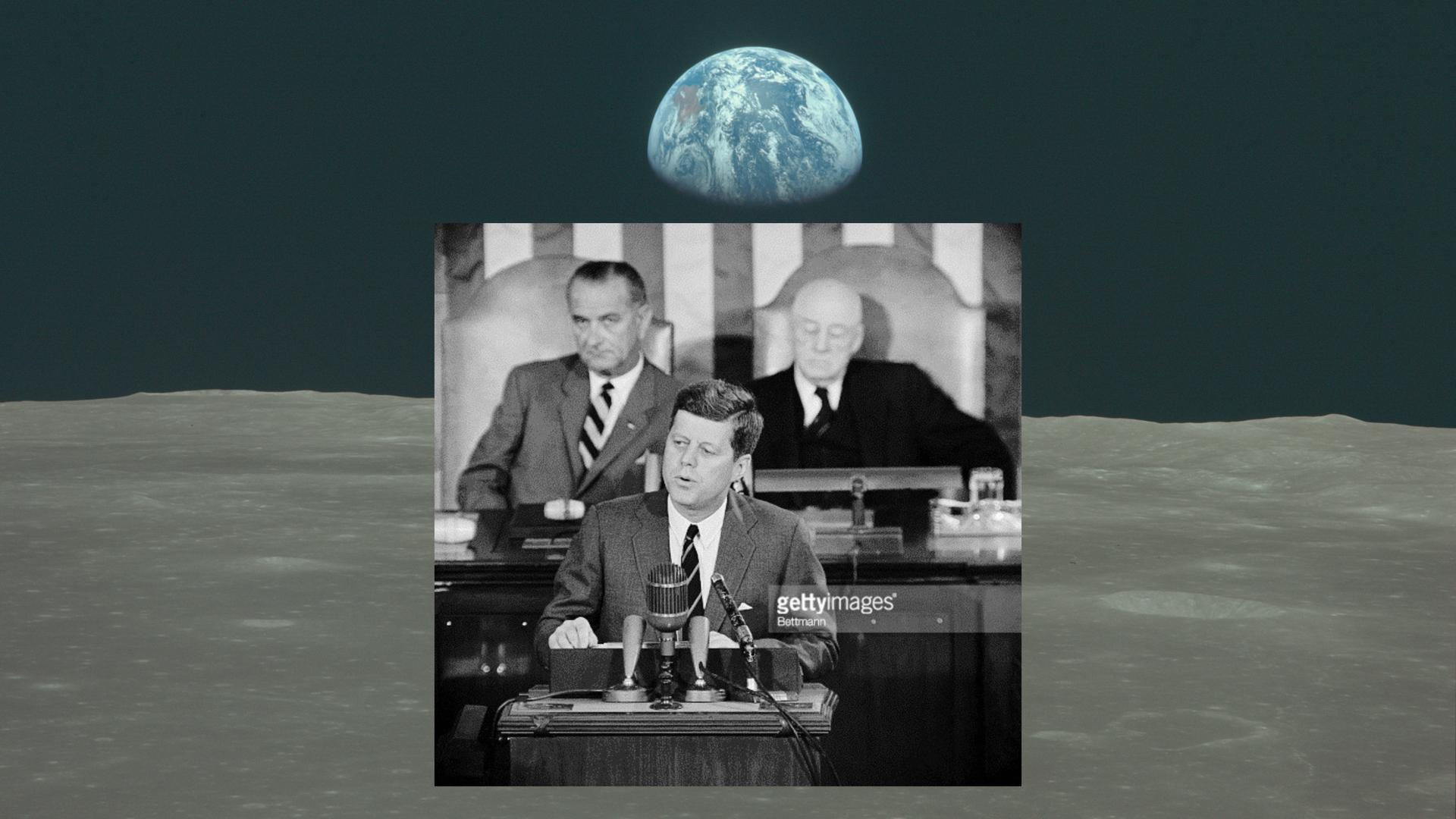
In the United States, President John F. Kennedy officially launched the race to the Moon on May 25, 1961 during a speech before the U.S. Congress.
“- 50 citations pour commencer l'année du bon pied Et si on s'inspirait d'une citation positive pour bien démarrer cette année”
Futura says that on September 12, 1962 Kennedy delivered a speech at Rice University in Houston that called for unlocking funds to send “a man to the Moon and return him safely to Earth.”

Futura reports that at Rice University Kennedy stood before an audience of about 40,000 people and said, “We choose to go to the Moon.”
The same source adds that Kennedy also requested funding for the development of telecommunications satellites and for a network of Earth-observation satellites dedicated to terrestrial meteorology.
Futura notes that Kennedy was assassinated on November 22, 1963, in Dallas, after setting the goal for the Apollo program.
A communications lesson
On February 23, 2012, Christophe Lachnitt at Superception described “John F. Kennedy's Communication Lesson” through the relationship between JFK and Theodore Sorensen.
Superception says that in that relationship “a communications director must indeed play a role that goes far beyond the definition and implementation of the communications policy.”
Lachnitt writes that the head of communications must coach the leader on “the perception that his personality, his actions and his words generate among his internal and external audiences.”
Superception also frames the job as providing ideas, stating that “the head of communications must also play the role of an idea provider to his boss.”
The post concludes by describing Superception as a media outlet devoted to perception issues through communication, management, and marketing in the context of artificial intelligence, created and published by Christophe Lachnitt.
Ask what you can do
The Times of India presents John F. Kennedy’s 1961 inaugural address line as a “Quote of the day,” stating, “My fellow Americans, ask not what your country can do for you—ask what you can do for your country.”
“One week after Tatiana Schlossberg's death, her brother Jack breaks his silence and pays tribute to her”
It says the line turned citizenship from something received into something owed and became “the single most repeated line of his presidency.”
The Times of India adds that Kennedy delivered it at the height of the Cold War, addressing a generation described as tempered by war and disciplined by a hard, uncertain peace.
The Times of India connects the quote to action by saying Kennedy established the Peace Corps by executive order within two months of the inauguration.
It reports that the Peace Corps invited young Americans to serve abroad in education, agriculture and public health, and that “The Peace Corps still operates today, more than sixty years later.”
More on USA

Analyses Link Donald Trump’s Greenland Push to U.S. Expansionism From the Monroe Doctrine
11 sources compared

Aspen Acres Fire Forces Evacuations Near Denver, Destroys 160 Structures in Colorado
11 sources compared

Trump Uses July 4 250th Birthday for Political Rallies in Washington
14 sources compared

New York Harbor Welcomes More Than 40 Tall Ships for Sail4th 250 Anniversary Parade
13 sources compared