Joseph Aoun Says Lebanon Seeks Permanent Agreements After Israel-Hezbollah Ceasefire
Key Takeaways
- Lebanon seeks permanent agreements with Israel after the US-brokered ceasefire.
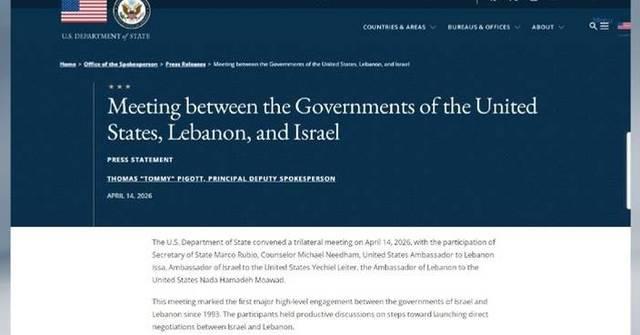
- Direct talks in Washington mark first high-level Lebanon-Israel talks since 1993.
- Aoun says Lebanon will not be a pawn or arena, pursuing permanent terms.
Ceasefire turns to talks
Lebanese President Joseph Aoun said on Friday that Lebanon is on the verge of a “new phase” of “permanent agreements” after the ceasefire in the Israel-Hezbollah war went into force.
In his first speech to the nation since the truce, Aoun said, “Now, we all stand before a new phase,” and described it as “the phase of transition from working on a ceasefire to working on permanent agreements that preserve the rights of our people, the unity of our land, and the sovereignty of our nation.”

Aoun framed the shift as a move away from Lebanon being used by others, saying, “Lebanon is no longer an ‘arena’ for anyone’s wars,” and that “today, we negotiate for ourselves… we are no longer a pawn in anyone’s game, nor an arena for anyone’s wars, and we never will be again.”
He also emphasized that direct talks with Israel were “not a sign of weakness nor a concession,” adding that “negotiations do not mean, and will never mean, giving up any right, conceding any principle, or compromising the sovereignty of this nation.”
Aoun said the ceasefire was “the outcome of everyone’s efforts,” and he told the public, “Between suicide and prosperity, my people and I choose prosperity against suicide.”
In the same address, he laid out Lebanon’s goals as “to stop the Israeli aggression against our land and our people, to achieve Israeli withdrawal, to extend the authority of the state over all its territory by its own forces exclusively, and to ensure the return of the prisoners and the return of our people to their homes and villages.”
What led to the truce
The ceasefire that Aoun referenced came after a period of fighting between Israel and Hezbollah that began on March 2, when Hezbollah attacked Israel to avenge the death of Iranian supreme leader Ali Khamenei and Israel responded with strikes and a ground offensive.
The Times of Israel said the televised address was Aoun’s first since the US brokered a ceasefire to end six weeks of fighting between Israel and the Hezbollah terror group, with the truce going into force overnight after a 10-day ceasefire.

Al Jazeera reported that the ceasefire brought “respite from Israeli attacks that began on March 2,” and said those attacks and Hezbollah rocket fire had left “more than 2,200 dead and more than a million displaced.”
The New Arab described the truce as a “ten-day ceasefire deal” that took effect on Friday, with Trump saying it would begin at midnight local time in Lebanon and Israel (2100 GMT), and it said the announcement came days after Lebanese and Israeli ambassadors to Washington met at the US State Department to agree to begin direct negotiations.
In that account, Trump said the leaders agreed “in order to achieve PEACE between their Countries” they would “formally begin a 10 Day CEASEFIRE at 5 P.M. EST,” or 2100 GMT, and Trump also said he expected Netanyahu and Aoun to visit the White House “over the next four or five days.”
The New Arab also said the ceasefire text released by the US State Department provided that “All parties recognise Lebanon's security forces as having exclusive responsibility for Lebanon's sovereignty and national defence,” and that Israel agreed not to carry out any offensive military operations in Lebanon during the ten days.
Aoun’s message and Hezbollah’s pushback
Aoun’s televised remarks combined a call for direct negotiations with a warning that Lebanon would not accept terms that compromise sovereignty.
In the speech, he said, “I hereby affirm... that there will be no agreement that infringes upon our national rights, diminishes the dignity of our steadfast people, or relinquishes an iota of this nation’s soil,” and he added that direct talks with Israel were “not a sign of weakness nor a concession.”
He also told the public, “To those gambling with the fate of Lebanon and the lives of the Lebanese, I say enough! Only a state-building project in Lebanon is the strongest, most enduring, and most secure option for everyone,” which the Naharnet account said was apparently addressing Hezbollah.
The Times of Israel reported that Aoun’s address came after Beirut took “unprecedented decisions against Hezbollah,” including a commitment to disarm the group in August after a November 2024 ceasefire and a ban on the group’s military activities after the start of the most recent war last month.
The Times of Israel also said Hezbollah opposes direct talks with Israel, and that its lawmakers criticized the government for agreeing to hold such negotiations.
The Jerusalem Post similarly reported that Hezbollah has said it opposes direct talks with Israel and that its lawmakers on Friday criticized the government for agreeing to hold such negotiations.
Different outlets, different emphases
While all the accounts describe Aoun’s push for “permanent agreements,” they differ in how they frame the ceasefire’s timing, the scale of the war, and the immediate political implications.
The Times of Israel said the truce was a “10-day ceasefire” that went into force overnight after the US brokered a ceasefire to end “six weeks of fighting,” and it placed Aoun’s speech as his first since that truce.

Al Jazeera also described a “10-day ceasefire” and said it came “a day after a 10-day ceasefire was announced between Lebanon and Israel,” adding that it brought respite from attacks that began on March 2 and left “more than 2,200 dead and more than a million displaced.”
The New Arab, meanwhile, described the ceasefire as beginning at midnight local time in Lebanon and Israel (2100 GMT) and said Trump stated the ceasefire would start at “5 P.M. EST,” or 2100 GMT, on his Truth Social platform.
In terms of the political narrative, The Times of Israel emphasized Beirut’s “unprecedented decisions against Hezbollah,” including disarmament commitments and bans on military activities, while Al Jazeera focused on Aoun’s insistence that Lebanon would no longer be “a pawn in anyone’s game” and that the ceasefire should lead to work on permanent agreements.
The Jerusalem Post highlighted that the deal’s text says Israel and Lebanon would hold direct talks to produce “peace between the two countries,” and it reported that Aoun did not specify whether he meant a prospective peace deal with Israel.
What’s at stake next
The sources portray the next phase as hinging on whether negotiations can translate the ceasefire into durable arrangements while managing ongoing military realities on the ground.
Aoun said the transition is meant to “preserve the rights of our people, the unity of our land, and the sovereignty of our nation,” and he insisted, “I hereby affirm... that there will be no agreement that infringes upon our national rights.”

He also set out immediate priorities that include “to achieve Israeli withdrawal” and “to ensure the return of the prisoners and the return of our people to their homes and villages,” while also saying Lebanon would extend state authority “by its own forces exclusively.”
At the same time, The Jerusalem Post reported that Israel’s defense minister said Israeli troops would continue demolishing homes in southern Lebanon that were being used by Hezbollah, and The New Arab reported that Israel maintained a “10-kilometre (6.2-mile)” security zone along the border in southern Lebanon.
The New Arab also said Netanyahu insisted that disarmament of Hezbollah remained a precondition for a “historic peace agreement,” and it reported that Netanyahu rejected Hezbollah’s conditions including full withdrawal from Lebanese territory and a ceasefire based on “quiet in return for quiet.”
Kurdistan24 described Aoun saying direct negotiations with Israel have reached a “sensitive and decisive stage” and emphasizing national unity, with a strategy focused on “establishing a permanent ceasefire” and “ensuring the withdrawal of Israeli forces from occupied southern territories.”
More on Lebanon

Naim Qassem Says Hezbollah Truce With Israel Must Be Two-Sided, Vows Response To Attacks
16 sources compared

Macron Blames Hezbollah for Killing French UNIFIL Peacekeeper in Southern Lebanon
16 sources compared
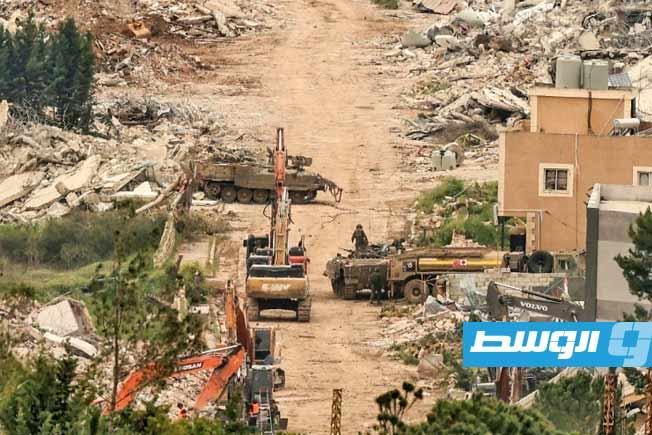
Israel Attacks Lebanon After Ceasefire, Leaving Nabatieh Residents Returning to Destroyed Homes
35 sources compared
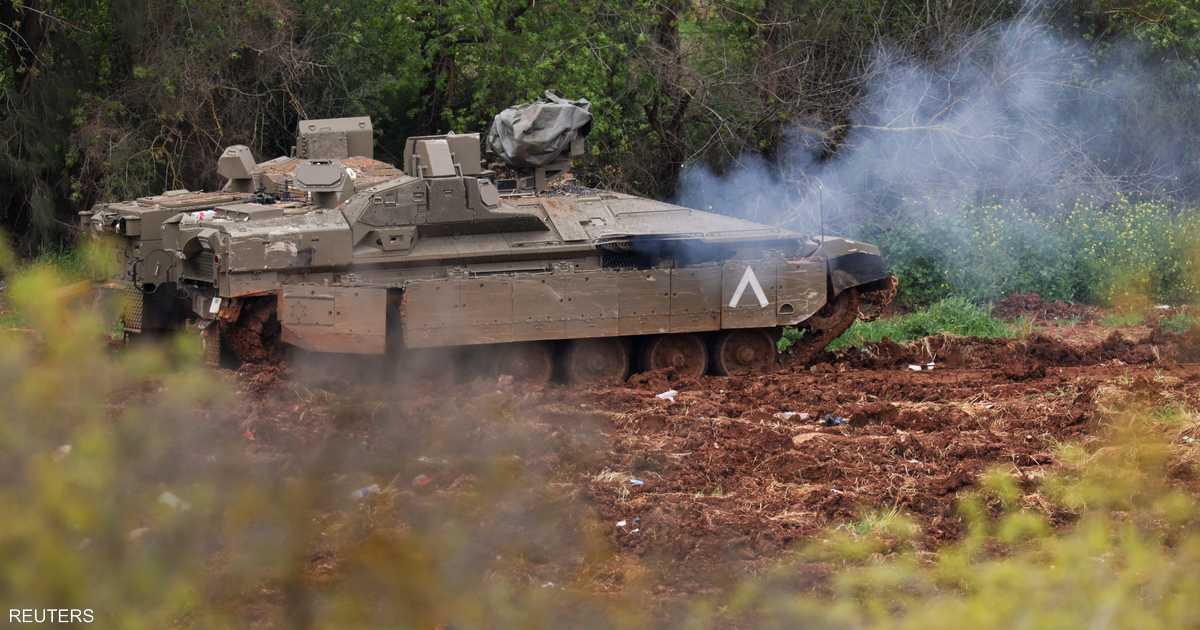
Lebanese Return to South Lebanon After Israel-Lebanon 10-Day Ceasefire Takes Hold
27 sources compared