Lebanon18 April, 20267 min read
Lebanese Return to South Lebanon After Israel-Lebanon 10-Day Ceasefire Takes Hold
This article is an automated aggregation of coverage from news outlets. Our editorials offer in-depth analysis curated by the NewsCord team.
A 10-day ceasefire between Lebanon and Israel took effect and held. Thousands of displaced Lebanese returned to southern Lebanon as the ceasefire took hold.
PressTV was read line by line by the Watchdog: 1.1. See the score →
Ceasefire and return
Lebanese families began returning to southern Lebanon after Lebanon and Israel agreed to a 10-day truce, even as Lebanon’s army urged residents to delay their return and Hezbollah warned it has its “finger on the trigger” if Israel violates the agreement. Al Jazeera reported that “Tens of thousands of people poured into areas of southern Lebanon on Friday morning hours after the truce went into effect,” with many heading back to homes and villages battered by more than a month of Israeli attacks. The BBC said the ceasefire took effect from 17:00 EST (21:00 GMT; midnight local time) on 16 April, and described it as a 10-day deal.
Reuters reported that the ceasefire was “mostly holds” as Lebanese return to “unliveable” areas, while the Washington Post described families packing into cars with mattresses lashed to rooftops as they streamed into southern Lebanon in the first hours of a tentative ceasefire early Friday. In the first day, Reuters and CBC reported an Israeli drone strike killed one person in southern Lebanon on Friday, “the first full day of a U.S.-brokered truce meant to end hostilities between Israel and the militant group Hezbollah.”

The New York Times said the Israel-Lebanon truce appeared to hold on its first day as thousands of families displaced by weeks of fighting filled the main highway to southern Lebanon on Friday. Across the return routes, the New York Times reported that UN peacekeeping force in Lebanon said Israeli airstrikes had stopped in the south and that “no projectiles had been fired into Israel from Lebanese territory.”
Timeline and escalation
The ceasefire arrived after weeks of fighting that Lebanese and Israeli authorities described in stark terms, with Al Jazeera saying Israeli air strikes and a ground invasion of parts of southern Lebanon have killed more than 2,100 people and displaced some 1.2 million in the latest round of fighting. CBC and the Washington Post also tied the return rush to “six weeks of Israeli bombardment” that had killed more than 2,100 people across the country. The BBC framed the truce as a 10-day pause intended to enable negotiations, noting that Trump announced the 10-day ceasefire agreement on Thursday and that it took effect at midnight local time.
The Guardian described how the war in Iran spilled over into Lebanon when Hezbollah launched missile attacks on 2 March against Israel in solidarity with Tehran, triggering a ferocious Israeli response including a ground invasion into southern Lebanon. The Guardian also said Israel declared its intention to occupy southern Lebanon up to the Litani River, about 18 miles from its border, and continued to fight Hezbollah there in recent days. Reuters and CBC reported that the Lebanese army accused Israel of several early violations on Friday, including intermittent shelling of southern Lebanese villages, even as the ceasefire largely appeared to hold.

The New York Times added that UNIFIL said Israeli airstrikes had stopped in the south but that peacekeepers continued to observe airspace violations and reports of mortar and artillery shelling in some areas in southern Lebanon. In the background of the ceasefire, the BBC said the terms specify that the ceasefire lasts for 10 days with the possibility of being “extended by mutual agreement” if negotiations show signs of progress.
Voices on both sides
As displaced families returned, leaders and armed groups issued competing messages about compliance and what comes next.
“Not until a proper ceasefire, a real one. Not until Israeli withdrawal.”
Al Jazeera reported that Hezbollah said its fighters “will keep their finger on the trigger because they are wary of the enemy’s treachery,” while the Lebanese army called on residents to delay their return.
The BBC quoted senior Hezbollah leader Wafiq Safa saying, “Not until a proper ceasefire, a real one. Not until Israeli withdrawal.”
In Washington, President Donald Trump posted that “Israel will not be bombing Lebanon any longer. They are PROHIBITED from doing so by the U.S.A. Enough is enough!!!” and CBC reported the timing of the drone strike came minutes after Trump’s social media warning.
The New York Times said Hezbollah politicians affirmed a “cautious commitment” to the 10-day cease-fire while also criticizing the Lebanese government, and it quoted the bloc accusing Lebanon’s leadership of pushing the country “into a new and extremely dangerous phase” by submitting to what it called U.S. and Israeli “dictates.”
Lebanese President Joseph Aoun sought unity, with the New York Times quoting him: “What has been achieved in halting the gunfire was the culmination of everyone’s efforts,” and Al Jazeera reported Aoun said direct negotiations with Israel would be “crucial” and that the government hoped to secure Israel’s withdrawal from southern Lebanon, recover prisoners and resolve bolder disputes.
Reuters and CBC both described Israel’s stance that the ceasefire does not end its campaign against Hezbollah, with Al Jazeera reporting Israeli Defence Minister Israel Katz said the group’s fighters would have to be disarmed one way or another.
In the same reporting stream, Al Jazeera said Katz warned that if fighting resumed, Lebanese returning to the south would have to flee yet again.
How outlets frame the same truce
Different outlets emphasized different aspects of the same ceasefire, from compliance to the political meaning of the pause. The BBC’s explainer focused on what the agreement says, reporting that “The terms of the deal specify that the ceasefire will last for 10 days” and that Israel retains its “right to take all necessary measures in self-defence, at any time, against planned, imminent, or ongoing attacks.” The Guardian, by contrast, foregrounded the linkage to U.S.-Iran diplomacy, describing the ceasefire as hoped to bring progress toward a parallel peace agreement between the US and Iran and saying Trump announced it after “excellent conversations” with Lebanon’s president Joseph Aoun and Israeli prime minister Benjamin Netanyahu.
Reuters and CBC both reported early violations and a first-day strike, but Reuters’ framing centered on return to “unliveable” areas while CBC stressed the drone strike and Trump’s claim that the U.S. had banned Israel from further bombing. The New York Times combined the on-the-ground return with diplomatic context, saying the truce could remove an obstacle in U.S.-Iran peace talks and quoting UN peacekeeping force statements that Israeli airstrikes had stopped in the south. Al Jazeera’s coverage leaned into the tension between return and warnings, describing Lebanese army accusations of early violations and Hezbollah’s “finger on the trigger” posture, while also reporting that “Tens of thousands of people poured into areas of southern Lebanon” after the truce took hold.
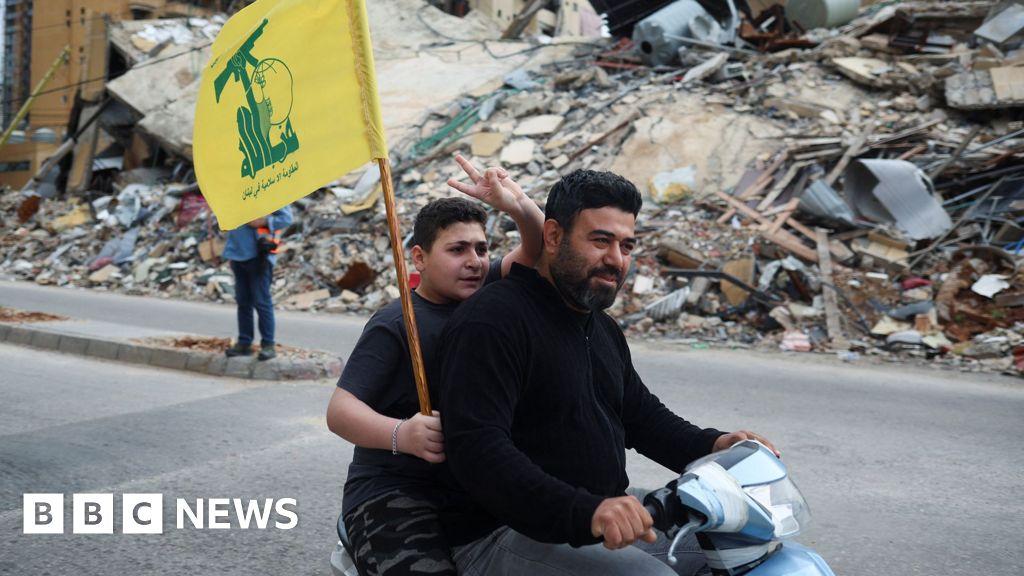
The Washington Post described the human rush home—families with mattresses lashed to rooftops and many waving Hezbollah flags—while also noting relief at the prospect of quiet as aid groups mobilized. Even within the same day’s reporting, the BBC and CBC differed in how they presented the ceasefire’s start time details, with the BBC specifying 17:00 EST (21:00 GMT; midnight local time) on 16 April and CBC describing the ceasefire as the “first full day” of the U.S.-brokered truce.
What comes next
The sources portray the truce as a short window with unresolved questions about withdrawal, disarmament, and the safety of returning residents.
The BBC said the terms require Lebanon to take “meaningful steps” to prevent Hezbollah and all other “rogue non-state armed groups” from carrying out attacks against Israeli targets, while Israel and Lebanon requested that the U.S. continues to facilitate further direct talks with the objective of “resolving all remaining issues.”

The Guardian reported that the Israeli occupation is likely to be the subject of talks that Trump said would take place in Washington next Tuesday between Aoun and Netanyahu, described as the first Israeli-Lebanese summit in decades.
The New York Times said Israeli forces continue to occupy southern Lebanon and have warned residents not to return there, and it reported that the Lebanese government is expected to take “meaningful steps” to prevent Hezbollah from attacking Israeli targets, according to a U.S. State Department memo.
In parallel, Al Jazeera said Israel’s Defence Minister Israel Katz warned that if fighting resumed, Lebanese returning to the south would have to flee yet again, and it reported that Katz said the group’s fighters would have to be disarmed one way or another.
Hezbollah’s own posture, as reported by Al Jazeera and the BBC, kept the threat of renewed violence alive, with Hezbollah saying it “will keep their finger on the trigger” and Wafiq Safa telling the BBC “Not until a proper ceasefire, a real one. Not until Israeli withdrawal.”
The BBC also highlighted that the ceasefire’s linkage to U.S.-Iran negotiations could ease one of the main points of tension, and it said the Strait of Hormuz was declared “completely open” in line with the Lebanon ceasefire.
NPR reported that while the Strait of Hormuz opened for commercial ships, “the U.S. naval blockade remained in enforced on Iran,” and Trump wrote that “THE NAVAL BLOCKADE WILL REMAIN IN FULL FORCE AND EFFECT AS IT PERTAINS TO IRAN, ONLY.”