
Khartoum Rejects Massad Boulos Ceasefire Plan, Demands RSF Withdrawal From Captured Cities
Key Takeaways
- U.S. plan envisions a 90-day humanitarian ceasefire and post-conflict political process.
- Sudanese government conditions acceptance on complete RSF withdrawal from all occupied cities.
- Some outlets report rejection or broad criticism of the plan, while others note conditional acceptance.
Khartoum rejects Washington roadmap
Five days after Washington presented a plan for a ceasefire to the UN Security Council, Khartoum rejected the roadmap in five steps proposed by Massad Boulos, adviser to Donald Trump for Africa and the Middle East.
“Cinq jours après la présentation du plan américain devant le Conseil de sécurité de l’ONU, Khartoum a rejeté la feuille de route en cinq étapes proposée par Massad Boulos, conseiller de Donald Trump pour l’Afrique et le Moyen-Orient, jugeant qu’elle ne tient pas compte des intérêts supérieurs du pays”
In a communiqué from the Sudanese Ministry of Foreign Affairs, Khartoum said: «Toute proposition qui ne prendrait pas en compte les intérêts supérieurs du pays ne sera pas approuvée par le gouvernement et ne sera pas mise en œuvre.»

The plan presented by Massad Boulos on 19 February before the Security Council laid out five steps: an immediate humanitarian truce, UN supervision of aid, a permanent ceasefire negotiated in phases, a transition to a civilian government, and finally elections.
The Sudanese government said the mediation of the Quartet—composed of the United States, Saudi Arabia, the United Arab Emirates, and Egypt—would harm Sudan’s sovereignty and favor the Rapid Support Forces, and it accused Abu Dhabi of delivering weapons and drones to the paramilitaries.
The rejection came as Sudan’s war, which began in April 2023 between the army of General Abdel Fattah al-Burhan and the Rapid Support Forces of General Mohamed Hamdane Daglo, called Hemedti, has killed more than 40 000 people according to UN figures and forced more than 14 million people to flee their homes.
Withdrawal is the sticking point
The Sudanese army linked its acceptance of a U.S. peace proposal to the full withdrawal of the Rapid Support Forces from occupied cities, with Reuters reporting that the documents show a 90-day humanitarian truce and a UN-led mechanism to support limited RSF withdrawals.
The Sudanese government agreed to most parts of the proposal but objected to the limited scope of RSF withdrawal, insisting on a full retreat from all occupied cities since May 11, 2023.

Two senior Sudanese officials, speaking to Anadolu on condition of anonymity, said the government’s response was submitted in a document titled Restoring Peace in Sudan and required the RSF to withdraw from all cities under its control, disarm, demobilise its militants, and reintegrate eligible personnel into the Sudanese Armed Forces under UN supervision after a permanent ceasefire takes effect.
The same document said the 90-day humanitarian truce should begin nationwide simultaneously with the RSF’s withdrawal from all cities under its control, and it described the truce as a way to facilitate humanitarian aid delivery, protect civilians, and create conditions for indirect ceasefire negotiations.
In the political track, the response called for a comprehensive national dialogue inside Sudan under civilian leadership and UN supervision to establish a transitional civilian government and begin an inclusive Sudanese-led political process aimed at reaching a political settlement while preserving a unified Sudan with civilian state institutions.
UN-backed talks and deadlines
Al Jazeera Net said official Sudanese sources told it the government’s response renewed its commitment to end the war through negotiations and to endorse a 90-day humanitarian truce on condition that the Rapid Support Forces withdraw from all cities they have controlled since May 11, 2023.
Those sources said the response delivered to the American official on June 25 included ensuring Sudan’s unity and territorial integrity and preserving the Sudanese armed forces as a united national army, while ending foreign interference and stopping support for the RSF militia with weapons and mercenaries.
Al Jazeera Net also published details of the phased withdrawal described in the response, with Phase One to be carried out within 30 days including withdrawal from the Blue Nile region and the states of North Kordofan and the northern, central, and western Darfur.
The same account said the political process would be a comprehensive Sudanese-Sudanese dialogue leading to a civilian transitional government lasting until free and fair elections are held, while also proposing mechanisms to monitor the ceasefire and create a reconstruction fund for war-damaged areas.
Separately, Afrik reported that Bloomberg said the White House had set 4 July 2026 as a target date for the signature of a peace agreement, a timeline that Khartoum’s rejection of the earlier roadmap made harder to reach.
More on Sudan
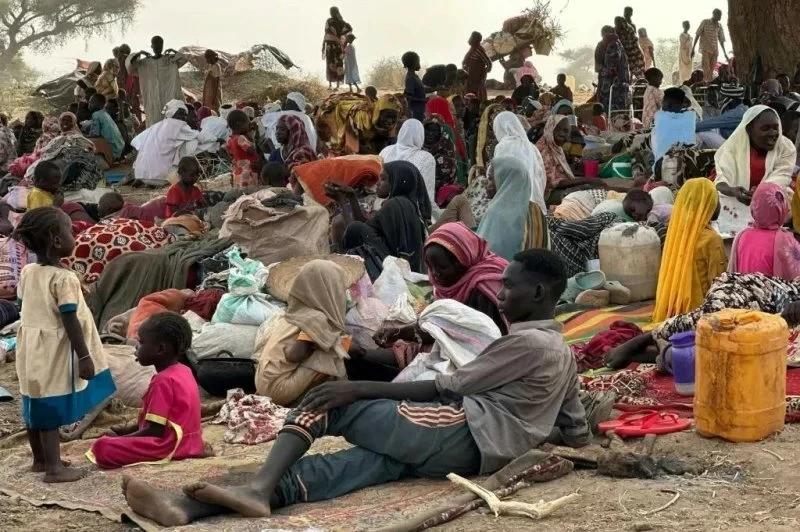
UN Investigators Say RSF Tactics in El-Obeid Bear Hallmarks of Genocide
15 sources compared
Sudan Gold Mine Collapse Kills 15 Miners At Mohamed Tawfiq Mine Near Egyptian Border
11 sources compared

Qatar Airways Launches First Port Sudan Flights From Doha With Airbus A320
10 sources compared

Rapid Support Forces Impose Siege Conditions, Intensify Drone Strikes on El Obeid, Sudan
18 sources compared