
Full story
Nuclear Defense Rationale
North Korean Supreme Leader Kim Jong Un has strongly defended his country's nuclear weapons program, using the ongoing war involving Iran as justification for maintaining robust military deterrence capabilities.
“North Korean Supreme Leader Kim Jong Un has defended his country's decision to maintain nuclear weapons, saying the ongoing war involving Iran demonstrates the need for a strong military deterrence, according to the South Korean state-run Korean Central News Agency (KCNA).”
In a significant address to North Korea's Supreme People's Assembly on Tuesday, Kim argued that the current global conflicts demonstrate the necessity of nuclear weapons for national security and sovereignty.
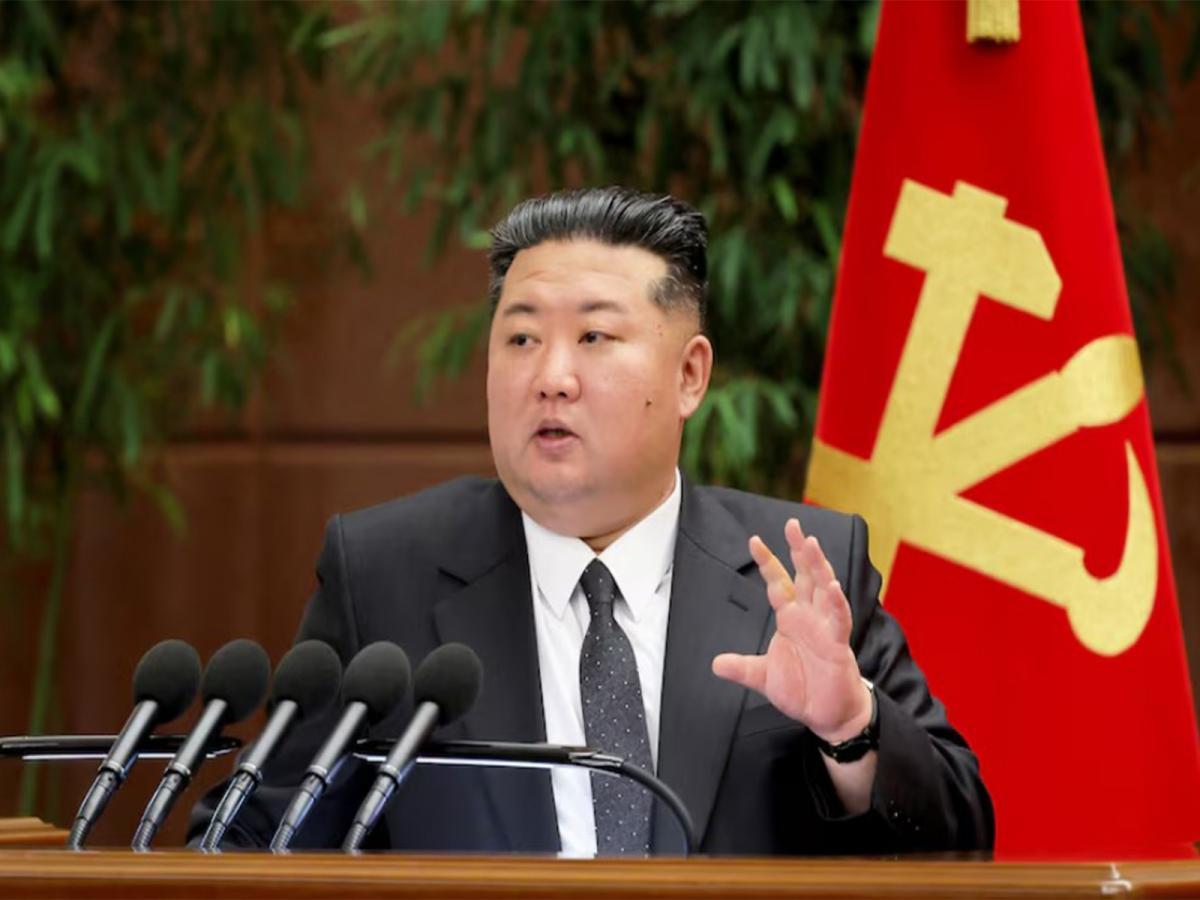
According to the South Korean state-run Korean Central News Agency (KCNA), Kim stated that 'dignity, interest and the final victory of a country can only be guaranteed by the most powerful might,' directly linking North Korea's nuclear stance to the broader geopolitical tensions involving Iran and the United States.
The North Korean leader framed his nuclear policy as a defensive necessity rather than an aggressive stance, positioning his country's arsenal as essential protection against what he perceives as external threats and American aggression.
US Accusations
Kim Jong Un escalated his rhetoric against the United States, accusing Washington of carrying out 'terrorism and invasions' across different regions, with clear references to the ongoing conflict with Iran.
Though he deliberately avoided naming US President Donald Trump directly, the North Korean leader made pointed criticisms of American foreign policy that clearly targeted the current administration.
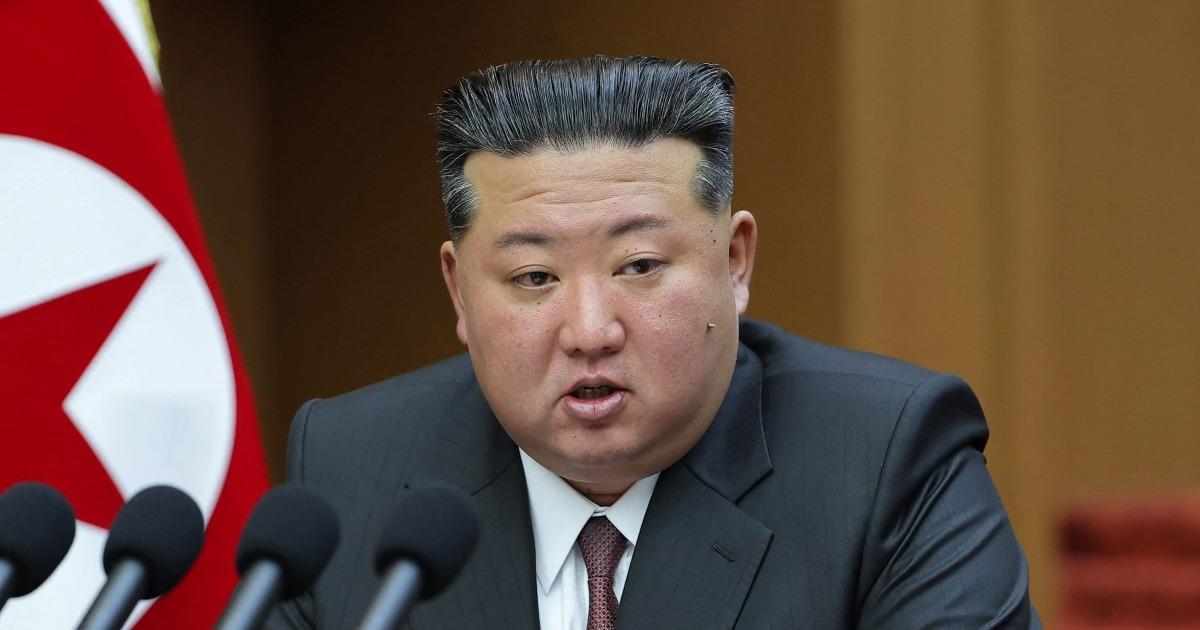
Kim's remarks, as reported by KCNA, portrayed the United States as a destabilizing force in global affairs, stating that 'whether the enemies choose confrontation or peaceful coexistence, that's their choice, and we are ready to respond to any choice.'
This language suggests a calculated approach to diplomatic relations, combining harsh criticism with the possibility of engagement depending on American behavior.
The speech represented a significant hardening of North Korea's public stance against the US while maintaining some ambiguity about potential future dialogue.
South Korea Hostility
The North Korean leader formally declared South Korea as the 'most hostile nation,' significantly escalating tensions on the Korean Peninsula.
“North Korea 'officially' recognised South Korea as the most hostile nation and will thoroughly ignore and disregard it through the clearest remarks and actions,' Kim was quoted by KCNA as saying, warning of 'merciless' consequences if Seoul carries out any actions that provoke Pyongyang.”
Kim Jong Un announced that North Korea would 'officially' recognize South Korea as its primary adversary, warning of 'merciless' consequences for any provocative actions from Seoul.
According to KCNA reports, Kim stated that North Korea 'will thoroughly ignore and disregard' South Korea through 'the clearest remarks and actions,' indicating a complete freeze in diplomatic engagement and potential military readiness.
This formal designation represents a major rhetorical and strategic shift, moving beyond previous tensions to an officially declared state of hostility between the two Koreas.
The timing of this declaration, coinciding with Kim's defense of the nuclear program, suggests a coordinated strategy of regional hardening and deterrence consolidation.
Nuclear Advancement
Kim Jong Un vowed to further advance North Korea's 'defensive nuclear deterrence' capabilities, maintaining a 'prompt and precise' response posture for his nuclear forces to address what he called 'strategic threats' to national and regional security.
The North Korean leader declared that his country 'will continue to solidify its status as a nuclear weapons state ... while aggressively staging campaigns to crush any provocations by hostile forces.'
This commitment to irreversible nuclear advancement represents a fundamental shift in North Korea's strategic posture, moving beyond mere possession to actively entrenching its nuclear capabilities as permanent.
The speech emphasized a dual approach: consolidating nuclear deterrence while simultaneously preparing for potential military confrontation, suggesting that North Korea views nuclear weapons as both defensive shields and offensive tools in its strategic calculus.
The timing of these announcements coincides with ongoing international tensions, particularly the US-Iran conflict, which Kim has explicitly cited as justification for his nuclear policies.
US-Iran Contrast
Meanwhile, US President Trump confirmed that negotiations were ongoing with Iran, claiming that the war was going to end, creating an interesting contrast to Kim Jong Un's rhetoric about American aggression.
“Meanwhile, US President Trump had earlier confirmed that negotiations were on with Iran, claiming that the war was going to end.”
Trump's statements about the potential resolution of the Iran conflict could potentially impact North Korea's strategic calculus, though the North Korean leader has framed his nuclear policies as necessary regardless of changing international circumstances.
The juxtaposition of Trump's diplomatic assertions and Kim's accusations of US 'terrorism and invasions' highlights the significant disconnect in perceptions between Washington and Pyongyang.
While Trump has suggested a path toward de-escalation with Iran, Kim has used the same conflict as justification for expanding and entrenching North Korea's nuclear capabilities, indicating that the North Korean leadership views international conflicts through a fundamentally different lens than the US administration.