Britain23 October, 20253 min read
King Charles Breaks 500-Year Religious Divide by Praying Publicly with Pope Leo XIV in Vatican
This article is an automated aggregation of coverage from news outlets. Our editorials offer in-depth analysis curated by the NewsCord team.
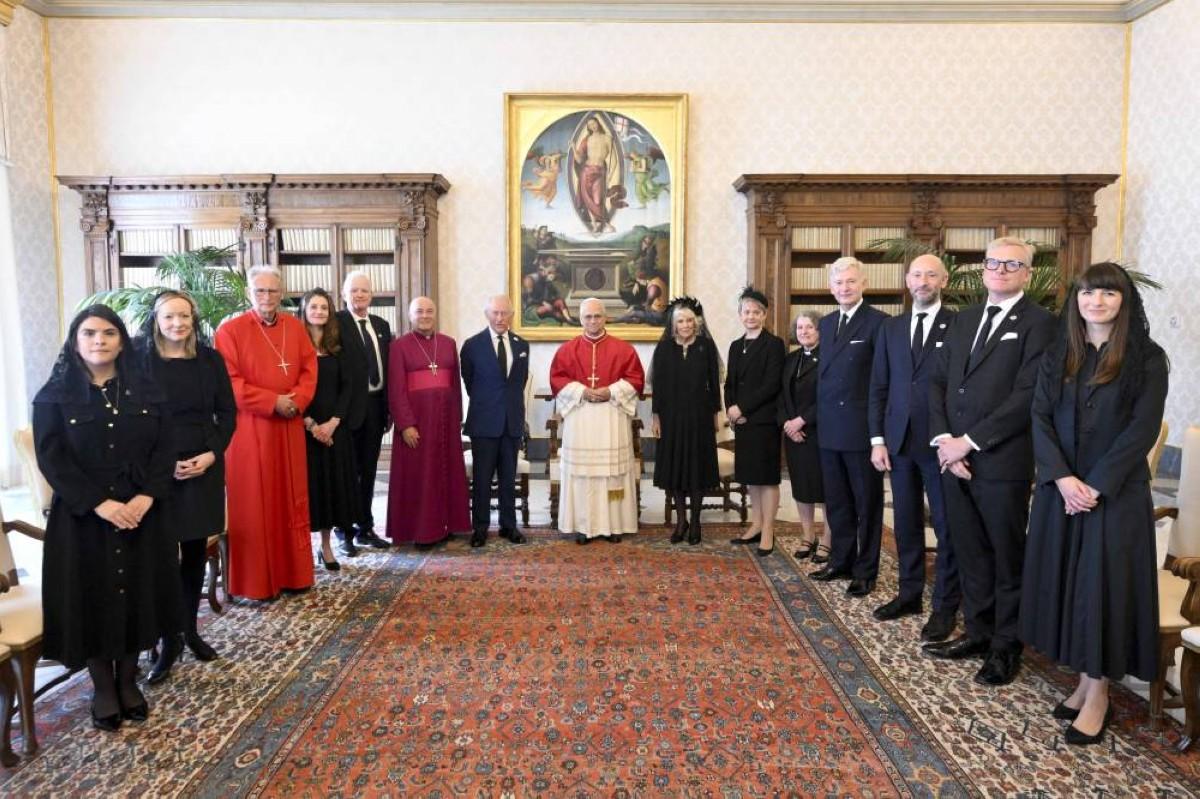
King Charles III and Pope Leo XIV prayed together publicly in the Sistine Chapel. This was the first joint prayer between a British monarch and a pope since the 16th-century Reformation.

74 outlets told this the same way.
Outlets did split on UK Police Charge Teddy Young With Spying For Foreign Power, Royal Navy Member →
Historic Prayer Between Leaders
Britain’s King Charles III and Pope Leo XIV prayed side by side in the Vatican’s Sistine Chapel. This was the first such public prayer between a reigning British monarch and a pope since Henry VIII’s 1534 break with Rome. The event is widely framed as a historic reconciliation after nearly five centuries of division.
“King Charles made history by becoming the first reigning British monarch since Henry VIII in 1534 to publicly pray with a pope, symbolizing a significant step toward reconciliation between the Catholic and Anglican churches.”
Western mainstream outlets stress the milestone but use measured language. The Guardian says Charles “made history… symbolizing a significant step toward reconciliation.” The Washington Post notes it was “the first time in nearly 500 years” such worship occurred.

Western broadcasters underline the Reformation context and the first-in-centuries nature of the event. The BBC calls it “the first joint prayer… since the 16th-century Reformation.” By contrast, Western alternative coverage like The Daily Beast uses more sweeping phrasing, saying the two “symbolically ended a 500-year-old rift.”
Ecumenical Service Highlights
The ecumenical service blended Catholic and Anglican traditions beneath Michelangelo’s frescoes. Latin chants and English prayers were led by Pope Leo XIV and Anglican Archbishop of York Stephen Cottrell. The Sistine Chapel Choir and royal choirs performed together during the service.
Several sources highlighted the environmental theme—‘Care for Creation’—and the Jubilee context. Other sources focused on the liturgy of the service. Western Mainstream and other outlets detailed the multilingual prayers and choirs.

Outlets across Asia and local Western media emphasized conservation. RTE.ie and The Straits Times noted that Cottrell represented Sarah Mullally, the newly announced first female Archbishop of Canterbury. This representation reinforced the moment’s contemporary significance.
Ceremonial Honors Between Leaders
The visit also carried ceremonial and diplomatic weight through reciprocal honors and revived traditions. King Charles was named “Royal Confrater” at the Basilica of St Paul Outside the Walls, with sources noting a special seat set aside for British monarchs there. The Pope received British honors and, in some accounts, became a Papal Confrater of St George’s Chapel.
“Additionally, King Charles was honored with the title ‘Royal Confrater’ at Rome’s Basilica of St.”
Western mainstream and Catholic outlets provide details on mutual decorations, such as Knights and Dames of the Order of Pope Pius IX, and the Pope as Knight Grand Cross of the Order of the Bath. Some local and other outlets simply record the confrater title and reserved chair. These gestures were framed as symbols of spiritual fellowship and ecumenical respect.
Reactions to Royal Visit
Not all reaction was celebratory. The Guardian reports criticism from some Protestant figures in Northern Ireland who argued Charles’s participation conflicted with his oath to uphold the Protestant faith, with calls for abdication from some quarters. Western Alternative and local Western outlets also note how the moment risked being eclipsed by royal scandals and media glare.
The Daily Beast says the visit was somewhat overshadowed by scandals involving Prince Andrew. WHEC and GB News say the significance has been clouded by renewed scrutiny and media focus on Andrew. The BBC and The Star highlight the intense press environment, quoting Charles’s remark that cameras are a constant hazard, even as the service offered a rare calm.
Ecumenical Relations and Tensions
The broader context is a decades-long thaw in relations between churches. Since the 1960s, the churches have worked to bridge doctrinal divides. This effort culminated in milestones like a papal representative attending the 2023 coronation.
“Following the event, King Charles and Pope Leo exchanged honorary titles and gifts symbolizing renewed friendship.”
Western mainstream and public broadcasters frame the prayer as the latest step in a careful reconciliation despite ongoing differences. At the same time, other outlets spotlight internal Anglican tensions, such as the conservative Gafcon movement rejecting traditional structures after Sarah Mullally’s elevation. This shows that ecumenical progress coexists with intra-Anglican schism.
Many reports also stress shared priorities like environmental stewardship and social concerns. These shared priorities underscore Charles’s role in interfaith dialogue.