South Americaupdated 1h ago3 min read
Lula And Flavio Bolsonaro Seek Disqualification Over Meta Social Media Interference Ahead Of Brazil Runoff
This article is an automated aggregation of coverage from news outlets. Our editorials offer in-depth analysis curated by the NewsCord team.
Lula and Flavio Bolsonaro seek to disqualify each other over Meta interference allegations before runoff. Lula's campaign requests annulment of Bolsonaro candidacy over Meta platform interference allegations.

Meta dispute before runoff
Brazil’s presidential candidates Luiz Inácio Lula da Silva and Flavio Bolsonaro escalated calls to disqualify each other over allegations of social media interference, as their October 25 runoff approached. Flavio Bolsonaro’s camp asked the Superior Electoral Court to annul Lula’s candidacy over what it called unlawful propaganda, and Lula’s campaign said it would request Bolsonaro’s disqualification over alleged election interference by WhatsApp parent company Meta. Lula’s petition alleged “algorithmic manipulation” by Meta aimed at harming Lula’s chances of winning, while the electoral court gave Meta 24 hours on Monday to prove it was complying with an order to treat both campaigns equally.
Meta said on Tuesday, “We have completed the implementation of the measures to comply with the Superior Electoral Court’s decision,” as the court threatened a daily fine of around $200,000 if Meta did not comply. The dispute followed the first round in which Flavio Bolsonaro won with 47 percent of the vote to Lula’s 45 percent, according to the accounts in the reporting.
Court orders and denials
The electoral battle intensified after the electoral court ordered Meta not to give the candidates “unequal treatment,” and the controversy included episodes in which Lula’s Instagram posts were affected while his opponent could boost his own content. Justice Marco Aurélio Bellizze said he had found no evidence of deliberate action by Meta, but he gave Meta 24 hours to prove that problems affecting Lula had been fixed and would not happen again. Meta denied favouritism and said it had introduced human review to prevent any automated restrictions, while the company also insisted its recent operational incidents came from technical limitations rather than any partiality.
Meta’s London-based oversight board said it was “concerned by recurring enforcement failures in Meta’s election integrity efforts,” and it cited Brazil’s election and the suspension of the anti-Trump No Kings movement’s account in the US for several hours last Saturday. João Victor Archegas, the coordinator at the thinktank Institute for Technology and Society, said it was “almost impossible” to prove any interference by Meta in Brazilian elections because only the company has access to its internal data.
Debate tone and stakes
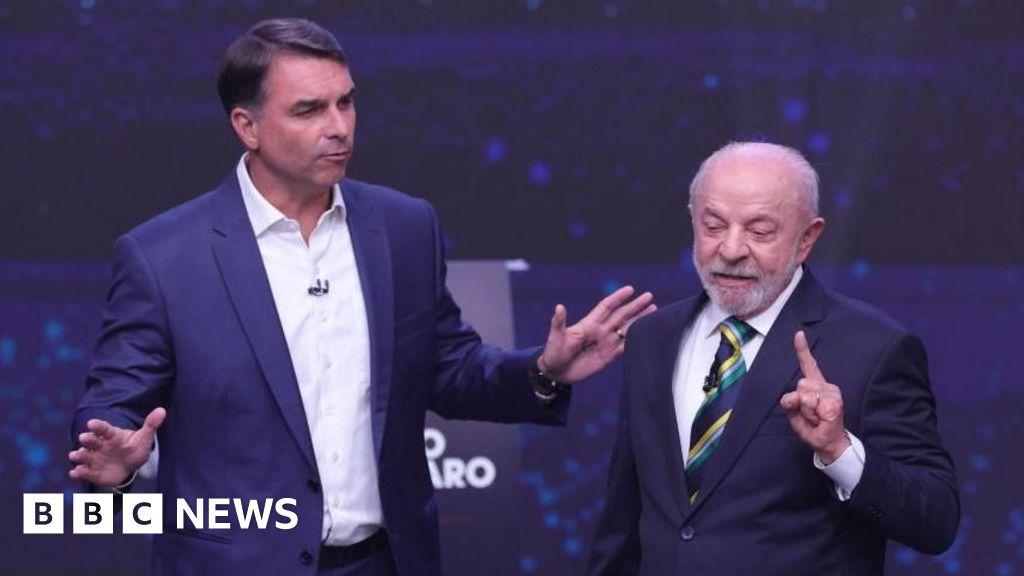
In the lead-up to the runoff, Lula and Flavio Bolsonaro traded barbs in a televised debate held one week before the vote, with analysts warning the aggressive tone could increase abstention.
The BBC reported that Flávio Bolsonaro won 47% of the vote in the first round compared with Lula’s 45.2%, and it described the debate as dominated by personal attacks rather than policies.
Lula told his supporters he would “win in extra time,” while Bolsonaro dismissed allegations as fake news and tried to bait Lula with a line about keeping distance so his “wallet isn’t stolen.”
The DW account said the debate devolved into personal attacks after contentious exchanges on the economy, public security, corruption, and Brazil’s relations with the United States.
The AP reporting framed the runoff stakes around corruption concerns, noting that more than 33 million people, or 21% of the electorate, did not vote on Oct. 4, and it said experts believed generalized perceptions of corruption could increase abstention and affect undecided voters.