USA03 June, 20262 min read
Marco Rubio Tells House Panel Israel Nuclear Questions Belong in Classified Setting
This article is an automated aggregation of coverage from news outlets. Our editorials offer in-depth analysis curated by the NewsCord team.
Rubio declines to confirm Israel possesses nuclear weapons, urges discussion in classified setting. Most of the world believes Israel has nuclear weapons; the U.S. position remains undisclosed.

Israel National News was read line by line by the Watchdog: 4.5. See the score →
Rubio seeks classified answers
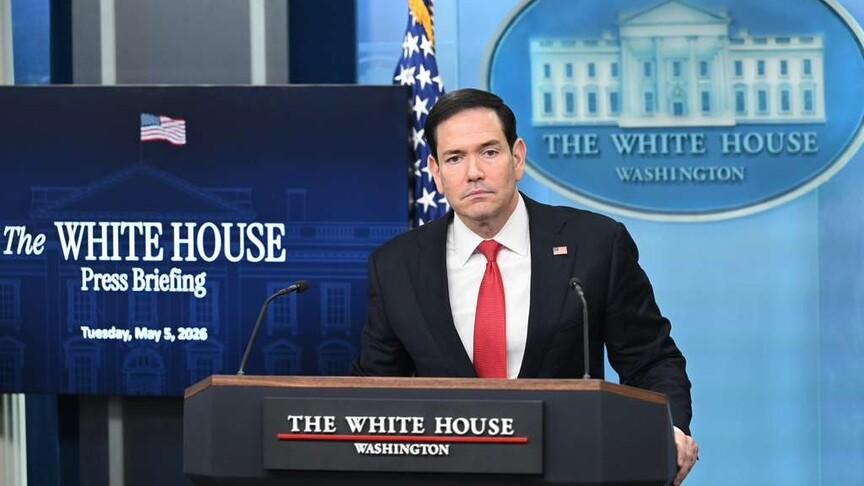
U.S. Secretary of State Marco Rubio told the House Foreign Affairs Committee on Wednesday that questions about Israel’s nuclear capabilities are better addressed in a classified setting, while declining to confirm Israel’s nuclear status during testimony.
Rubio said, "Before speaking frankly, I think most of the world assesses that they do, but they've never acknowledged that publicly," and he stopped short of confirming Israel’s nuclear capabilities.
Rubio added that lawmakers would receive a "more fulsome answer" in a "both classified and sensitive" setting.
Al Jazeera reported that Rubio acknowledged refraining from discussing Israel’s nuclear weapons is a "feature" of US foreign policy, and he suggested the issue should be discussed in a private setting.
Castro presses oversight
At the hearing, Democratic lawmaker Joaquin Castro pressed Rubio on whether the United States should know Israel’s nuclear red lines while the US is in a joint war with Israel against Iran. Castro said, "If they, in fact, possess nuclear weapons — and you’re right, in open-source reporting, that has come across — we don’t know what their red lines are for using those nuclear weapons," and he said he was "shocked" the government would not provide oversight information.
Rubio responded that the question was "fair" and said he would be willing to answer it in a classified format. Rubio told Castro, "These things require delicate balancing acts between different equities, but I think you can get, probably, a more fulsome answer if we were to be able to respond to that inquiry in a different context," as the exchange highlighted a decades-long taboo in US politics.
Congress letter and stakes
Al Jazeera reported that in May, Congress member Joaquin Castro penned a letter to the US Department of State signed by 30 lawmakers seeking clarifications about Israel’s nuclear programme and the US policy of not talking about it. The letter said, "We cannot develop coherent nonproliferation policy for the Middle East, including with respect to Iran’s civil nuclear program and Saudi Arabia’s civil nuclear ambitions, while maintaining a policy of official silence about the nuclear weapons capabilities of one party central to the ongoing conflict in which the United States is a direct participant," tying the issue to oversight of a war in which the US is a participant.
Rubio’s testimony came as the Al Jazeera account noted that on February 28 the administration of US President Donald Trump joined Israel in attacking Iran with the stated objective of preventing Iran from obtaining a nuclear weapon, which Tehran denies seeking. The same Al Jazeera report said Israel is not a signatory to the Treaty on the Non-Proliferation of Nuclear Weapons (NPT), and it described the exchange as underscoring the decades-long taboo against publicly talking about Israel’s nuclear programme.