Asia03 June, 20263 min read
Mark Carney Launches 10-Day Indo-Pacific Tour With Stops in India, Australia, Japan
This article is an automated aggregation of coverage from news outlets. Our editorials offer in-depth analysis curated by the NewsCord team.
India and Australia plan a defence supplies MoU and expand maritime security cooperation. Quad framework shapes India and Australia defense talks amid China-driven Indo-Pacific tensions.
Carney’s Indo-Pacific test
Canadian Prime Minister Mark Carney is set to undertake a 10-day tour in the Indo-Pacific with stops in India, Australia and Japan, after his presence at Davos, Switzerland where he denounced the coercition of « grandes puissances » and urged countries to stop invoking l’« ordre international fondé sur des règles comme s’il fonctionnait encore tel qu’on nous le présente. » The Asia Pacific Foundation of Canada says the first escales for Carney include Mumbai and New Delhi, and that he will meet Indian Prime Minister Narendra Modi in New Delhi, where the two men are expected to announce dozens of agreements including commercial deals in energy and agriculture and partnerships in research university, IA and technologies.
The same source says Carney’s itinerary is meant to test whether he can “pass de la parole aux actes” by reinforcing Canada’s Stratégie pour l’Indo-Pacifique de 2022 and pursuing diversification of trade, investment and security without the help of the United States while staying close to trusted Indo-Pacific partners. It also says Carney has previously traveled to China in January and to Malaysia, Singapore and South Korea in October 2025, and that Australia’s Prime Minister Anthony Albanese has said he is « en accord » with Carney’s Davos speech and invited him to speak before the Parliament of Australia.
India-Australia defense dialogue
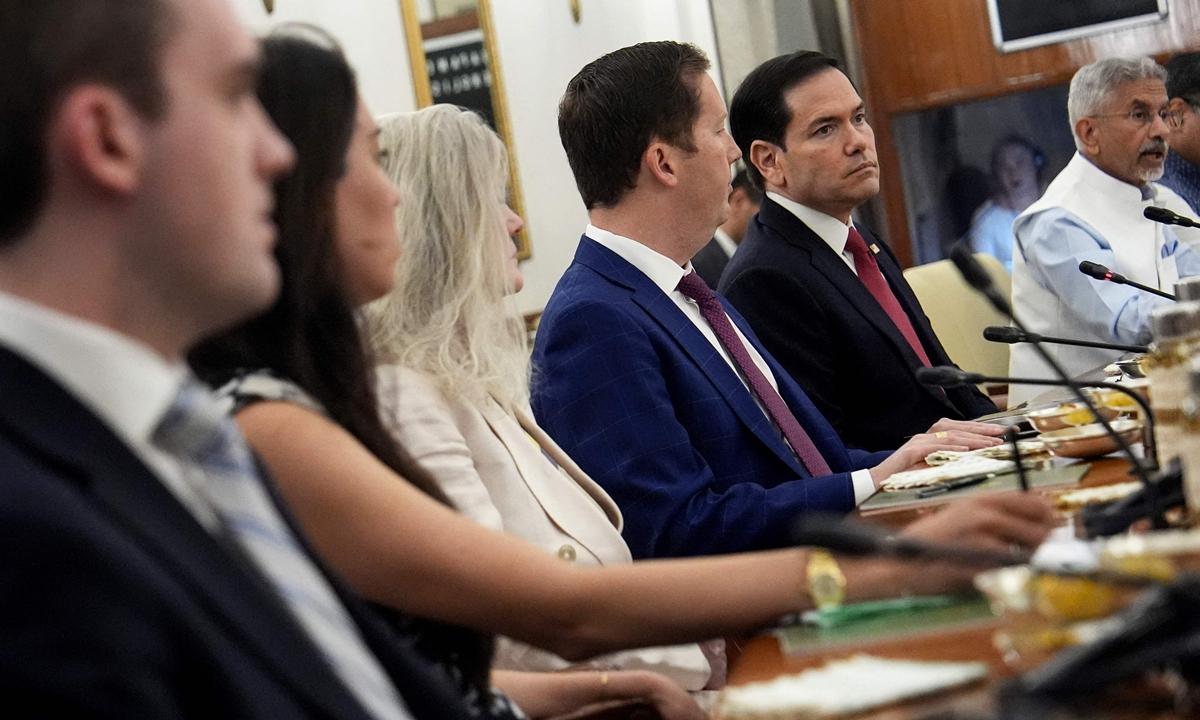
Days after a Quad Foreign Ministers meeting in New Delhi on May 26, 2026, India and Australia agreed to deepen cooperation on maritime surveillance and undersea monitoring, with a joint statement issued Monday describing a commitment toward what they called a "free and prosperous Indo-Pacific." Global Times quotes Chinese expert Chen Hong, director of the Asia-Pacific Studies Center at East China Normal University, saying the move intends to promote bloc-based alignment of regional waters under the banner of a "free and prosperous Indo-Pacific," which in reality serves as military deployments, intelligence sharing and maritime surveillance.
The Indian EYE reports that Defence Minister Rajnath Singh and Australian counterpart Richard Marles met in New Delhi to widen cooperation in maritime security, cybersecurity and emerging technologies, and that the Ministry of Defence said the two sides agreed to expand and diversify defence industry collaboration. KNN India says the ministers co-chaired the second India-Australia Defence Ministers’ Dialogue in New Delhi on Monday and agreed to begin developing a Memorandum of Understanding (MoU) on the provision of defence articles and defence services, while also reviewing progress since an inaugural dialogue in October 2025.

Common operational picture
India and Australia’s defense dialogue also centered on maritime domain awareness and a shared operational framework, with KNN India saying the ministers agreed to advance maritime domain awareness activities including cooperation involving maritime patrol aircraft and undersea domain awareness. The same KNN report says the two sides agreed to work toward developing a Common Operational Picture across the Indo-Pacific and welcomed the operationalisation of the Indian Ocean Region programme under the Quad Indo-Pacific Partnership for Maritime Domain Awareness through the Information Fusion Centre–Indian Ocean Region in Gurugram.
“We oppose forming exclusive groupings or engaging in bloc confrontation.”
In a different framing, The Print says the ministers cited the 1982 United Nations Convention on the Law of the Sea (UNCLOS) as the international legal standard grounding the freedom of navigation and overflight that India and Australia seek to uphold in the Indo-Pacific. Global Times adds that Chinese Foreign Minister spokesperson Mao Ning told a regular press conference on May 26 that "We oppose forming exclusive groupings or engaging in bloc confrontation," responding to the US, Japan, India and Australia launching a maritime surveillance initiative for the "Indo-Pacific" region and plans to partner with Fiji on port infrastructure.