Full story
EV quota sparks backlash
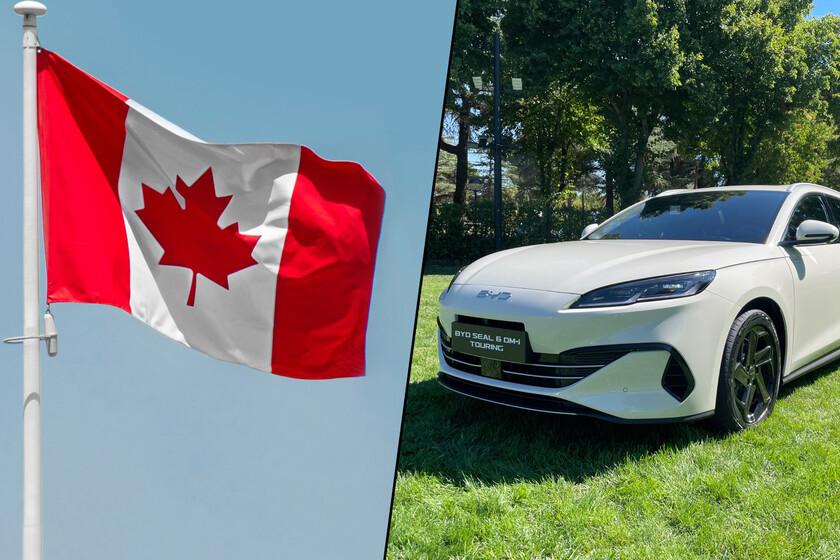
Canada moved to ease tensions with China by signing a trade agreement after Mark Carney’s visit to Beijing, replacing a 100% tariff on Chinese electric vehicles with a most-favored-nation tariff of 6.1% for up to 49,000 vehicles per year.
“Canada Moves Away from Trump After Electric Vehicle Deal with China”
Carney said the quota covers “less than three per cent of our market, 49,000 cars,” and he told Donald Trump, “I thought you’d actually like that.”
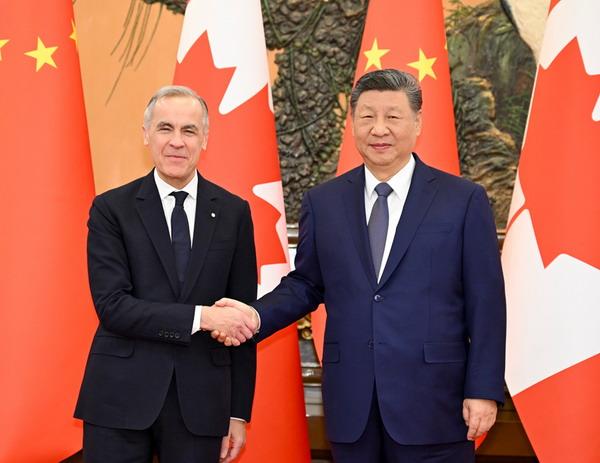
The deal’s immediate political impact was visible at the G7 summit in Évian-les-Bains, France, where Carney’s exchange with Trump became a focus of discussion.
In Canada, Ontario Premier Doug Ford called the agreement “terrible,” arguing that “The federal government opens the way to a flood of cheap electric vehicles manufactured in China without a real guarantee of investments equivalent or immediate in Canada,” while Carney defended the move as “less than 3% of the market.”
Trump, officials, and industry
At the G7 summit in Évian-les-Bains, France, Carney told Trump “cap, we capped, a hard line,” and Trump replied, “That’s good. I like that.”
Canada-U.S. Trade Minister Dominic LeBlanc played down the significance of the exchange, saying, “This shouldn’t surprise anybody that the prime minister took this opportunity to discuss what is a well-known circumstance,” while Le Temps reported that Trump “pretended to welcome the Canadian move” and said, “this is what he should do. It’s a good thing for him to sign a trade agreement.”

In the United States, Transportation Secretary Sean Duffy said Canada would “surely regret this decision,” and Jamieson Greer called Ottawa’s decision “problematic” because “There is a reason we do not sell many Chinese cars in the United States.”
Canadian industry and political opponents framed the deal as a threat to jobs and security, with Ford warning it “does not inspire confidence,” and the Canadian Vehicle Manufacturers Association president and CEO Brian Kingston saying China “does not adhere to many of the rules-based trade and investment principles” central to the auto industry.
What’s at stake next
The agreement took shape around a quota that Canada said could rise to 70,000 vehicles annually by 2031, with at least half of imports required to carry a price below C$35,000 within five years, and it also included a provision requiring Chinese automakers to establish joint ventures for vehicle or battery production in Canada within three years.
“Canadian Prime Minister Mark Carney was caught on a hot microphone defending his country’s Chinese EV import deal directly to US President Donald Trump during the G7 leaders’ summit in Évian-les-Bains on Tuesday”
In exchange, Beijing agreed to lower tariffs on Canadian agricultural and seafood exports, including slashing levies on canola seed, and Canada expects China to reduce tariffs on Canadian canola seeds by March 1.
The deal also set up a new point of friction with the United States, with the hot mic exchange occurring less than two weeks before a critical deadline for North American trade as the Canada-United States-Mexico Agreement enters its first mandatory joint review under Article 34.7 on July 1.
For Canada’s domestic market, the policy’s consequences were framed through competition and affordability, with Carney saying the quota is “less than 3% of the market,” while critics argued it would “damage our economy and lead to job losses,” and the U.S. warned Canada risks becoming a backdoor for Chinese vehicles to reach the broader North American market.