Full story
Dover port blockade
Dozens of masked anti-immigration protesters dressed in black blocked roads leading to the Port of Dover in Kent on Saturday morning, disrupting traffic and ferry services between England and France.
“disrupting traffic and ferry services in an apparent anti-immigration demonstration”
The Port of Dover said Saturday morning that all traffic in and out was "stopped due to an ongoing public order incident," while Kent Police said officers were at the scene and engaging with the protesters.

The National Highways agency said the protest blocked all routes to the port and caused a 4-mile (6.4-kilometer) traffic jam, and videos showed demonstrators linking arms across the A20 and chanting "stop the boats."
The blockade brought traffic in and out of the port on the A20 to a standstill, with delays of up to 30 minutes and around four miles of congestion, according to National Highways, and by Saturday lunchtime the protesters had dispersed as the Port of Dover said access roads were "free flowing."
Condemnation and rival claims
The UK government condemned the action, saying it went well beyond peaceful protest, and a Home Office spokesperson said, "We appreciate the frustration of those who have been impacted today," adding that access to the port had been restored and traffic was flowing.
Labour MP Mike Tapp, the Labour MP for Dover and Deal, criticized the protesters for disrupting the town and port, saying the demonstration had caused problems for local residents and travellers, and he wrote on Facebook that "I bet if you asked any one of those ‘protesters’ they wouldn’t know small boat crossing(s) are down by 40%".
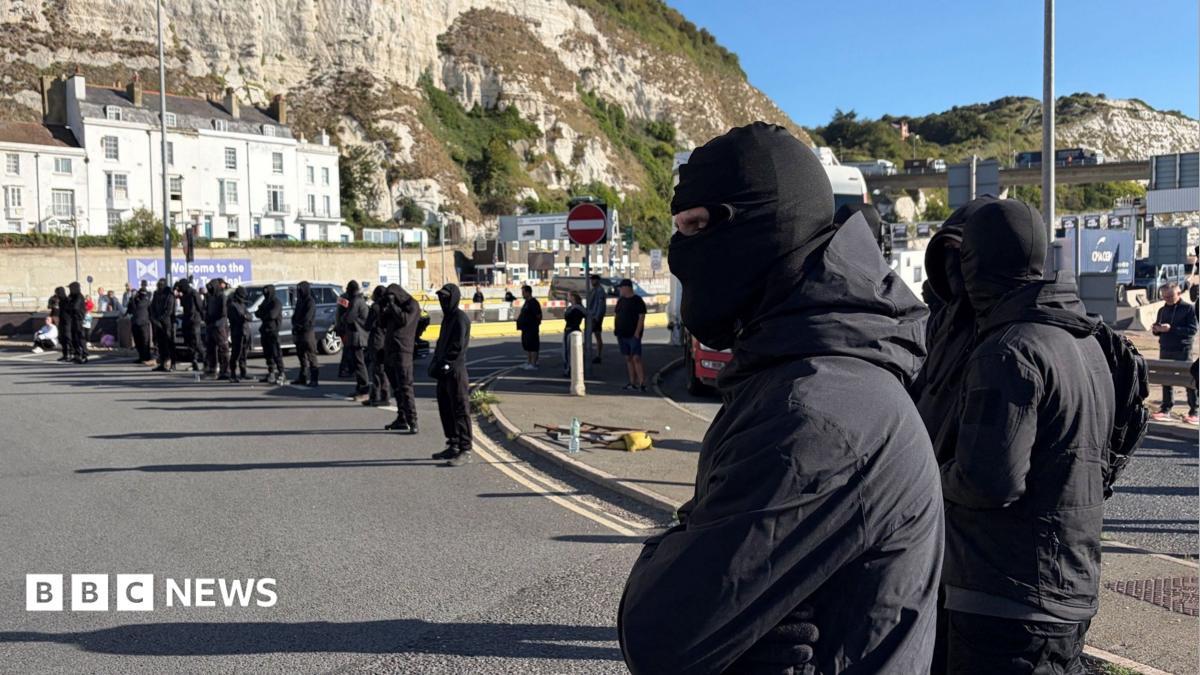
Far-right activist Stephen Yaxley-Lennon, who uses the name Tommy Robinson, wrote on X that "patriots have mobilised to close down the port," while Conservative councillor Chris Vinson said the demonstration appeared to be "illegal migration-related" and described the men wearing black paramilitary gear and balaclavas as "extremely intimidating."
The BBC reported that Kent Police made no arrests and described the protest as a "spontaneous" protest, while it also said Hope Not Hate claimed the Patriot Platform network arranged the protest and that the group began meeting in July.
Aftermath and what’s at risk
P&O Ferries said just before midday that "access to the Port of Dover has now been restored," and it said passengers who missed their ferry would be offered the next available crossing, while DFDS also said it would accommodate passengers onto the next departure once they arrived.
“access to the Port of Dover has now been restored”
The BBC said officers moved the crowd from the port to Dover Priory railway station at about 11:30 BST and that "all involved had dispersed by 12:00," and the Port of Dover said operations had returned to normal with routes in and out reopened.
The disruption was framed by officials as travel disruption and a public order incident affecting the town, with the Port of Dover later confirming it was affecting "all routes" in and out, as well as around the town.
The broader context in the sources ties the protest to the UK’s ongoing debate over irregular migration and small-boat crossings across the English Channel, with the BBC noting the Crime and Policing Act 2026 made it an offence to conceal your identity at a protest in England and Wales, but only if the area has.