USA12 April, 20263 min read
Massive Landslide Into Alaska’s Tracy Arm Fjord Triggered 481-Meter Tsunami Wave
This article is an automated aggregation of coverage from news outlets. Our editorials offer in-depth analysis curated by the NewsCord team.
Rock slide into Tracy Arm on Aug 10, 2025 produced a 1,580-foot tsunami, second-highest recorded. Volume exceeded 63–64 million cubic meters; initial wave about 100 meters tall.

Tracy Arm megatsunami
A massive landslide into Alaska’s Tracy Arm fjord on August 10, 2025 sent a tsunami wave 481 meters—1,578 feet—up the opposite fjord wall, after a rock collapse near the South Sawyer Glacier.
The event began when more than 64 million cubic meters of rock collapsed into the fjord, triggering an initial 100-meter breaking wave that tore across the fjord at speeds exceeding 70 meters a second.

Scientists said the tsunami stripped vegetation from the steep fjord walls and that no one was killed or injured, with the timing described as a key factor because no cruise ships or large numbers of visitors were nearby.
The U.S. Geological Survey said the landslide occurred at about 5:26 a.m. local time and was detected by seismic instruments, while a NOAA tide gauge in Juneau recorded tsunami waves up to 36 centimeters above tide level that continued for hours.
Warnings and near-miss
Dan Shugar, a University of Calgary geomorphologist and lead author of the Science study, said, "The fact that the landslide occurred this early in the morning was unbelievably lucky. Next time — and there will be a next time — we may not be so lucky," as the study warned that glacier fjords can amplify landslide-generated tsunamis.
Aram Fathian, a University of Calgary researcher and co-author of the Science study, said, "It was the second highest tsunami ever recorded on Earth," while also calling it a near-miss event that left the area without reported injuries or fatalities.
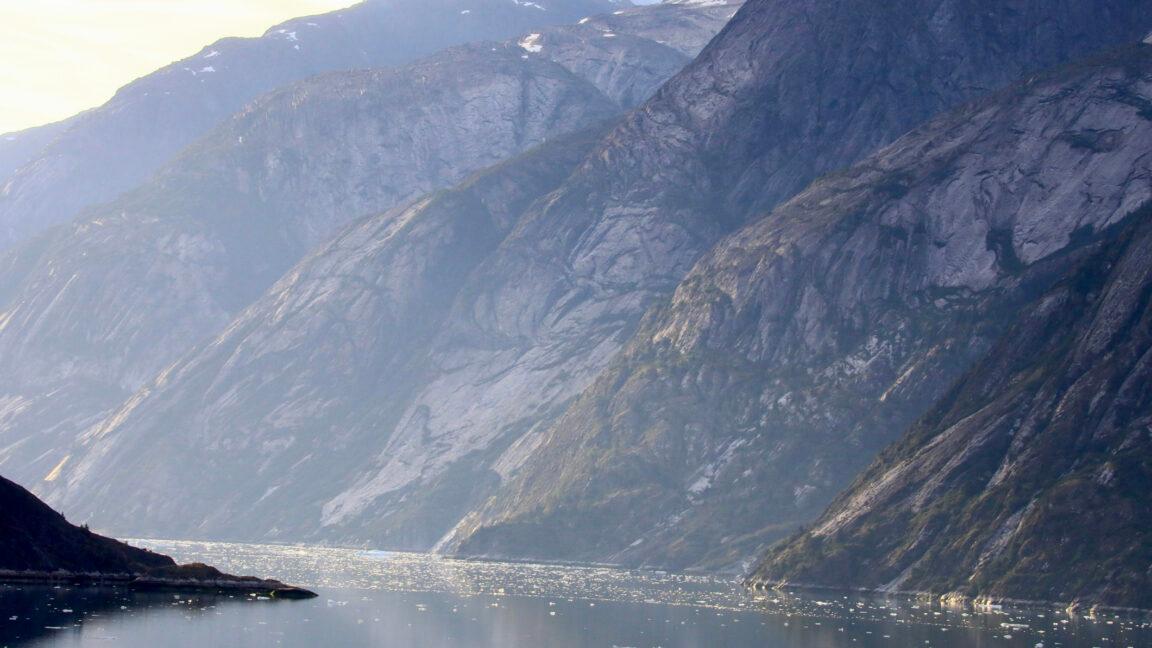
Kayakers camping on Harbor Island near the mouth of Tracy Arm later reported that their gear had been swept away by waves, and passengers aboard a small cruise vessel in neighboring Endicott Arm reported swings in water levels and a strong current associated with the tsunami.
In the aftermath, cruise lines started avoiding Tracy Arm, and large cruise lines that previously listed Tracy Arm as a stop now show Endicott Arm on their itineraries, according to the accounts describing the shift in operations.
What’s at stake next
The Science study and related reporting tied the hazard to glacier retreat and destabilization, describing how South Sawyer Glacier’s rapid calving and retreat exposed a new area of open water that left the fjord vulnerable to a landscape-reorganizing tsunami. The study described the landslide as producing seismic waves equivalent to a magnitude 5.4 earthquake and generating a long-period seiche that persisted for up to 36 hours, with the event also leaving a “bathtub” ring where the forest was leveled up to 1,578 feet (481 meters) above sea level.
Researchers said the exact mechanisms remain uncertain and could involve a combination of factors, including rainfall and rapid retreat, while NASA’s account said the glacier’s retreat exposed a new area of open water that the tsunami exploited. The Alaska Beacon account said the second-highest run-up was just below the record 1,730-foot run-up in Alaska’s Lituya Bay in 1958, and it quoted study coauthor Ezgi Karasözen saying, "It’s the timing of the event that saved us all," as tour operators skipped Tracy Arm in the months after the August 10, 2025 collapse.