Ukraine War23 October, 20262 min read
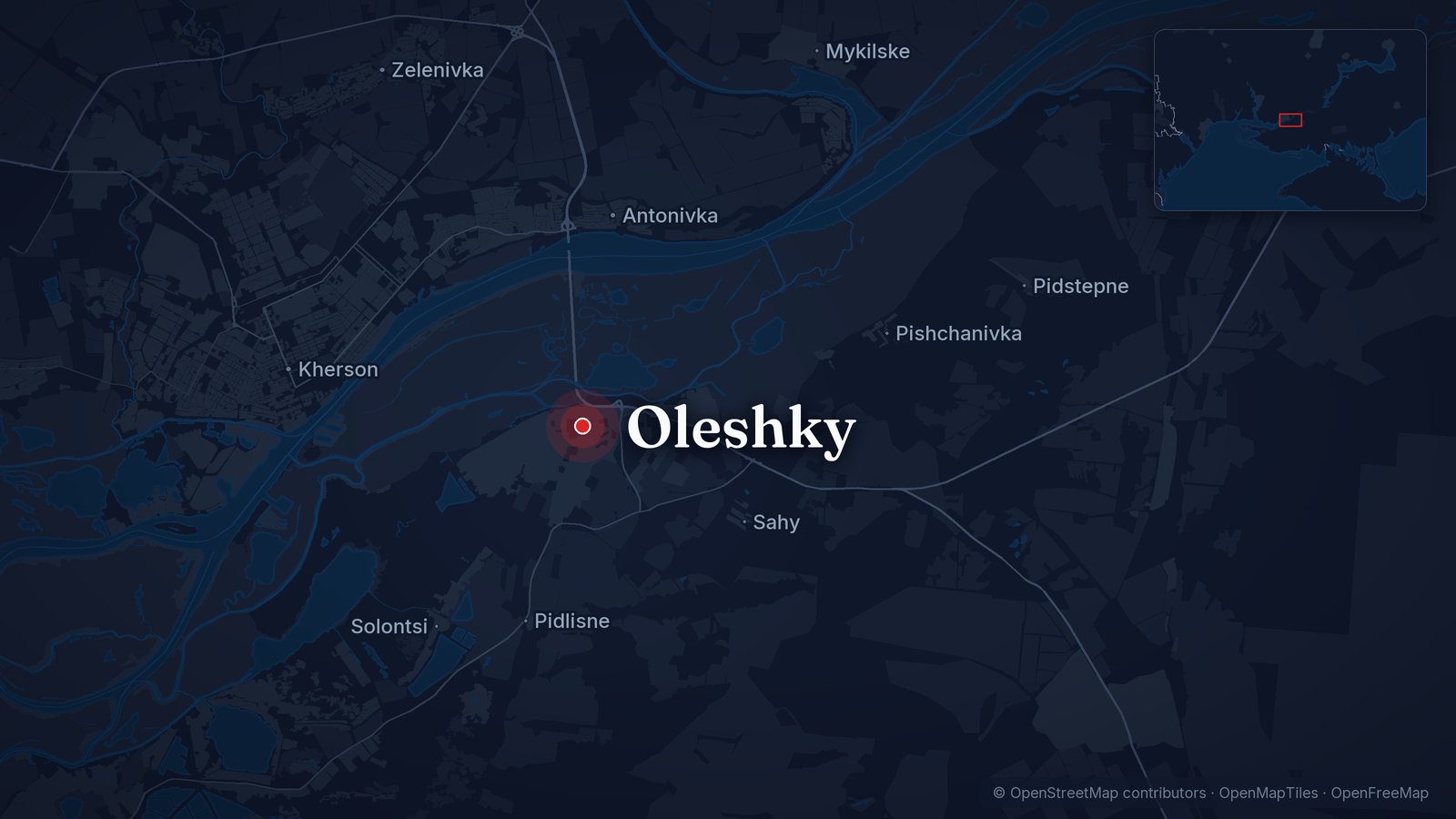
MapMelania Trump Brokers Oleshky Ceasefire for Humanitarian Aid, White House Says
“Ukraine and Russia confirmed the deal was agreed to evacuate residents and deliver aid.”
“Reuters notes that Ukraine has not officially confirmed the ceasefire.”
Map: © OpenStreetMap contributors, ODbL · Cropped for layout
This article is an automated aggregation of coverage from news outlets. Our editorials offer in-depth analysis curated by the NewsCord team.
Localized ceasefire in Oleshky to allow humanitarian aid and civilian evacuations from Oct 29. Mediated by First Lady Melania Trump, with direct talks between Russia and Ukraine.
Save coverage image
Oleshky Ceasefire Announced
First lady Melania Trump brokered an upcoming ceasefire between Russia and Ukraine for the Russian-occupied Ukrainian city of Oleshky to allow humanitarian aid and the evacuation of civilians, the White House announced on Friday.
The localized ceasefire is set to begin on Oct. 29, and Melania Trump said in a news release that the situation there is “on the brink of disaster”.
The White House said Melania Trump initiated the discussions and worked directly with Russian and Ukrainian leadership to define the terms of the ceasefire, while Kremlin spokesman Dmitry Peskov said Moscow was grateful for helping organise the Oleshky mission.
Ukraine’s lead negotiator Dmytro Lubinets thanked Melania Trump for her involvement and said the deal would be “extremely challenging to implement,” as the operation was described as gradual and tied to humanitarian access and evacuation.
Implementation Disputed, Timelines
Russia’s chief of the general staff, Gen. Valery Gerasimov, said Russian forces “will cease fire on the Kherson axis” starting at 4 a.m. Tuesday Moscow time in connection with the humanitarian operation near Oleshky.
Kremlin spokesman Dmitry Peskov said “those who want to leave it would be able to do so,” while he declined to say whether evacuees would go to Russia- or Ukraine-held territory and said it would likely take several days.
Ukraine’s BBC account said the White House statement described Oleshky as a “front-line war city on the brink of disaster” without medicine, food and clean water, and it said the truce would begin on 29 October.
Davyd Arakhamia later said “an operation to unblock the settlement of Oleshky and its surroundings will begin in the near future,” while the BBC reported that no date or time had been announced by Kyiv yet.
Humanitarian Stakes and Next Steps
The White House said the ceasefire would allow non-military, civilian leaders from both countries to visit Oleshky residents in their homes and determine the level of assistance they require, and it said residents who wish to evacuate would receive coordinated support and transportation to their preferred destination. Melania Trump said Oleshky residents “have limited electricity, live amid mined roads, and endure regular military attacks,” and she said that without her intervention “the possibility to bring humanitarian aid into the city and to evacuate the elderly would be impossible”.
The BBC reported that Oleshky was home to 24,000 people before Russia’s full-scale invasion in February 2022, and it said Ukraine estimates that some 6,000 people remain in the city and its surrounding areas, including 200 children. The BBC also reported that the Kremlin in September acknowledged Oleshky was facing “a critical situation” and “problems with supplies of food and medicine,” while blaming Kyiv, as the ceasefire was positioned as a step to deliver aid and evacuate civilians.