Technology and Science19 March, 20267 min read
Meta Acquires Assured Robot Intelligence To Accelerate Humanoid Robot Push
Meta acquires Assured Robot Intelligence to boost humanoid AI capabilities ARI team joins Meta Superintelligence Labs to collaborate with Robotics Studio on humanoid hardware
Meta buys ARI
Meta has acquired Assured Robot Intelligence (ARI), a startup building AI models for robots, to accelerate its humanoid robot push, according to multiple reports. The Decoder says Meta bought ARI “to accelerate humanoid robot push,” and that Meta did not disclose what it paid for ARI. SiliconANGLE similarly reports that Meta announced the deal “without disclosing the financial terms” and said the acquisition is designed “to advance its efforts to develop humanoid robots.”
Business Insider adds that Bloomberg first reported the acquisition and that Meta and AIX Ventures confirmed the news to Business Insider. Several outlets identify ARI as a San Diego-based company founded by Lerrel Pinto and Xiaolong Wang, with SiliconANGLE calling the founders “prominent AI researchers.”

The Decoder says the team will join Meta Superintelligence Labs, while Quartz describes the group as joining Meta Superintelligence Labs and working alongside Meta Robotics Studio. TechCrunch also reports that ARI’s team will join Meta’s AI unit, the Superintelligence Labs research division, and that ARI was building foundation models for humanoid robots to perform “all types of physical labor such as household chores.”
Who joins and what they do
Across the coverage, the acquisition is framed as bringing ARI’s robotics intelligence work into Meta’s internal AI and robotics organizations. The Decoder says the team will join Meta Superintelligence Labs to help push forward the company’s work on humanoid robots, and it adds that the deal brings “over ARI's entire staff” including co-founders Lerrel Pinto and Xiaolong Wang. Benzinga reports that Meta Superintelligence Labs head Alexandr Wang welcomed the ARI team on X, underscoring the division’s push into physical AI, and it quotes Pinto on X: “We have the potential to transform AI that can think and talk to AI that can do, assisting humans safely and reliably in the physical world,” Pinto wrote on X.
SiliconANGLE says the Assured Robot Intelligence team will join Meta Superintelligence Labs, and it describes ARI’s background as a provider of “artificial intelligence software for robots.” Quartz adds that the incoming team is expected to advance capabilities including “model architecture, robot control systems, and self-learning techniques as they apply to full-body humanoid platforms.”
TechCrunch quotes Meta’s spokesperson describing ARI as “a company at the frontier of robotic intelligence designed to enable robots to understand, predict, and adapt to human behaviors in complex and dynamic environments.” Business Insider adds that ARI is developing AI models that will power humanoid robots and quotes AIX Ventures partner Nick Crance saying the startup is focused on “high-precision dexterity and manipulation in robotics.”
Physical AGI and self-learning
The acquisition coverage repeatedly links ARI’s mission to Meta’s stated goal of building robots that can operate in the physical world, with co-founder Xiaolong Wang describing the work as chasing “physical AGI.” The Decoder says Wang posted on X that ARI has been chasing “physical AGI”—artificial general intelligence built for the real world—since launching a year ago. It adds that Wang said customer projects made it clear that getting there requires a universal physical agent, and that “humanoid designs work best for the job.”
The Decoder also reports Wang’s view that the system should learn directly from human experience, “not just teleoperation,” and it says Meta is building its own hardware, sensors, and software for humanoid robots. Benzinga echoes the emphasis on learning from human experience, quoting Wang as saying the team aims to achieve “physical AGI,” and that scaling “will come from learning directly from human experience, not teleoperation alone.”
SiliconANGLE provides additional technical context, describing a control system that lets users view footage from a robot’s cameras through a virtual reality headset, where “the direction of the wearable changes with the turn of the user’s head” and the robot repositions its cameras accordingly. Quartz similarly describes the acquisition as advancing “self-learning techniques,” and it says Meta’s spokesperson characterized the work as equipping robots to interpret and respond to human behavior across “unpredictable, real-world conditions.”
Meta’s robotics ecosystem and prior moves
Several outlets connect the ARI purchase to Meta’s earlier robotics and AI infrastructure, including its internal divisions and hardware efforts. SiliconANGLE says the ARI team will join Meta Superintelligence Labs, the business unit that leads the Facebook parent’s AI development efforts, and it notes that the group trained the Muse Spark large language model that Meta debuted last month. It also says the team includes the Meta Robotics Studio, the team that leads Meta’s humanoid robot initiative, and it describes Meta’s MIA500 machine learning chip as an inference accelerator that can provide “10 petaflops of performance when processing FP8 data.”
SiliconANGLE adds that Bloomberg reported Meta “doesn’t plan to launch its own humanoid robot” and instead hopes to supply components and software to other market players, comparing Meta’s role to Qualcomm’s position in the mobile ecosystem. Quartz similarly says Meta envisions itself as an enabling layer for the robotics industry, “a platform role comparable to the one Android and Qualcomm's processors came to occupy in mobile,” and it says engineers are working on “everything from sensors to software.”
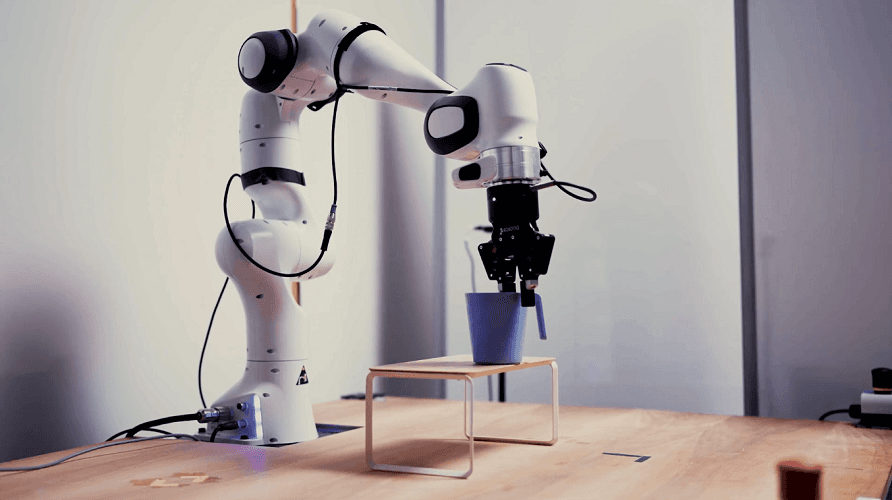
Quartz also situates the deal within Meta’s broader spending and staffing changes, saying that in late April the company increased its capital spending forecast for 2026 to between “$125 billion and $145 billion,” and that it is cutting about “10% of its staff,” with layoffs starting “May 20.” Business Insider adds that in 2025 Meta formed a robotics group within its Reality Labs division, according to a memo obtained by Business Insider, and it says MSL is a separate division from Reality Labs that is “increasingly becoming intertwined through AI hardware and robotics.”
Industry race and reactions
The acquisition is also presented as part of a broader competition among big tech and robotics startups, with multiple reports tying ARI’s move to a “race” for physical AI. Benzinga frames the deal as happening as “the $5 Trillion Market Race Heats Up,” and it says the acquisition positions Meta directly in a rapidly commercializing humanoid robotics sector where “big tech, automakers and well-funded startups are competing to deploy physical AI at scale.” It also cites an industry target, saying Figure AI, backed by Nvidia, OpenAI and Jeff Bezos, is targeting “100,000 humanoid robot deployments over four years.”
The Decoder similarly says Tesla, Google, and Amazon are “pouring money into humanoid robotics,” and it describes Meta’s plan to license the tech to other companies. Business Insider adds that ARI is one of several startups working on the “brains for humanoids and other robots,” listing Physical Intelligence, Generalist AI, and Genesis AI as focused on the intelligence layer rather than hardware.

Quartz notes that the acquired team had been concentrated in San Diego and New York, and it says interest in humanoid robots is growing across the tech industry with companies like Tesla, Google, and Amazon working on their own projects. In terms of reactions from within the ecosystem, Benzinga quotes Pinto on X about transforming AI from “think and talk” to “do,” while The Decoder quotes Wang’s “physical AGI” framing and his emphasis on learning from human experience rather than teleoperation.
What comes next
Looking ahead, the sources describe ARI’s integration into Meta’s robotics roadmap and the expected technical direction of the combined teams. SiliconANGLE says Meta stated that Assured Robot Intelligence will help its engineers develop robot control systems and AI model architectures, and it adds that the startup’s team will explore new self-learning techniques. Quartz says the acquisition is expected to advance capabilities including “model architecture, robot control systems, and self-learning techniques as they apply to full-body humanoid platforms,” and it says the group will work alongside Meta Robotics Studio.
TechCrunch similarly quotes Meta’s statement that “This team, led by Lerrel Pinto and Xiaolong Wang, will bring a deep expertise in how we can design our models and frontier capabilities for robot control and self-learning to whole-body humanoid control.” The Decoder adds that Meta is building its own hardware, sensors, and software for humanoid robots and plans to license the tech to other companies, “much like Google did with Android in the smartphone market.”
SiliconANGLE also points to how Meta’s existing consumer-adjacent hardware could intersect with robotics, noting that Meta may be looking to develop humanoid robots that users can control remotely using smart glasses, referencing the Meta Ray-Ban Display and its Neural Band wristband. Quartz situates the robotics push within Meta’s broader AI spending and restructuring, noting the increased capital spending forecast for 2026 and the May 20 layoffs date, which could affect how quickly teams scale.