Africa08 July, 20263 min read
Misrata Leaders Reject Massad Boulos’s US Initiative, Denounce Power Split Between Haftar and Dbeibah
Misrata leaders reject Massad Boulos’s US mediation and any settlement reproducing Libya’s crisis. Boulos plan envisions a unified Libyan government funded by oil resources.
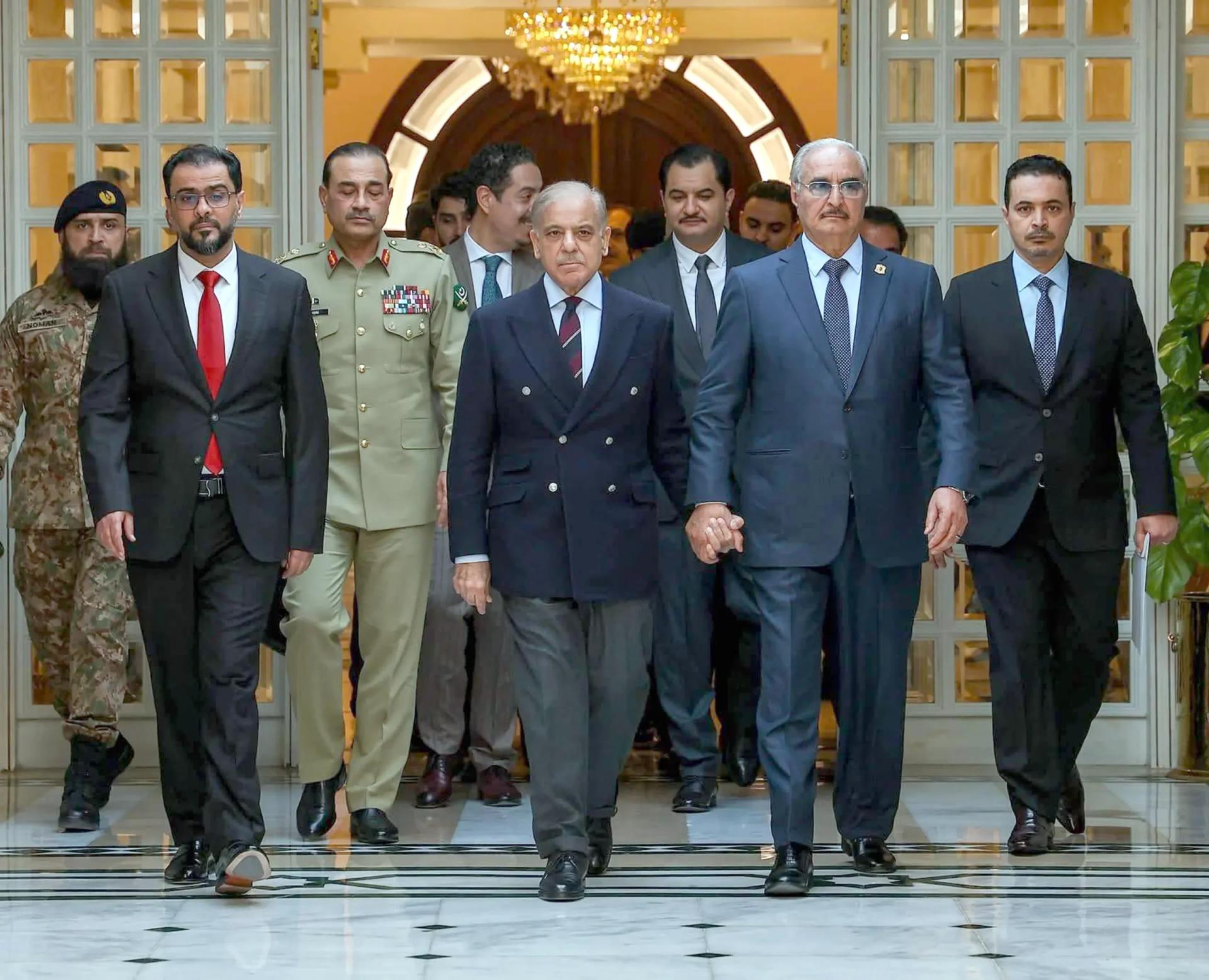
Misrata Rejects Settlement
Community leaders in Misrata, alongside military leaders and civil society organizations, rejected any political settlement that reproduces Libya’s crisis or paves the way for figures named in UN reports over corruption or human rights violations. They said any solution must be based on a clear constitutional framework backed by international guarantees that preserve Libya’s unity and sovereignty during a meeting with US senior adviser Massad Boulos and his accompanying delegation. Ahead of Boulos’s visit to Misrata, protesters gathered outside Misrata International Airport to reject both the visit and the reported US initiative aimed at resolving Libya’s political crisis.
Videos circulating on social media showed groups of young people gathering near the airport, chanting slogans rejecting Boulos’s visit and denouncing what they described as externally imposed political initiatives and arrangements. The protesters described the reported US initiative as a “suspicious deal,” arguing that it seeks to divide power between the Haftar family and the Dbeibah family and lacks legitimacy.

Pakistan’s Quiet Mediation
Reuters reporting, as carried by NDTV Profit, said Pakistan has quietly begun mediating between Libya's rival eastern and western factions in a previously unreported effort that could raise Islamabad's diplomatic profile. The involvement comes months after Pakistan signed a defence agreement worth over $4 billion with the eastern-based Libyan National Army in December 2025, covering 16 JF-17 fighter jets co-developed with China and 12 Super Mushshak trainer aircraft. NDTV Profit also said sources told Reuters that the United States is "fully aware and involved" in Pakistan's role, while Saudi Arabia is said to be backing the effort alongside encouragement from Qatar and Turkiye.
In Al Jazeera’s account of the US mediation plan, Massad Boulos is described as leading a diplomatic push for a reunification plan, with the US aiming to turn a growing financial crisis into an incentive for warring factions to cooperate. Al Jazeera quoted Tim Eaton saying, “While the US public messaging is that this is about creating an inclusive government, their efforts really hinge on getting the Haftar and Dbeibah families to formally agree to be part of the same government.”

Power-Sharing Stakes
Multiple sources describe a transitional power-sharing framework that would keep Abdul Hamid al-Dbeiba as prime minister during a 36-month phase while Saddam Haftar would chair a Presidential Council. The Libya Observer said the reported Boulos Initiative would reunify Libya’s executive authority by keeping Prime Minister Abdul Hamid Dbeibah as head of government while appointing Saddam Khalifa Haftar as head of the Presidential Council, replacing Mohammed Menfi. In the Reuters summary carried by The القدس العربي, the plan is described as a transitional authority for thirty-six months under a National Unity Government and a Presidential Council, with Abdul Hamid al-Dbeibah as prime minister and Saddam Haftar as head of the Presidential Council with oversight of the budget.
Al Jazeera’s explanation of the US approach says the US plan hinges on formal agreement between the Haftar and Dbeibah families, and it frames the incentive as US encouragement for companies to invest in Libya’s massive oilfields. The same Al Jazeera piece says the Central Bank of Libya has made it clear that it cannot sustainably continue to finance two parallel governments, tying the political settlement to the financial crisis.