
Mohammad Bagher Ghalibaf Says Iran and China Must Anchor New Regional Blocs
Key Takeaways
- Iran and China will anchor any emerging regional bloc, Tehran a full partner.
- Iran positions itself as a partner to China, not merely a customer.
- Ghalibaf, Parliament Speaker and China affairs envoy, spoke at Chamber of Commerce meeting.
Ghalibaf’s bloc pitch
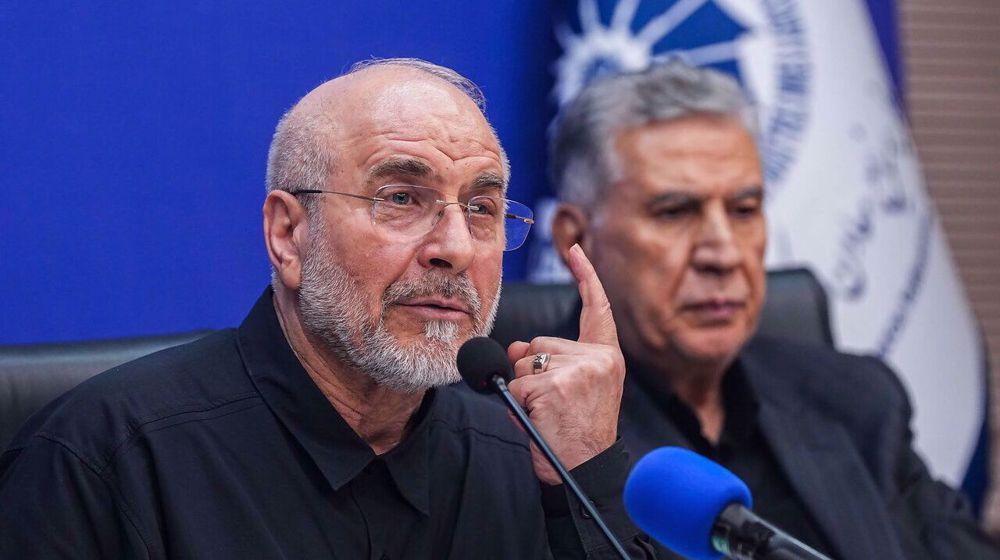
Iran’s parliament speaker Mohammad Bagher Ghalibaf, described as Iran’s special representative for China affairs, told a meeting with the Iranian Chamber of Commerce that Tehran needs new regional blocs with Iran and China at their center.
“Iranian Parliament Speaker Mohammad Baqer Ghalibaf has stressed that Tehran is a “full-fledged” partner of China, emphasizing the pivotal role the two countries would play in any emerging regional bloc”
Ghalibaf said, “In any bloc that emerges, there are two definitive and irreplaceable countries in all areas: China and Iran,” and he also stressed that “We need blocs; I am making it clear that these blocs must be formed and have been formed to some extent.”

The Deep Dive reported that Ghalibaf’s proposal included an operational demand for a dashboard to track the “pulse” of Iran-China economic relations daily, identify problems, and push them back through the system.
The Deep Dive also said Iran already has a 25-year cooperation plan with Beijing, and that China’s foreign ministry said the two countries signed the plan in March 2021 and launched its implementation in January 2022.
Trade tensions and sanctions
The Deep Dive tied Ghalibaf’s push for deeper coordination to a trade imbalance Tehran sees inside the partnership, saying for Tehran that trade balance is the problem hiding inside the partnership.
It reported that Reuters said China’s imports of Iranian crude fell to 1.10 million barrels per day in May, the lowest since January 2025, and that Iran’s own crude exports collapsed to 260,000 barrels per day in May, less than one-fifth of the 2025 average of 1.67 million barrels per day.
The Deep Dive also said Reuters reported that Iranian oil imported by China is often labeled by traders as coming from other countries, including Malaysia and Indonesia, and that Chinese customs data has not shown oil shipped from Iran since July 2022.
In response to a separate dispute tied to nuclear talks, Radio آزادی quoted the Chinese foreign ministry saying on February 16, “Normal cooperation among countries within the framework of international law is reasonable and legitimate and should be respected and supported.”
What’s at stake next
The Deep Dive framed Ghalibaf’s appointment as a signal that China relations have moved above ordinary ministry channels, and it said the meeting brought together economic, industrial, oil, banking, planning, and business figures.
“Iranian Parliament Speaker Mohammad Baqer Qalibaf has stressed that Tehran is a “full-fledged” partner of China, emphasizing the pivotal role the two countries would play in any emerging regional bloc”
It reported that the ask from private-sector and industrial representatives was practical—stable rules, institutional follow-through, Chinese investment, and a shift from imports toward technology transfer and joint production—while also describing the pitch as defensive.
Radio آزادی added that with the resumption of nuclear talks on February 17 in Geneva, the United States was weighing new pressure on Iran’s oil exports to China, and it stated that more than 80 percent of Iran’s oil exports go to China.
The same Radio آزادی report quoted Article 19 director Michael Caster saying, “This is a pattern that China has mastered and evolved domestically,” linking China’s role to technology transfers and Iran’s ability to withstand Western pressure.
More on Iran

United States And Iran Digitally Sign Memorandum To End War, Reopen Strait Of Hormuz
41 sources compared
Trump Administration Releases 14-Point Iran Deal Text, Says It Prevents Worldwide Depression
24 sources compared

Trump Warns Iran Over 14-Point US Memorandum, Triggering 60-Day Strait Of Hormuz Talks
19 sources compared

Three Iranian Tankers Diona, Hero II, Sonia I Pass US Blockade Line in Gulf of Oman
25 sources compared