Yemenupdated 1h ago3 min read
MapMore Than 200 Yemeni Scholars Hold Mecca Conference Backing State and Confronting Houthis
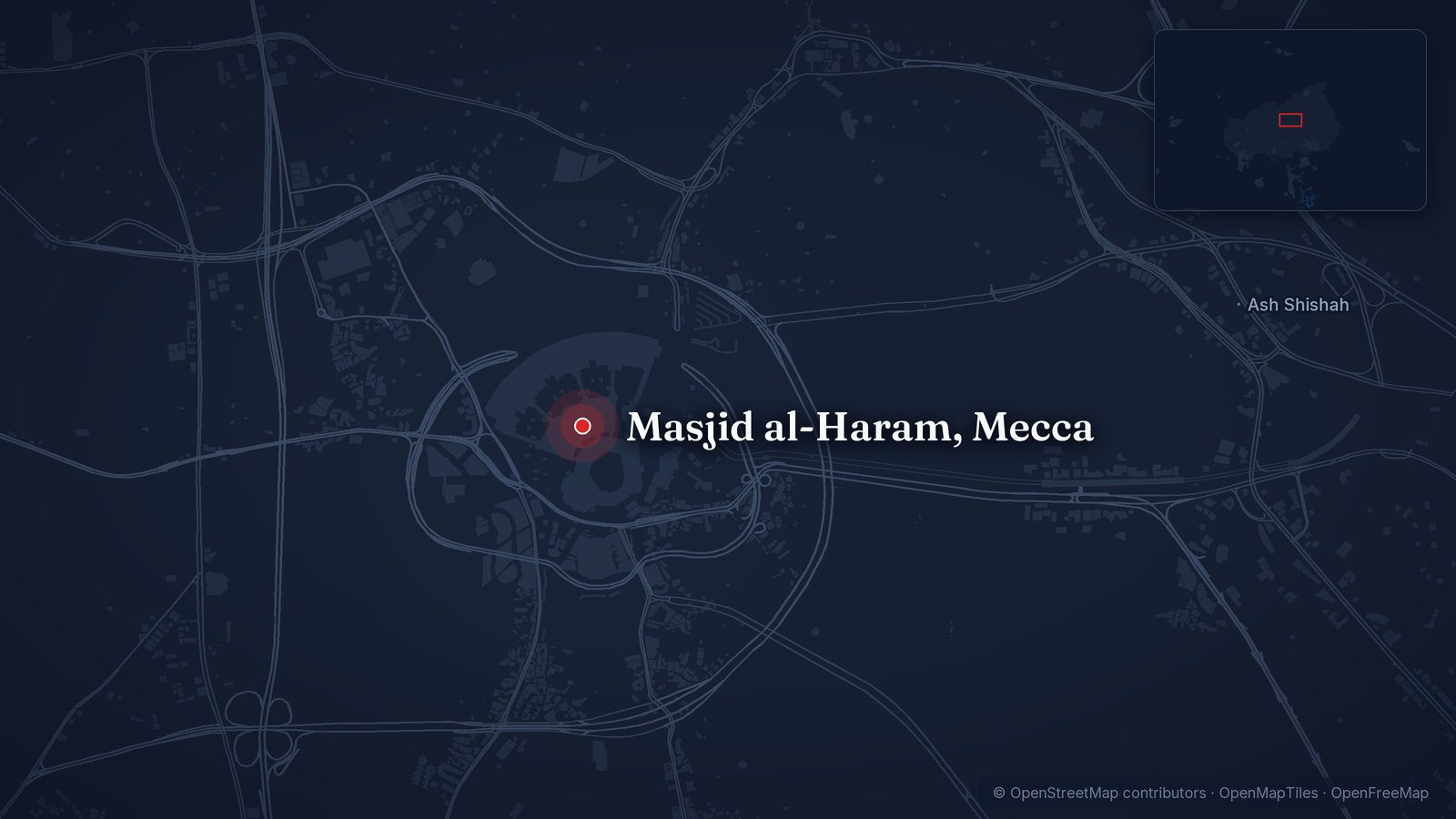
8 West Asian1 OtherMap: © OpenStreetMap contributors, ODbL · Cropped for layout
This article is an automated aggregation of coverage from news outlets. Our editorials offer in-depth analysis curated by the NewsCord team.
More than 200 Yemeni scholars meet in Mecca to back the legitimate state. Final statement urges restoring state institutions and ending the Houthi coup.
Save coverage image
9 outlets in this story. Read their headlines below.
Outlets did split on Houthis Claim Ballistic Missile Strike on Saudi Officers’ Camp in Aden →
Mecca conference backs state
More than 200 Yemeni scholars and preachers gathered in Mecca for a conference hosted by the Saudi Ministry of Islamic Affairs, Call and Guidance under the slogan “Supporting the State and Protecting the Identity… a Duty of the Phase,” with the stated aim of strengthening unity among Yemen’s ranks and supporting the legitimate government as military confrontations against Ansar Allah (the Houthis) continue. The conference, held beside the Grand Mosque, discussed ways to strengthen the unity of Yemeni ranks, support state institutions and the legitimate government, and protect religious and national identity, while also addressing “Houthi terrorism” and resisting attempts by the group to erase Yemeni identity. Mohammed bin Abdul Wahid Al-`Areefi, the supervisor of the program for communication with Yemeni scholars, said the conference discusses the scholars' responsibility in confronting what he described as 'Houthi terrorism,' and resisting attempts by the group to erase the Yemeni identity.
Turki bin Abdullah al-Wad`ei, Yemeni Minister of Endowments and Guidance, affirmed the role of scholars and preachers and said they must expose what he described as the Houthis' deviation and the danger of the sectarian thought they promote. The Yemeni Presidential Leadership Council issued a law designating the Houthis as a terrorist organization and criminalizing their activities and financing, two days after the House of Representatives approved it.
Scholars condemn coup and siege
The conference’s final statement said scholars and preachers unanimously emphasized rallying around legitimate state institutions, supporting efforts to restore state institutions, and ending the coup by the الحوثي (al-Houthi) terrorist militia. The statement urged confronting the الحوثي思想 (Houthi thought) scientifically, intellectually, missionary-wise, and in media, while warning of risks the الحوثي project poses to Yemen’s unity, identity, and security and stability. The statement also called for documenting violations committed by the الحوثي militias against scholars, mosques, Qur’an memorization schools, and religious institutions, and for highlighting them in Islamic and international forums.
The statement urged mobilizing official and popular efforts to lift the unjust الحوثي siege on the city of Taiz and relieve the suffering of its inhabitants. The conference condemned the الحوثي assaults on Saudi Arabia and its citizens and residents on its lands, on civilian targets and vital facilities in both countries, and it condemned any attack targeting Mecca and Medina.
Papers map Saudi-backed role
The conference featured two scientific sessions in which eight working papers were discussed on “the responsibility of scholars in preserving religious and national identity and countering extremist ideas,” with the program held under the Saudi slogan “Supporting the State and Protecting the Identity… a Duty of the Phase.”
Dr. Abdullah al-Hamiri chaired the first session, which discussed four scientific papers, and Dr. Muhammad al-‘Amri argued that the state is a necessity for organizing social life and caring for citizens’ affairs.
Sheikh Abbas al-Nahari discussed the role of scholars in unifying the word and strengthening Yemen’s unity, and Sheikh Abdullah Mar’i explored the concept of extremism and its relation to terrorism.
Sheikh Yahya bin Ali al-Hajjuri delivered an intervention on his behalf by his son Yahya due to health reasons, and the intervention stressed the need to aid the oppressed and protect society from practices described as including killing, displacement, roadblocks, sieges, and attacks on Muslims’ beliefs and sacred places.
The second session, chaired by Dr. Rabi‘ Taahir Hammoud, included papers on Saudi efforts to support Yemen and its stability, and the conference described Saudi support for Yemeni scientific institutions and scientists through the Program for Engaging with Yemeni Scholars and Preachers.