Khabarni
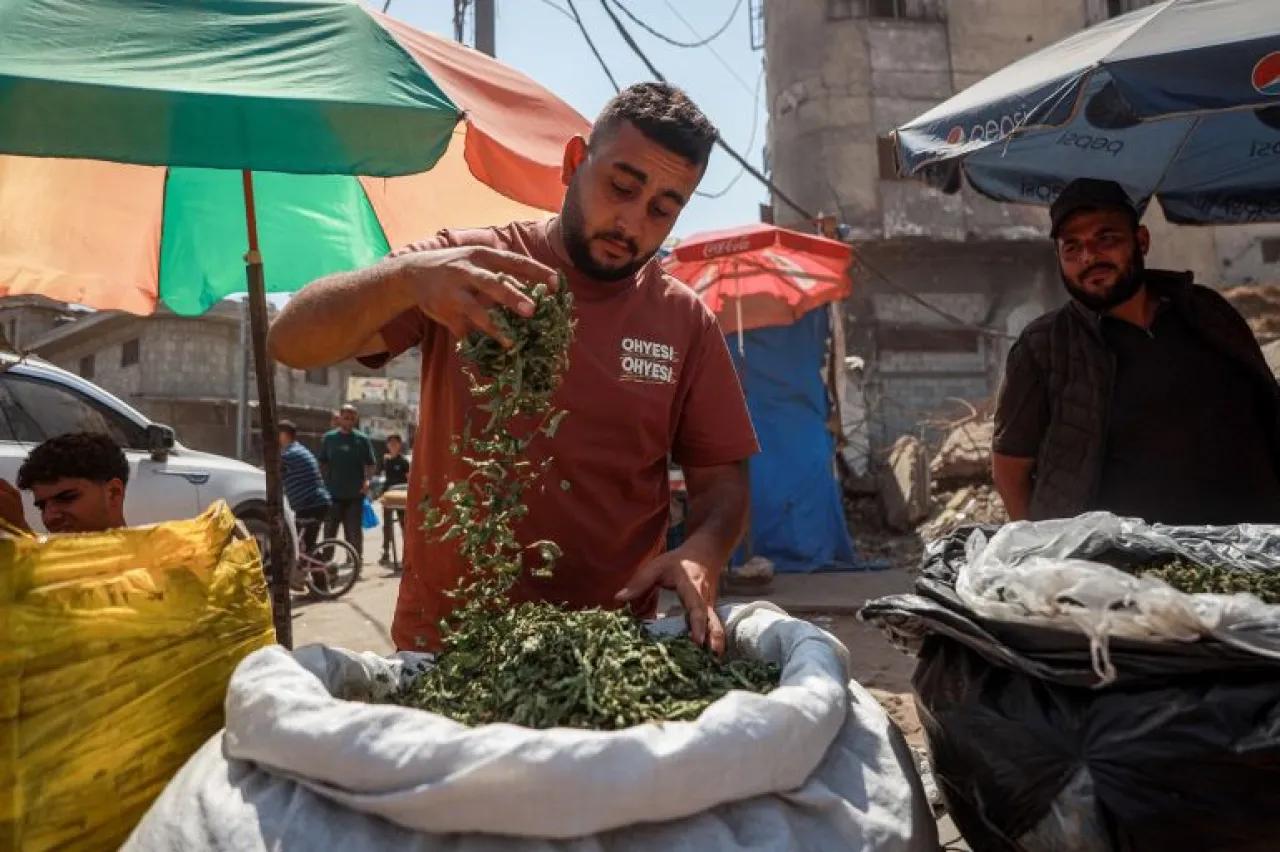
More dangerous than tobacco — As a father of two and unemployed since losing his job as a carpenter at the start of the war, every pack of cigarettes has become an unbearable burden. 'Before the war we tried everything... different tobaccos, and imported brands... Now we smoke whatever we can dry and roll. This is not a real substitute, just a necessity.' Although there is no official confirmation from Gaza's Ministry of Health, several doctors in the respiratory and cardiac departments have reported cases of suffocation, shortness of breath, and changes in face color linked to smoking molokhia cigarettes. Dr. Ahmed Said Al-Jadba, an ENT specialist, warns that burning molokhia may be even more dangerous than traditional tobacco, and may increase cancer risk. He explains that substances added to dried molokhia include liquid nicotine, a known carcinogen, and in some cases even industrial substances such as pesticides or battery oils, making the mixture highly toxic. 'When these substances are burned, they release toxic gases like carbon monoxide and tar... these are the same harmful compounds found in traditional tobacco, and they are among the main causes of cancer and cellular damage over time.' He notes that many patients arriving at clinics suffer from severe coughing, hoarseness, and dark or yellow phlegm, and in some cases pre-cancerous lesions on the vocal cords. 'Isn't all of our lives harmful anyway?' Ala recalls having bad experiences with nicotine, including a troubling incident when liquid nicotine touched his skin, causing severe irritation and loss of consciousness for four hours. 'I used to carry a nicotine syringe in my pocket... it broke suddenly and leaked onto my skin. It caused severe burns and penetrated tissue. I would have died if not for God's mercy.' He adds that he has heard of several similar incidents in the local market, where improper handling of nicotine led to serious injuries or even fatalities. Despite full awareness of the risks, addiction and economic pressure override his attempts to quit. He says, 'In difficult circumstances like ours in Gaza, we need to smoke just to relieve the pressure... something to vent all this tension.' 'Aren't all our lives harmful anyway?' Molokhia mixed with nicotine has become common as street vendors try to make ends meet. What was a modest prewar income has become more precarious due to Israeli restrictions on imports into Gaza. Israel has not allowed tobacco products into Gaza since the start of its war on the territory, along with other restrictions on food and humanitarian aid into the territory. These restrictions were supposed to be lifted under the current ceasefire, which began in October, but Israel continued to restrict what can enter Gaza. Unconventional alternatives — Abdul Karim Hals (36) from Shujaiya, now displaced in western Gaza City, has been selling tobacco for years, and says: 'We have been in the tobacco business since before the war... and we continued during the war. I have no other profession.' But the real shift, as he explains, is not limited to trading conditions but also to customer behavior. With the spike in cigarette prices, people began turning to unconventional substitutes, including herbs mixed with nicotine, most notably molokhia. He says the idea spread as an emergency fix within a broader improvisation forced by scarcity. But he acknowledges that this 'solution' carries serious health risks. 'Using raw nicotine with herbs is dangerous... it's a toxic substance and may cause death,' recalling incidents in the market: 'I know two people who recently died immediately after taking nicotine.' He explains that the danger lies not in nicotine itself but in how it interacts with the dried herbs, especially molokhia, which has become the most used base because 'it holds the substance' better than other plants. He describes the preparation method as primitive: 'The leaves are dried, ground, and mixed with nicotine to produce a smoking material, far from any safety standards,' emphasizing that it cannot be considered a real substitute. But he says the economic reality and rising cigarette prices leave him with little room to choose. 'A pack of cigarettes used to cost 15 shekels ($5.15) ... now it can reach 500 or 600 shekels ($171 or $205). It's nearly impossible for many.' He adds that even singles are sold at inflated prices, reflecting a sharp collapse in purchasing power. Psychological pressure — This sharp rise, along with shortages and import restrictions, has led to a steep drop in demand, not due to health awareness, but simply because people can no longer afford it. Hasan Hagan (40), who has smoked since 2017, has turned to molokhia cigarettes, saying: 'Honestly, I worry about my health... but what's available isn't a real substitute.' He describes waking up daily with shortness of breath and a chest full of dark phlegm, which has driven him to quit several times, but he relapses under the pressure of addiction. Like hundreds of thousands of others in Gaza, Hasan is simply trying to get by, not knowing when life will return to some form of normal. 'I can barely feed my four children... my situation is suffocating. I lost my home in Shujaiya and now live in a tent under extremely harsh conditions.'
09 June, 2026
Read the original →