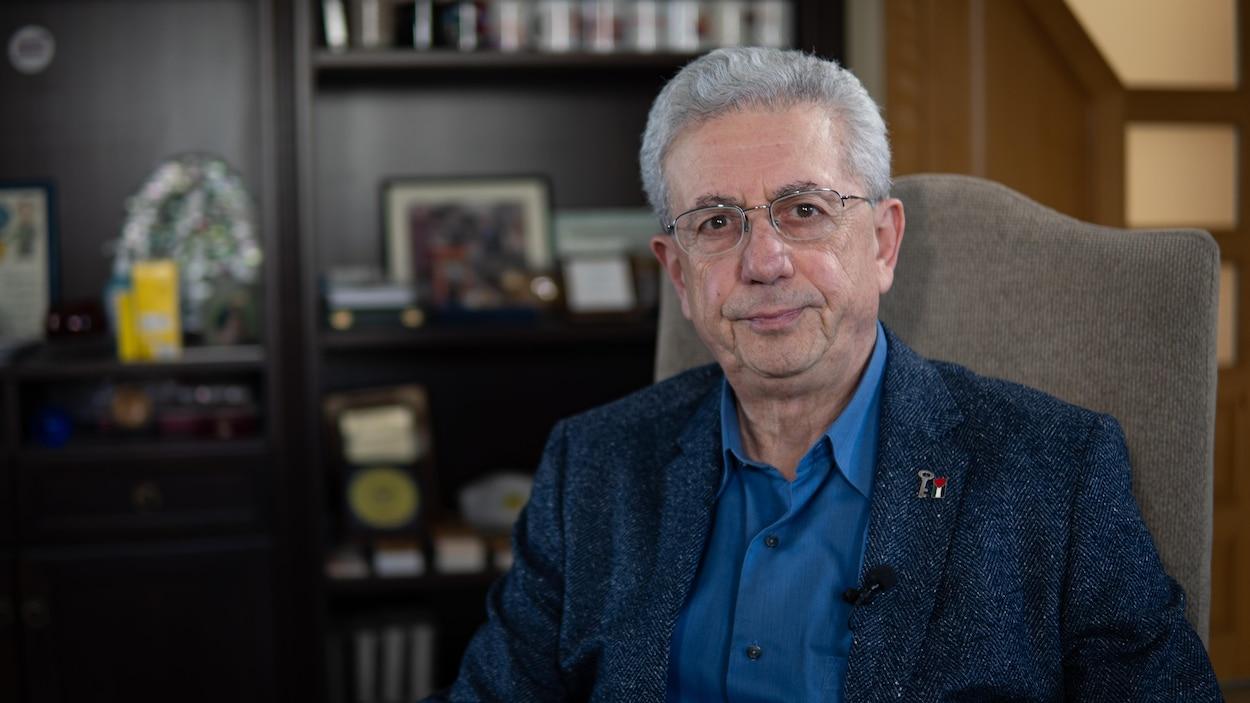
Mustafa Barghouti Says Israel’s Gaza War Continues Despite Ceasefire, With 1,530 Violations
Key Takeaways
- Barghouti leads the Palestinian National Initiative.
- The PNI operates from Ramallah, hosting Barghouti's leadership activities.
- Washington discussions with Trump's Peace Council address Gaza ceasefire implementation.
Ceasefire, daily violations
The war on Gaza has not actually ceased despite a ceasefire, Palestinian leader Mustafa Barghouti said in an Anadolu interview, arguing that “the war on Gaza has not actually ceased despite the ceasefire, and Israeli violations reflect the fragility of the field situation.”
“Barghouti: Escalation against Iran Gives Israel Cover to Bypass the Palestinian Arena (Interview) Mustafa Barghouti, Secretary-General of the Palestinian National Initiative Movement: - The region is moving toward a new phase of regional realignment with the possibility of additional actors entering the line of confrontation and the conflict spiraling out of control Qais Omar Darwesh Omar March 3, 2026 • Updated: March 3, 2026 Ramallah Ramallah/ Qais Abu Samrah/ Anadolu Mustafa Barghouti: - The region is moving toward a new phase of regional realignment with the possible entry of additional parties into the line of confrontation, which may push the conflict beyond the Palestinian arena - The war on Gaza has not actually ceased despite the ceasefire, and Israeli violations reflect the fragility of the field situation and the possibility of it spiraling into a wider confrontation - What is happening in the West Bank amounts to the imposition of an actual curfew between areas and reflects an Israeli tendency toward gradual annexation and imposing new faits accomplis on the ground - The current phase requires political and popular vigilance and regional and international solidarity to contain the escalation before the region becomes an open confrontation arena In an exclusive interview with Anadolu, Barghouti said that the regional scene amid the US-Israeli war on Iran is characterized by an “unprecedented danger,” and the escalation gives Tel Aviv a “cover to widen the circle of conflict beyond the Palestinian arena” Barghouti, in the Anadolu interview, considered that direct US involvement in the ongoing escalation against Iran “serves primarily the agenda of the Israeli government, and provides it with cover to widen the circle of conflict beyond the Palestinian arena”
Barghouti described the situation in the West Bank as “the imposition of an actual curfew between areas,” and he linked that to “an Israeli tendency toward gradual annexation and imposing new faits accomplis on the ground.”

In El País, Barghuti described a West Bank reality of confinement, saying, “We are surrounded by 1,100 checkpoints and 200 security gates that isolate the communities and turn them into cages,” while he spoke from the Ramala headquarters of Iniciativa Nacional Palestina.
El País also reported that Israel has taken advantage of the conflict with Teheran to extend its control over large areas allocated to la Autoridad Palestina in the Oslo Accords of 1993, while settlers’ aggressions multiplied.
The same El País report said the Gaza war, starting in October 2023, and the latest confrontation with Iran “have only worsened a crisis that has plunged the daily life of Palestinians into ‘survival mode,’” warning that reconstruction remains blocked and basic supplies still do not reach a population of two million inhabitants.
Radio-Canada’s interview with Barghouti added that “There is no ceasefire in Gaza,” and that Israel “has been violated since October 10, no fewer than 1,530 times,” during which “Israel has killed more than 612 Palestinians and wounded more than 1,600 others.”
From Iran escalation to Gaza
Barghouti tied the Gaza crisis to a broader regional escalation, telling Anadolu that the “region is moving toward a new phase of regional realignment” and warning that “the possibility of additional parties entering the line of confrontation… may push the conflict beyond the Palestinian arena.”
He said the “unprecedented danger” in the region stems from the US-Israeli war on Iran, and he argued that the escalation gives Tel Aviv “cover to widen the circle of conflict beyond the Palestinian arena.”

In the same Anadolu interview, Barghouti said direct US involvement “serves primarily the agenda of the Israeli government, and provides it with cover to widen the circle of conflict beyond the Palestinian arena.”
El País similarly described how Israel “has taken advantage of the conflict with Teheran to extend its control over large areas allocated to la Autoridad Palestina in the Oslo Accords of 1993,” while settlers’ aggressions multiplied.
El País also said the Palestinians have suffered the consequences of a war in which “four young women have died from the impact of an Iranian projectile,” and that “more than ten civilians have died in attacks by settlers and Israeli soldiers.”
Barghouti’s warning in Anadolu that “continuing this path will lead to catastrophic consequences for the peoples of the entire region” was paired with a discussion of global repercussions, including oil prices and energy sources.
Humanitarian collapse and disease
El País described Gaza’s humanitarian situation as a continuing collapse, stating that “Médecins Sans Frontières defines daily life in Gaza as ‘catastrophic’ after six months of nominal ceasefire.”
“Donald Trump's Peace Council, tasked with implementing the second phase of the Gaza ceasefire, meets in Washington for the first time”
The same report quoted MSF denouncing “a continuous and deliberate pattern of blocking aid, with shortages of drinking water and food, and no access to healthcare,” adding that “Israel prevents the entry of medical supplies and evacuations of seriously ill patients.”
El País also said the reconstruction process remains blocked and that “basic supplies still do not reach a population of two million inhabitants,” while “the risk of war re-igniting in Gaza grows.”
Radio-Canada’s Barghouti described the consequences of the war’s damage in stark terms, saying “the infrastructure is totally damaged,” and that “Because of that, people still drink polluted water.”
He added that “One consequence is that we have 73,000 cases of infectious hepatitis and many, many other diseases,” and he said “More than 90% of homes are either completely destroyed, or severely damaged.”
In El País, the death toll in the Strip was described as continuing, with “Five people died on Monday the 13th in Israeli army incursions,” and “On Saturday, two truck drivers supplying drinking water for a UN agency were shot.”
Peace council and the second phase
Radio-Canada reported that Donald Trump’s Peace Council, tasked with implementing the second phase of the Gaza ceasefire, met in Washington for the first time, and it sent a special envoy, Jean-François Bélanger, to meet Moustafa Barghouti in Ramallah.
Barghouti told Radio-Canada that “We are confused about this Peace Council,” saying “We don't know who is in it or not,” and he argued that “Trump's various statements show that this is not a council for Gaza, but something that could become a substitute for the United Nations.”
He said “That's why many countries, notably in Europe, abstain from participating,” and he criticized the composition by saying “there isn't a single Palestinian.”
Barghouti also challenged the legitimacy of the process by stating, “I thought peace was usually made between two parties,” and he added, “There is no ceasefire in Gaza. Israel does not respect the ceasefire.”
He accused Israel of violating the ceasefire “since October 10, no fewer than 1,530 times,” and he said “Israel has killed more than 612 Palestinians and wounded more than 1,600 others.”
On the question of the technocratic government, Barghouti said “The technocratic government charged with administering Gaza is ready,” and that it is “in Egypt and waiting for a permit to go to Gaza, which the Israelis have not granted yet.”
Competing narratives and accountability
Across the sources, Barghouti’s framing emphasizes Palestinian confinement, Israeli violations, and the collapse of political prospects, while other reporting elements focus on institutional mechanisms and the language of peace.
“She has to get out of there”
In El País, Barghouti argued that “Israel only handles an occupation plan, not a peace plan,” and he said, “It has already killed the two-State solution; there is no future for a Palestinian State, but we will never abandon our land.”
He also described how he is “forbidden to set foot in his birthplace Jerusalén,” and he linked the West Bank situation to the Oslo Accords of 1993 being undermined by Israel’s actions.
El País included a specific example from the Israeli NGO B’Tselem, saying “The Israeli NGO B’Tselem has established that a Palestinian was shot in the back last week by shots fired by a settler mobilized by the army as a reservist in the village of Deir Yarir, north of Ramala.”
In Anadolu, Barghouti’s emphasis was on regional dynamics, saying the escalation against Iran gives Israel “cover to widen the circle of conflict beyond the Palestinian arena,” and he warned that “continuing this path will lead to catastrophic consequences for the peoples of the entire region.”
Radio-Canada presented a different angle on the same political landscape by focusing on the Peace Council and the second phase, with Barghouti saying “We want peace,” and describing a stabilization force that “will be a peacekeeping force, not a police force.”
More on Gaza Genocide
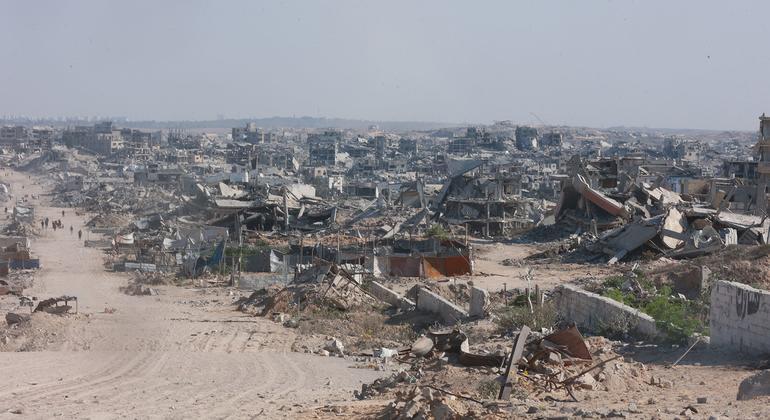
RDNA Finds Gaza Needs More Than $71 Billion Over Next Decade for Recovery
11 sources compared
EU, UN Estimate Gaza Recovery Needs $71.4 Billion Over Next Decade
24 sources compared
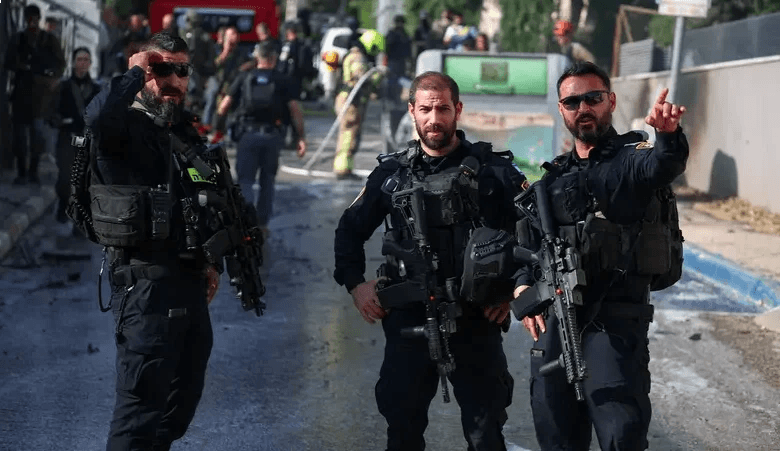
Northern Israel Residents Shut Schools And Shops To Protest Lebanon Ceasefire
11 sources compared
Israeli Attacks Push Gaza Death Toll to 72,551, Injuries Reach 172,274
13 sources compared