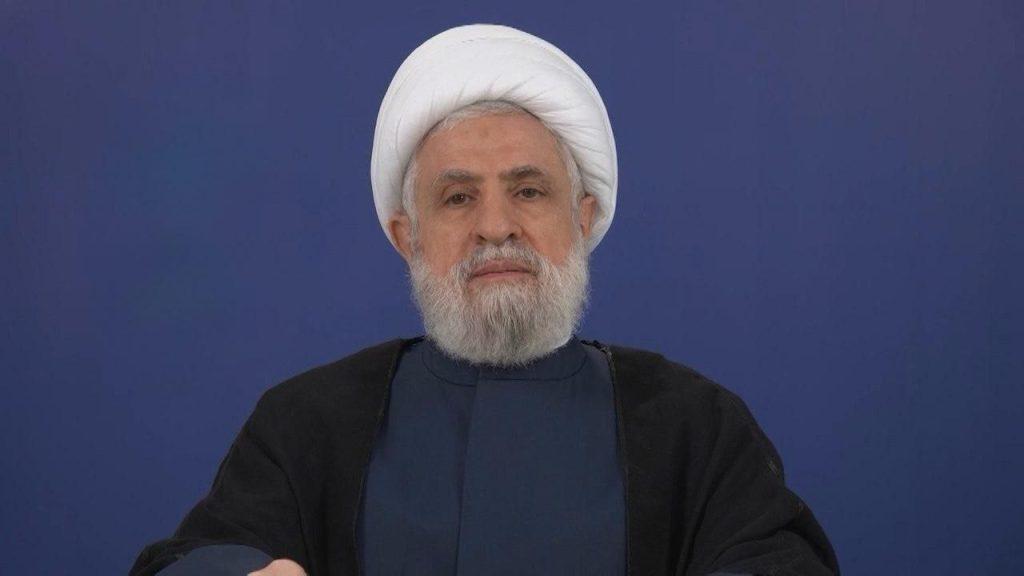
Naim Qassem, Hezbollah chief, rejects Israel talks as surrender amid continued IDF strikes
Key Takeaways
- Qassem says negotiating with Israel under fire would be surrender.
- Urged the government to reverse its ban on Hezbollah's military activities.
- Israeli strikes on Lebanon continued as Hezbollah defied calls for diplomacy.
Negotiation Rejection
Hezbollah Secretary General Naim Qassem firmly rejected negotiations with Israel under current conditions.
“Hezbollah Secretary General Naim Qassem warned that a dangerous US-Israeli scheme to establish the so-called “Greater Israel” is already underway, based on occupation and expansion “from the Euphrates to the Nile, including Lebanon,” and emphasized that attacks on Lebanon have continued unabated for fifteen months”
Qassem declared such talks would constitute 'surrender' for Lebanon.
He stated that 'when negotiations with the Israeli enemy are proposed under fire, this is an imposition of surrender.'
Qassem dismissed the Lebanese president's initiative to start direct negotiations with 'an enemy that occupies our land.'
He called on the Lebanese government to reverse its March 2 decision banning Hezbollah's military activities.
Qassem argued such restrictions serve Israeli objectives and weaken Lebanon's defensive capabilities.
He emphasized dialogue with Israel would be fundamentally unacceptable while occupation continues.
Qassem urged national unity as the only viable path to defend Lebanon's sovereignty.
Military Escalation
The conflict has escalated significantly since Hezbollah resumed rocket attacks at Israel in early 2025.
Hezbollah broke a November 2024 ceasefire deal with their renewed attacks.

The Israeli Defense Force has conducted extensive airstrikes across Lebanon in response.
Recent IDF operations targeted a Hezbollah command center in Beirut's southern suburbs.
Multiple gas stations owned by Hezbollah, including Al-Amana fuel company, were struck.
Rocket-launching squads in southern Lebanon have been targeted by Israeli forces.
The IDF destroyed a Hezbollah weapons depot during ground operations.
Several Hezbollah operatives were killed in ongoing military engagements.
An IDF raid captured a Hezbollah-allied militia commander from Mount Dov.
Israeli authorities issued evacuation warnings for targeted areas.
National Unity Call
Qassem framed Lebanon's situation as a choice between surrender and resistance.
“War in theMiddle East Advertisement Supported by There were few signs that either side was prepared to step back from the fighting”
He presented national unity as the essential response to Israeli aggression.
Qassem emphasized that confronting assault is a 'national responsibility shared by government, people, army, and all political and social forces.'
He called for unity under a single immediate priority: 'halting the aggression to liberate the land and the people.'
Qassem warned the government must avoid decisions serving Israeli objectives, even unintentionally.
He urged reversal of measures that criminalize resistance or its supporters.
The Hezbollah leader described the conflict as a defensive struggle for Lebanon's independence.
Qassem stated that 'the martyrs are among our finest men, women, and children.'
He emphasized that 'every territory reclaimed belongs solely to Lebanon.'
Casualties and Operations
The ongoing conflict has resulted in significant casualties on both sides.
According to the IDF, approximately 700 Hezbollah operatives have been killed since hostilities escalated.
Hundreds of Hezbollah's elite Radwan Force members have been among the casualties.
Lebanon's health ministry reports Israeli attacks have killed over 1,000 people.
Hezbollah maintains a high tempo of operations despite Israeli military pressure.
The group fires an average of about 150 rockets per day.
Roughly two-thirds of daily rocket fire targets Israeli forces in southern Lebanon.
The remaining third of rockets are aimed at Israel proper.
Hezbollah's rocket fire has repeatedly triggered sirens in northern Israeli communities.
Barrages have targeted the Haifa Bay area, demonstrating sustained military capability.
Regional Context
Qassem positioned the conflict within a broader regional context.
“Hezbollah Secretary General Naim Qassem warned that a dangerous US-Israeli scheme to establish the so-called “Greater Israel” is already underway, based on occupation and expansion “from the Euphrates to the Nile, including Lebanon,” and emphasized that attacks on Lebanon have continued unabated for fifteen months”
He warned of a dangerous US-Israeli scheme to establish 'Greater Israel'.
Qassem stated this scheme is based on occupation and expansion 'from the Euphrates to the Nile, including Lebanon.'
He characterized the conflict not as a proxy war but 'a war by Israel and the United States against Lebanon.'
The Hezbollah leader contrasted this with Hezbollah's defensive efforts.
Qassem emphasized the resistance is backed by its people and national supporters.
He expressed unwavering confidence in victory regardless of sacrifices.
Qassem accused Israeli-US campaign of seeking to 'strip Lebanon of its strength'.
He claimed they aim to 'control its policies and determine the future of its people'.
Qassem stated they do this by 'inciting internal strife and legitimizing Israeli occupation.'
More on Lebanon

Hezbollah attacks northern Israel; Israel expands buffer zone to Litani, plans long-term occupation
10 sources compared

Israel Strikes Across Lebanon, Targeting Hezbollah Infrastructure
58 sources compared
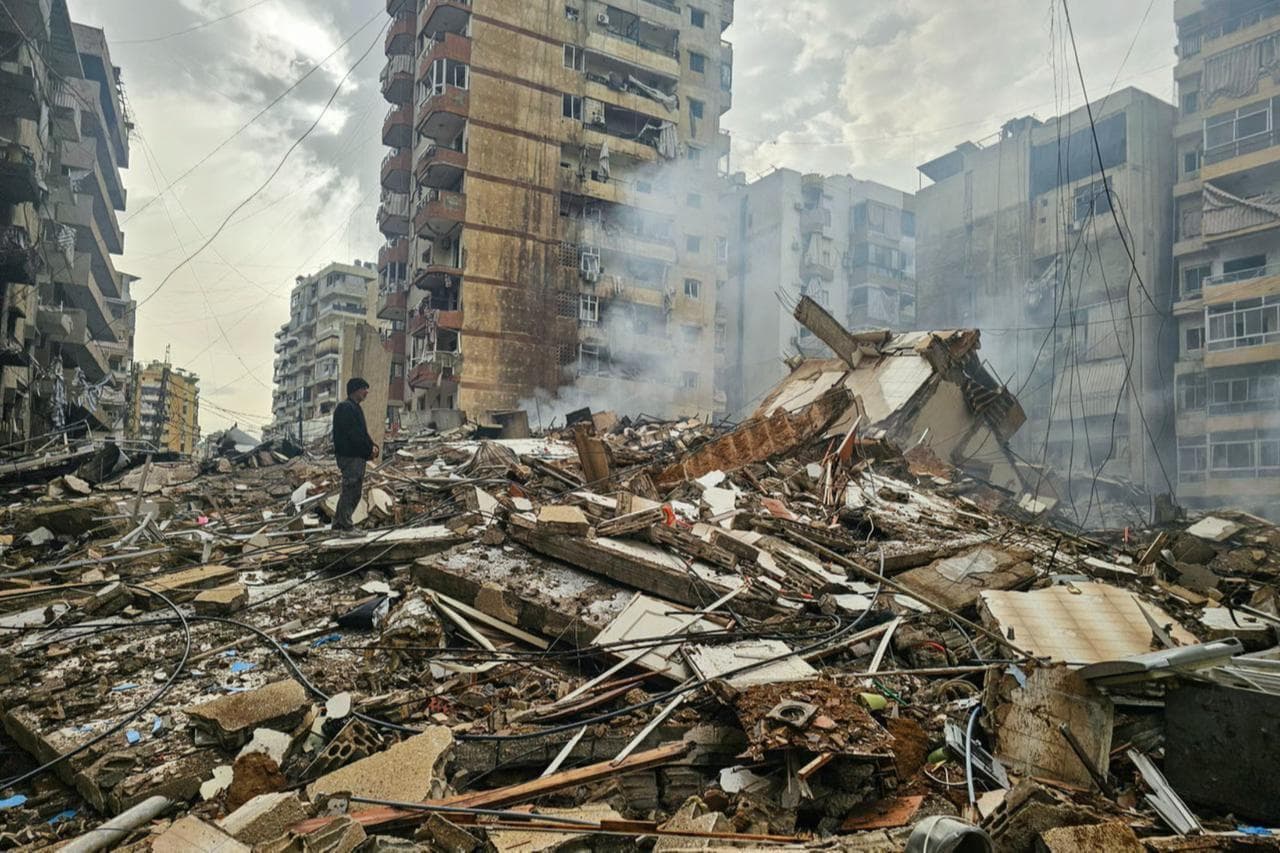
Finance Minister Bezalel Smotrich Calls for Annexation of Southern Lebanon
26 sources compared
Iran fires missile at Lebanon coast after Beirut expels Tehran's ambassador
16 sources compared