Technology and Science18 June, 20263 min read
NASA Launches Swift Boost Mission With Katalyst Space Technologies to Rescue Swift Telescope
This article is an automated aggregation of coverage from news outlets. Our editorials offer in-depth analysis curated by the NewsCord team.
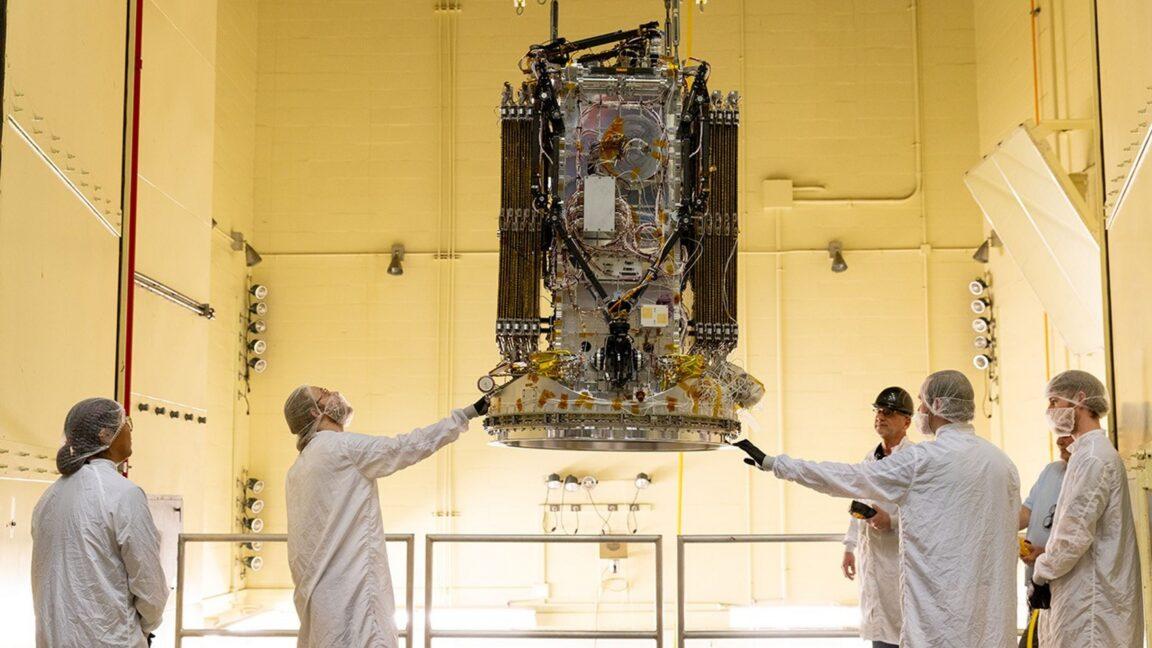
LINK spacecraft by Katalyst Space Technologies rides Pegasus XL to rescue the Swift Observatory. June launch on Pegasus XL aims to prevent Swift from re-entering Earth's atmosphere.

Swift rescue mission nears
NASA’s Swift space observatory is falling toward Earth and is “doomed to a fiery death by the end of the year as its orbit decays,” prompting the agency to pursue the Swift Boost mission to rendezvous and dock with the aging spacecraft. The plan centers on Katalyst Space Technologies’ untested LINK spacecraft, built to lift Swift into a higher, safer orbit before the observatory falls back to Earth, with liftoff officially set for June 27. NASA picked Katalyst in September 2025 to build the boosting spacecraft on a budget of $30 million, and the mission timeline has compressed to the point that Shawn Domagal-Goldman said, “No one thought it was going to be possible.”
Ars Technica reported that NASA asked three companies in August and then awarded Katalyst the $30 million contract in September, while the mission is designed to use three robotic arms to latch onto Swift and boost its orbit back to a safe operating altitude. The rescue effort is time-critical because Swift was launched in 2004 and, without countermeasures, NASA says it would crash by the end of this summer as increased solar activity has puffed up Earth’s atmosphere and increased drag.
Robotic capture and timing
The LINK robotic spacecraft has been attached to the Pegasus XL rocket and is set to be transported to the Marshall Islands in the Pacific before launching from there, with heise online describing a two-step sequence in which LINK approaches Swift, inspects it, and then “slowly push it into a higher orbit.” heise online also said NASA paid Katalyst $30 million and that the mission was expected to happen by the end of June after being originally scheduled for spring, while it added that Swift must not drop below 300 km to be saved. USA Today reported that mission teams on the ground are keeping Swift at least 185 miles above Earth, where the boost mission has the best chance of success, and it framed the effort as unprecedented because Swift “was never meant to be serviced in space.”
Ars Technica described the technical constraint that Swift lacks any thrusters, noting that aerodynamic drag has gradually caused its altitude to decay, and it gave an example of the observatory’s altitude dropping from roughly 363 miles (585 km) above Earth to 225 miles (363 km) as of Thursday. In addition to the capture challenge, the mission depends on a rapid turnaround: Ars Technica said NASA asked in August, awarded in September, and then tasked Katalyst’s Link servicing spacecraft to boost Swift’s orbit back to a safe operating altitude so it can resume scientific observations.

What’s at stake for science
Swift’s scientific value is tied to its role in observing gamma-ray bursts, which Space described as “the most powerful explosions in the universe,” and it said Swift has detected over 2,000 of these sources all the way out to the edge of the visible universe. Space also quoted Swift principal investigator Brad Cenko saying, “Swift was designed to study gamma-ray bursts, short-lived flashes of high-energy light,” and it linked Swift’s observations to confirming that the heaviest elements, including gold and platinum, were forged by these explosive cosmic events. The mission’s stakes are also operational: Ars Technica said Swift launched in November 2004 into an orbit roughly 363 miles (585 km) above Earth and is expected to burn up during reentry as it continues to descend, while heise online said Swift must not drop below 300 km.
“To be saved, it must not drop below 300 km.”
Northrop Grumman’s materials emphasized that Pegasus will launch this June from Kwajalein Atoll to intercept Swift in a decaying orbit and boost it to a higher altitude, and it highlighted that Pegasus is “renowned for its pioneering air-launched design” and was deemed able to meet orbit, timeline, and budget requirements. If the rescue succeeds, the sources frame it as more than a one-off: heise online said a successful mission would prove that the usual procedure can be significantly accelerated, while Space described the boost as adding years of life to the aging space telescope’s mission.