
Nearly 650,000 Gaza Children Lose Schooling After Israeli Airstrikes Destroy Schools
Key Takeaways
- Gaza's schools and education spaces have been destroyed or closed.
- Displaced children study music in tents using improvised instruments.
- Singing and music activity serves as resilience amid displacement.
Schooling stripped away
Nearly 650,000 children in Gaza have not had access to schooling for almost eleven months, as the war has destroyed public schools and private schools and left families trapped in displacement.
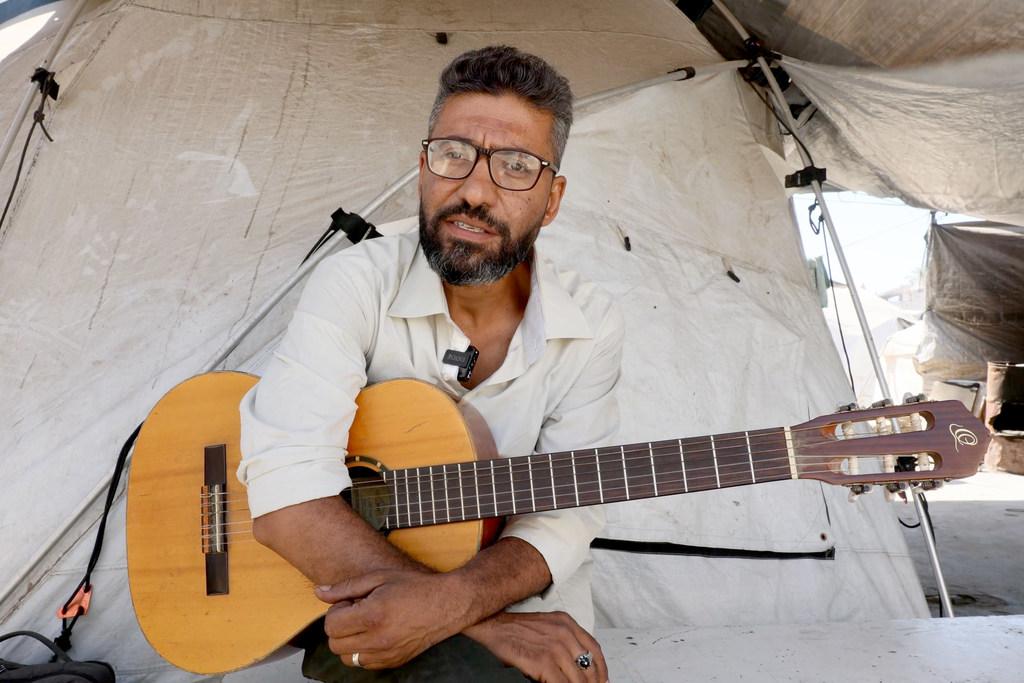
“Palestine Media Agency, August 20, 2025 Ahmed Abu Amsha is a music professor at the Edward Said Conservatory and a coordinator in southern Gaza”
Politis.fr describes a child in a green T-shirt trying to slip between adults to see his father one last time, killed in an Israeli airstrike, and says “Public schools, private schools, they are all destroyed.”
The same source says Asma, who taught French in Khan Younis, explains that “For almost eleven months, the war has been stealing the childhood of the youngest in the Palestinian enclave,” and adds that the youngest who are in primary “have not learned to read and write.”
Politis.fr also frames the loss of schooling as a break in a prior pattern, saying that before October 7, 94 percent of children under 10 were going to school, and that the literacy rate in the enclave was 97 percent even after a seventeen-year blockade imposed by Israel.
In parallel, UN News reports that on Al-Jalaa Street in Gaza City, plastic tents have been turned into a temporary home for the Edward Said Institute for Music after its headquarters were destroyed, with children and youths learning to play the oud, guitar, and violin.
Music as survival
Agence Media Palestine says Palestinian music teacher Ahmed Abu Amsha, a coordinator in southern Gaza and a music professor at the Edward Said Conservatory, brings a project to life under the “incessant buzzing of Israeli drones,” teaching displaced children to sing amid ruins.
It adds that, with a small team of musicians, he and colleagues provide lessons to more than 600 children across the southern Gaza Strip, including in tents and improvised rooms in refugee camps such as Al-Mawasi near Khan Younis.
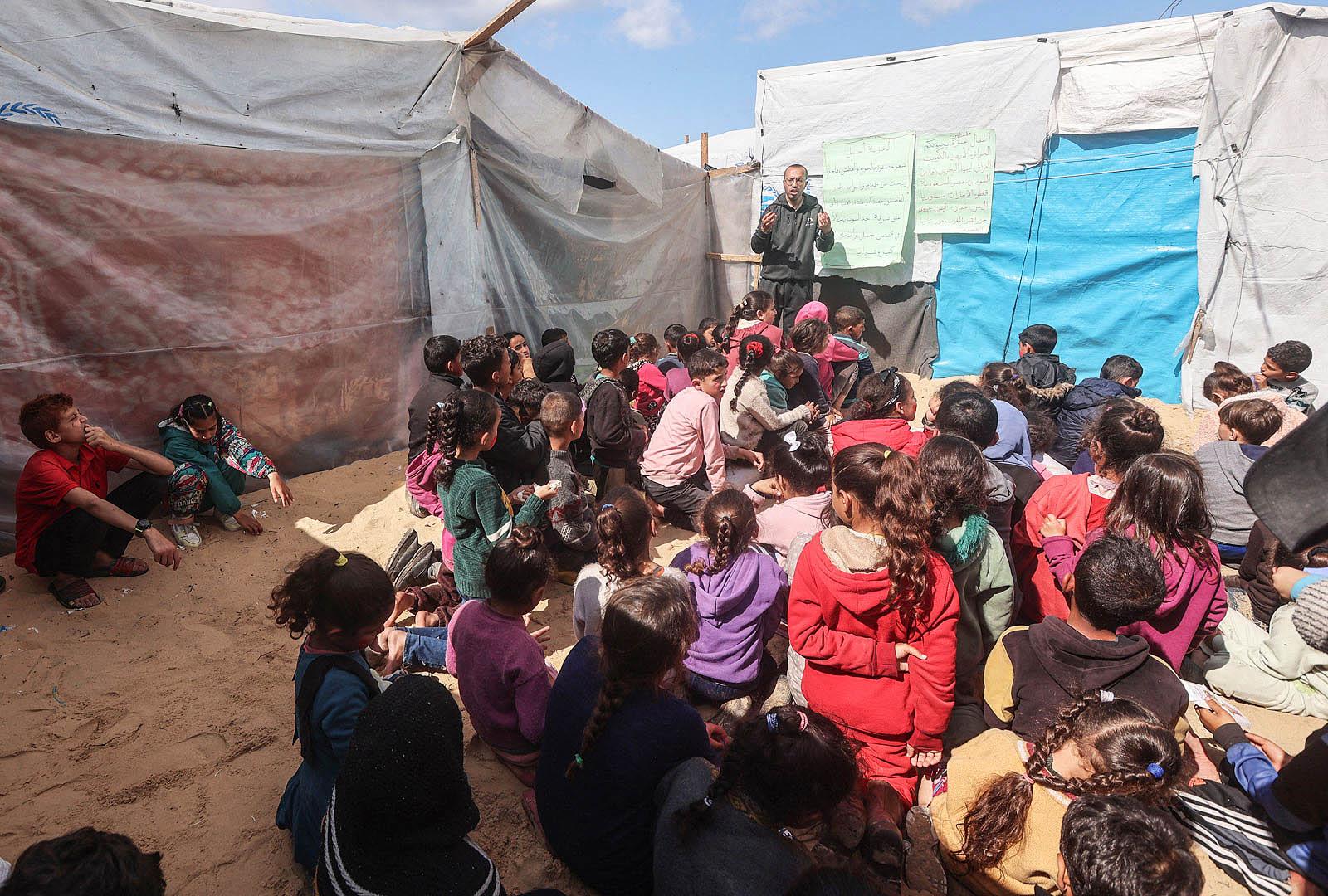
Al Jazeera Net describes the same Edward Said Music Project through stories inside displacement tents and shelters, including Fuad Khadr and the 15-year-old Malak Al-Talmas, who tells how she lost her entire family and carries her younger sister Bayan while learning guitar.
In that account, Malak says, “The guitar was my consolation in my most painful days; I carry it under my arm and begin to play my sorrows,” and frames training as a way to lighten the burden after playing.
UN News also quotes student Hanan Ghazal saying, “To escape the atmosphere of war and the feeling of insecurity we lived with, I turned to learning music to be my refuge amid all this destruction.”
What’s at stake next
The Guardian reports that the Gaza branch of Palestine’s national conservatory—dedicated to teaching classical, popular and traditional music—has reopened in tents after its Gaza City offices, “three pianos,” and store rooms full of instruments and musical scores were destroyed in the Israeli offensive that laid waste much of Gaza between October 2023 and October 2025.
“The three tents line a stretch of overcrowded, windswept sand, their windows open on to a view of the breaking waves of the Mediterranean”
It says the conservatory’s overall headquarters are in the occupied West Bank, while the local branch’s Gaza activities are now constrained by Israeli restrictions on what can enter Gaza, and it notes that a proposed second phase of the ceasefire is stalled as negotiations over the disarmament of Hamas continue.
The Guardian also quotes Ahmed Abu Amsha saying, “Now music has become an important tool for psychological relief,” and describes how he works with children suffering from trauma and psychological distress caused by the war.
In the same article, Abu Amsha recounts the loss of student Yusuf Salman, saying he was killed when a cafe was bombed, and adds that demand for music lessons is high while there are very few teachers.
UN News underscores the operational strain by quoting music teacher and activities coordinator Fuad Khadr, who says, “Personally, as a musician and music teacher, I have been displaced more than 25 times,” and links repeated displacement in the northern Gaza Strip to fragmentation of the music program and difficulties maintaining regular communication with students.
More on Gaza Genocide
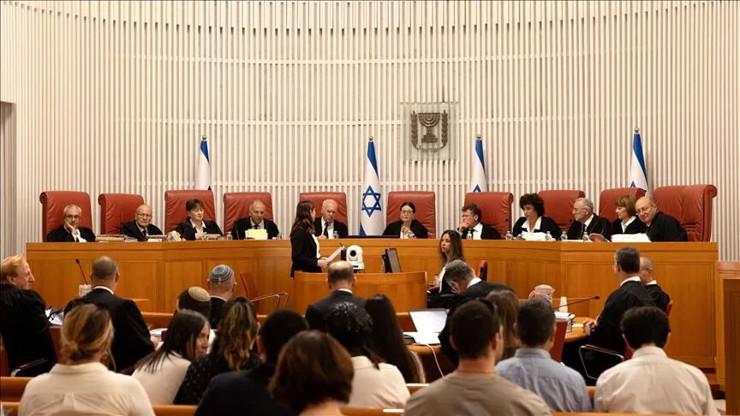
Netanyahu Government Vows To Defy Israel Supreme Court Over Second Authority Quorum
14 sources compared

Lawyer Says Israel Holds Gaza Doctor Hussam Abu Safiya in Immediate Danger
13 sources compared
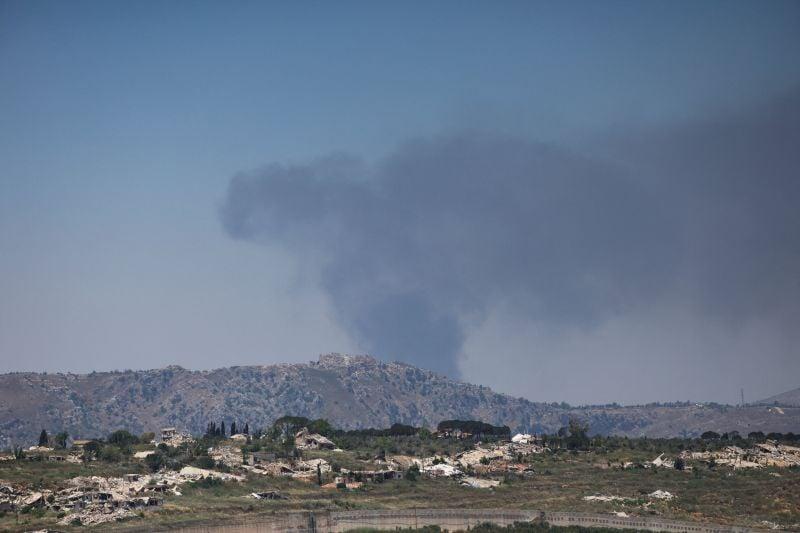
Israel And Lebanon Negotiate Hezbollah-Free Zone Before Israeli Pullback From Southern Villages
12 sources compared

Trump Tells Axios Netanyahu Knows Who the Boss Is Ahead of White House Meeting
18 sources compared