
Full story
Floods, quake signal, ice collapse
Nepalese authorities said floods that struck the Rasuwagadhi region and nearby areas near the Chinese border killed 469 people, with Nepali police issuing the statement on Friday as reported by the local Kathmandu Post on August 28, 2026.
“to indicate that the seismic event, which registered magnitude 5.2, was actually caused by an ice collapse.”
The same report said floodwaters destroyed dozens of bridges and caused substantial damage to roads, prompting the deployment of helicopters to participate in search and rescue operations.
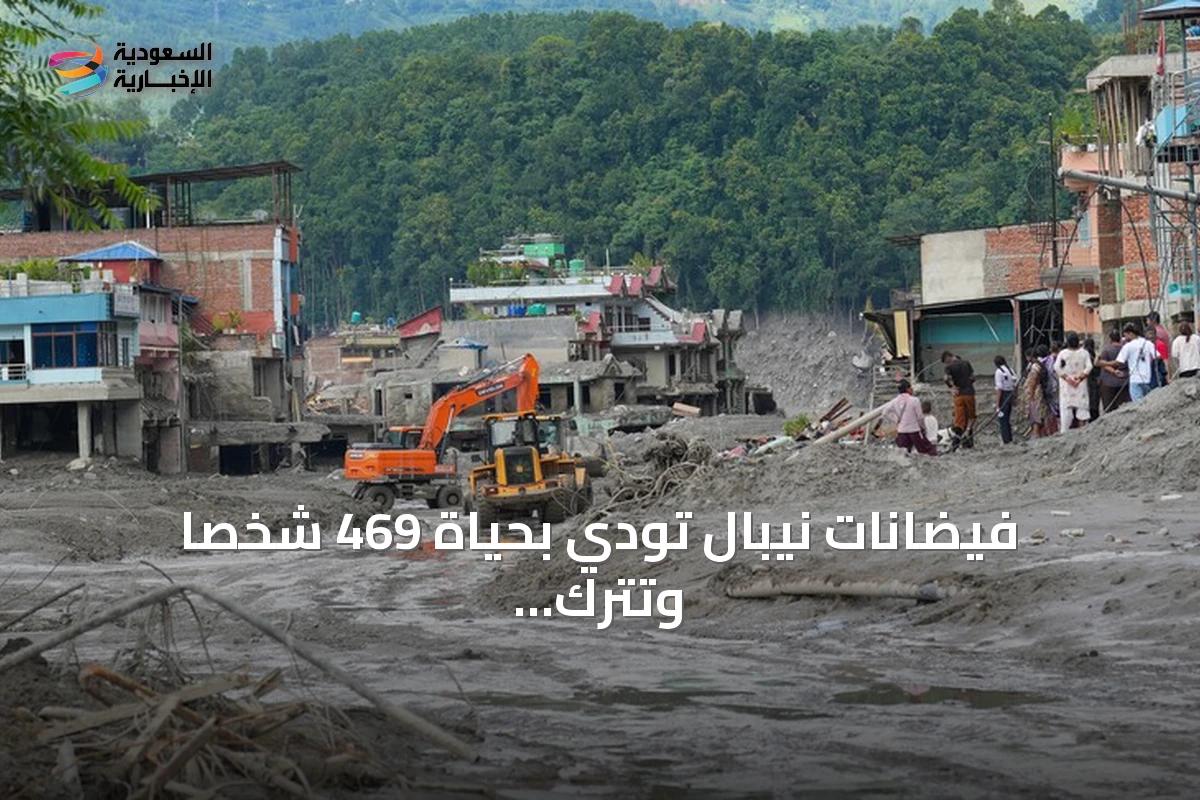
Officials told the Associated Press that more than 1,300 people were missing, while the latest official toll indicated 359 killed and 910 others missing, and China’s official television CCTV reported three deaths and 558 people missing on the Tibetan side of the border.
The United States Geological Survey said it had detected an earthquake before the floods, then revised its data to indicate that the seismic event, which registered magnitude 5.2, was actually caused by an ice collapse.
Experts at the Integrated Mountain Development International Centre (ICIMOD), based in Kathmandu, said the collapse of ice in mountainous areas led to a glacial outburst flood that caused the flooding.
Search hampered by new landslides
The death toll from the devastating flood on Wednesday in the Bhote Koshi basin reached 750, while almost 3,000 people remained missing in a fifth day of searching hampered by new landslides and rains, according to 20Minutos.
Nepal’s National Disaster Risk Reduction Authority (NDRRMA) added 59 fatalities in its latest update, bringing the total number of victims in the Himalayan country to 734, and it also said 2,498 people were unaccounted for since the disaster in Nepal.
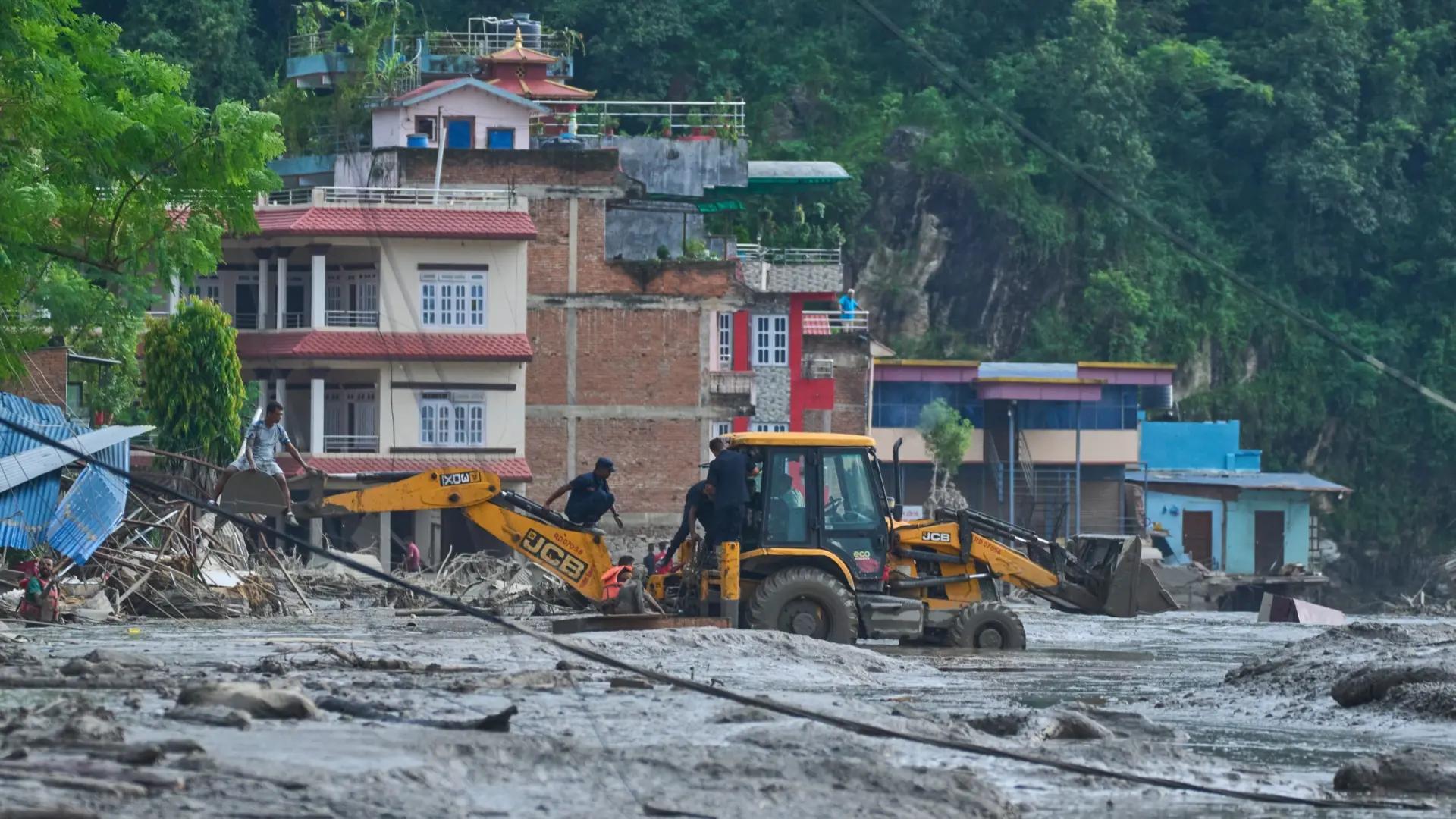
China raised its toll to 16 deaths on the Tibetan side early Sunday and continued to search for 546 missing in its territory, while the largest group among the missing were Nepalese with 104 missing, followed by India with 49 missing.
China evacuated rescue teams near the Gyirong border crossing after detecting a water accumulation following another landslide, and Nepal urged extreme caution due to rising water levels in the Bhote Koshi basin amid a weather alert.
The Chinese Ministry of Emergency Management said a new landslide detected downstream from the natural dam formed by the flood partially blocked the channel and forced the relocation of rescue teams near the Gyirong border crossing, according to CCTV.
Scientists explain chain reaction
ABC News reported that a geophysicist at the Lamont-Doherty Earth Observatory at Columbia University, Göran Ekström, said the flooding could be tracked to a "massive geophysical event" that set off a chain reaction Wednesday.
“a "massive geophysical event" set off a chain reaction Wednesday”
Ekström told ABC News that a landslide in the mountain pass took place during the day that took away a large chunk of land with glacial ice on top in the Himalayas, and he said the event was so powerful it caused an energy equivalent of a 5.2 earthquake registered on seismographs around the globe.
He estimated the flood waters were "outrageously high," possibly 130-160 feet high, and said the water may have moved as fast as 44 miles per hour.
Ekström said a second landslide occurred about three hours after the first, raising concerns that the first landslide left slopes unstable and that more landslides could occur in the region.
ABC News also said the International Centre for Integrated Mountain Development and the United Nations Development Programme identified 3,624 glacial lakes across Nepal, India and Tibet, with 47 classified as potentially dangerous and at risk of bursting, including 21 in Nepal.