
Netanyahu Orders IDF To Vigorously Attack Hezbollah Targets In Lebanon After Ceasefire Extension
Key Takeaways
- Netanyahu orders IDF to vigorously attack Hezbollah targets in Lebanon after ceasefire extension.
- Ceasefire extended by three weeks.
- Fresh Israeli attacks followed the directive, with casualties reported in southern Lebanon.
Ceasefire strains in Lebanon
Israel’s Prime Minister Benjamin Netanyahu ordered his military to “vigorously attack Hezbollah targets” in Lebanon, two days after a ceasefire was extended by three weeks.
“Israel has continued its attacks on southern Lebanon, hours after ceasefire between the two countries was extended for a further three weeks”
Fresh Israeli attacks followed the directive, coming after at least six people were killed in strikes on southern Lebanon on Saturday, according to the reporting in the sources.
The BBC described the ceasefire as having “seen a reduction in fire rather than a complete halt,” and said it was extended on Thursday after talks between the countries’ envoys in Washington.
The same BBC account said Israeli strikes on a truck and a motorbike in the town of Yohmor al-Shaqeef in the Nabatieh district killed four people, citing Lebanon’s health ministry via Agence-France-Presse.
It also said another two people were killed and 17 injured in an attack on the town of Safad al-Battikh in the Bint Jbeil district.
In the background of the renewed fighting, the Al Jazeera report said the attacks marked “the latest violations of a ceasefire that began on April 16 after weeks of fighting between Israel and Hezbollah.”
The Al Jazeera report also said Israeli forces remain stationed in southern Lebanon after establishing a “yellow line” in the region, and that Hezbollah began firing back rockets and drones at Israeli troops inside southern Lebanon and across the border inside Israel.
Attacks, locations, and claims
The sources describe a chain of incidents across multiple southern Lebanon districts after Netanyahu’s order, with both sides trading claims of strikes and retaliation.
The BBC said the Israel Defense Forces (IDF) “eliminated” three Hezbollah members on Saturday who were driving “a vehicle loaded with weapons,” as well as another one riding a motorcycle, and that two more armed members were killed in the Litani area where Israel has kept soldiers in the self-declared buffer zone.
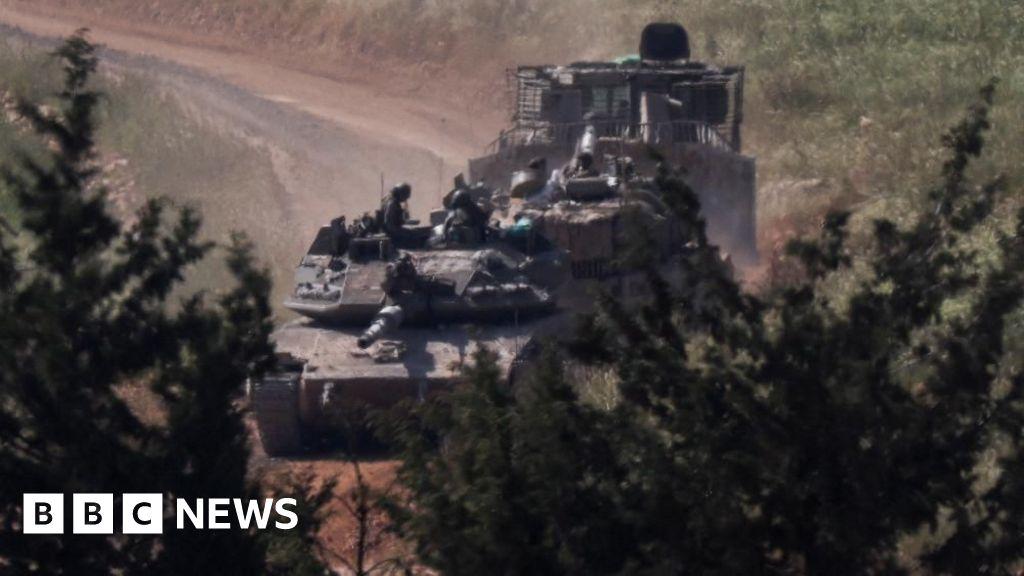
The BBC further reported that the IDF later said a “suspicious aerial target was identified” in the area of Malkia, adding the “incident constitutes an additional violation of the ceasefire.”
In the same BBC account, Hezbollah said it targeted an Israeli army vehicle in south Lebanon in retaliation for the attack on Yohmor al-Shaqeef, AFP reported.
The yalibnan report added that after Netanyahu’s order, Lebanon’s state-run National News Agency (NNA) reported a pair of strikes in quick succession in a town in Bint Jbeil district, another on a town in Tyre district, and strikes on two more towns in Nabatieh district.
It also said the Israeli military reported it “struck Hezbollah terrorist infrastructure used for military purposes across southern Lebanon” and would “continue to operate decisively against threats directed at Israeli civilians and IDF soldiers.”
Separately, Israel National News described the lead-up in terms of sirens and aerial threats, saying at around 5:15 p.m. on Saturday afternoon sirens sounded in the western Galilee after a UAV infiltration and that the Israeli Air Force successfully intercepted a suspicious aerial target launched from Lebanon toward Israeli territory.
Journalists targeted amid strikes
Beyond battlefield claims, the sources also focus on attacks involving media workers during the Lebanon fighting.
“Israeli media reported that Hezbollah launched more than 60 rockets in this batch, with some hitting areas about 100 kilometers from the Lebanese border, including Haifa, Safed, Afula, Hadera, and Karmiel”
The BBC and yalibnan both describe an international press advocacy group condemning attacks on journalists in Lebanon as “unacceptable,” after a journalist was among those killed in Israeli attacks on Wednesday.
The Media Freedom Coalition (MFC), described in the BBC and yalibnan accounts as a partnership of countries including the UK, urged all parties to allow members of the media to work freely and safely, with a statement from the co-chairs saying: “The UK and Finland strongly condemn all violence directed against journalists and media workers.”
The BBC said an Israeli strike killed Amal Khalil, who worked for a Lebanese newspaper, and injured freelance photographer Zeinab Faraj, and it added that the IDF said it did not target journalists.
The yalibnan report similarly said officials in Lebanon said Amal Khalil and Zeinab Faraj were deliberately targeted as they sought shelter in a home after an initial air strike hit the vehicle in front of them, killing two men.
The Kabul Tribune’s excerpt, citing BBC, repeats that Lebanese officials said the journalists were deliberately targeted while taking shelter after an initial strike, “though the IDF denied targeting media personnel.”
In that context, the Al Jazeera report quoted Hezbollah lawmaker Ali Fayyad dismissing the ceasefire extension as “meaningless,” saying: “It is essential to point out that the ceasefire is meaningless in light of Israel’s insistence on hostile acts, including assassinations, shelling, and gunfire,” and that every Israeli attack gave Hezbollah the “right to retaliate.”
Different outlets, different emphasis
While the core facts of Netanyahu’s directive and the continuation of attacks appear across multiple sources, the outlets diverge in how they frame the sequence and what they foreground.
BBC centers the directive and then moves through a detailed incident-by-incident account, including the casualty figures for Yohmor al-Shaqeef and Safad al-Battikh and the IDF’s “eliminated” claims, while also including the media-worker condemnation and the MFC statement.

In contrast, the Jerusalem Post excerpt functions as a live-updates framing, tying the Lebanon ceasefire strain to broader regional developments and listing items such as “US envoys' Pakistan visit canceled” and “US intercepts Iranian shadow fleet vessel in Arabian Sea,” alongside the line that “Hezbollah violates ceasefire with Israel, launches projectiles at North.”
The Haaretz excerpt, though limited, emphasizes the operational trigger and the language of “forceful” strikes, stating that Netanyahu ordered the IDF to “vigorously strike” Hezbollah targets and describing the announcement as following “two rockets and several drone infiltrations in northern Israel.”
The Al Jazeera report, meanwhile, emphasizes the persistence of military activity despite the ceasefire, quoting its reporter in Tyre saying: “There have been air strikes, drone strikes, home demolitions and continued occupation of territory here in southern Lebanon.”
It also foregrounds Hezbollah’s political response, quoting Ali Fayyad and then adding Netanyahu’s stance that Israel was “maintaining full freedom of action against any threat” and accusing Hezbollah of “trying to sabotage” the ceasefire deal.
Even the Israel National News excerpt, while still centered on Netanyahu’s order, focuses on the procedural and tactical framing of sirens, UAV infiltration, and interception, stating that “contact with the target was lost” and that the incident had concluded.
Casualties, totals, and next steps
The sources also provide casualty totals and describe what each side says it will do next, linking the renewed fighting to the broader stakes of the ceasefire.
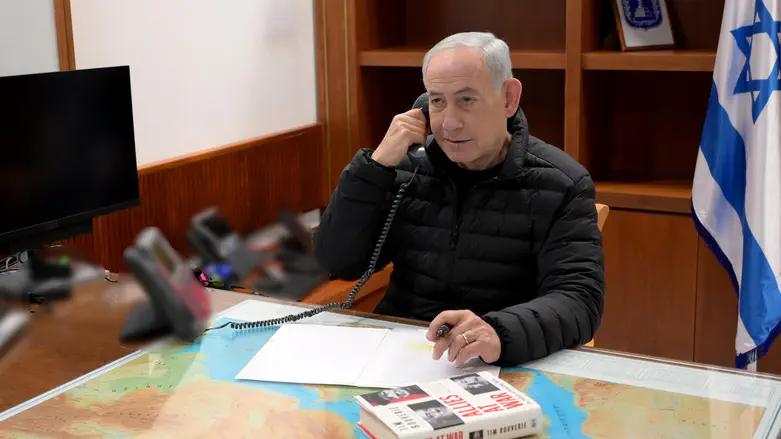
“Prime Minister Benjamin Netanyahu has ordered the IDF to vigorously attack Hezbollah targets in Lebanon, the Prime Minister's Office said Saturday night”
Al Jazeera said the casualty toll since the current round of fighting between the Israeli military and Hezbollah broke out on March 2 has risen to 2,491 people killed and 7,719 wounded, citing Lebanon’s Health Ministry.
It also said the Israeli military on Friday had “eliminated” six Hezbollah fighters in an exchange of fire in the area of Bint Jbeil, and that the Lebanese Health Ministry reported two people were killed in an Israeli air strike in the southern area of Touline.
The Al Jazeera report described ongoing military activity earlier on Friday, including an Israeli artillery attack on the town of Yater in southern Lebanon and a forced evacuation order for the town of Deir Aames, as reported by Lebanon’s state-run National News Agency.
In parallel, the Al Jazeera report quoted Hezbollah lawmaker Ali Fayyad saying the ceasefire is “meaningless” and that every Israeli attack gave Hezbollah the “right to retaliate,” while it quoted Netanyahu saying Israel was “maintaining full freedom of action against any threat” and accusing Hezbollah of “trying to sabotage” the ceasefire deal.
The same report said United Nations Secretary-General Antonio Guterres welcomed the extension of the ceasefire and praised the US for its role in mediating the truce, and it included his call: “Everyone must fully respect the cessation of hostilities, cease any further attacks & comply with their obligations under international law,”.
The yalibnan and BBC accounts both described the ceasefire as having been extended by three weeks after talks in Washington, but also as strained by continued exchanges and violations.
More on Lebanon
Israel Kills Six Hezbollah Fighters in Southern Lebanon After Ceasefire Extension
13 sources compared

Netanyahu Orders IDF To Vigorously Strike Hezbollah Targets In Lebanon
17 sources compared
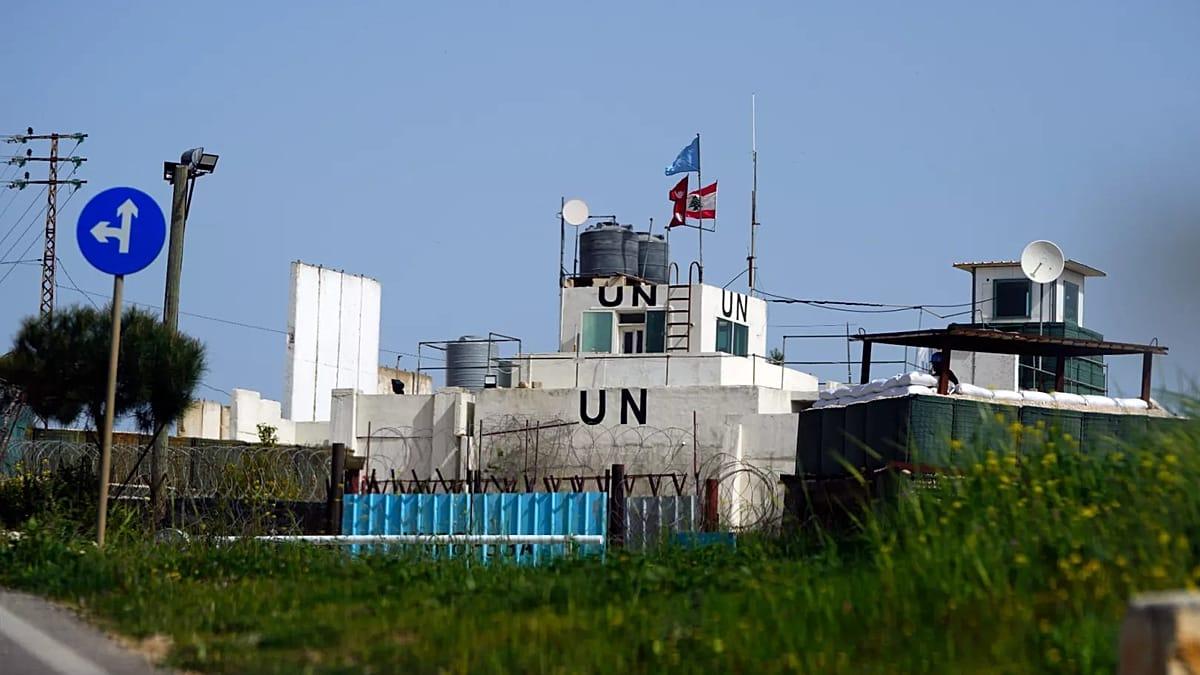
Israel’s Merkava Tank Fired Projectile That Killed Indonesian UNIFIL Peacekeeper Rico Pramudia in Beirut
10 sources compared
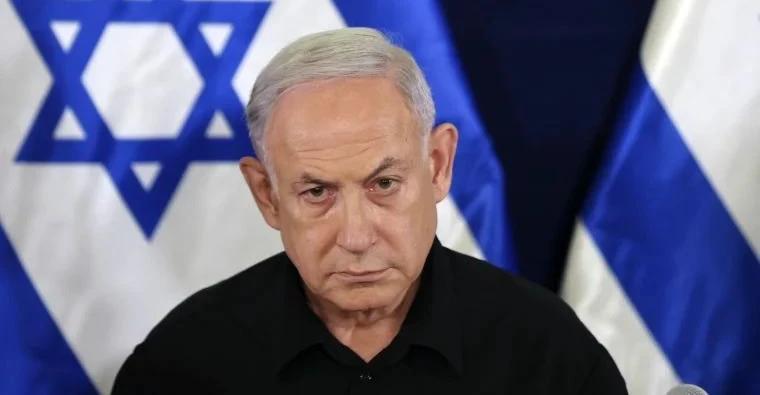
Israeli Strikes Kill Six in Southern Lebanon Despite Extended Ceasefire
45 sources compared