Gaza Genocide10 June, 20262 min read
Netanyahu Says Israeli Strikes in Iran Will Last Many Days, Guterres Urges Restraint
UN Secretary-General urges restraint amid Israeli settler violence in the West Bank. Ending the occupation and achieving a two-state solution remains the credible path to peace.
Escalation Fears Grow
Israel announced on Friday, June 13, that overnight it carried out strikes against military and nuclear sites in Iran, and Iran vowed to retaliate while the Israeli military said its fighter jets continued to strike in Iran. Prime Minister Benjamin Netanyahu stated that the Israeli military operation would last 'for many days,' and the Iranian Supreme Leader threatened Israel with a 'bitter and painful' fate while the Revolutionary Guards promised Israel 'severe vengeance' after the death of their leader.
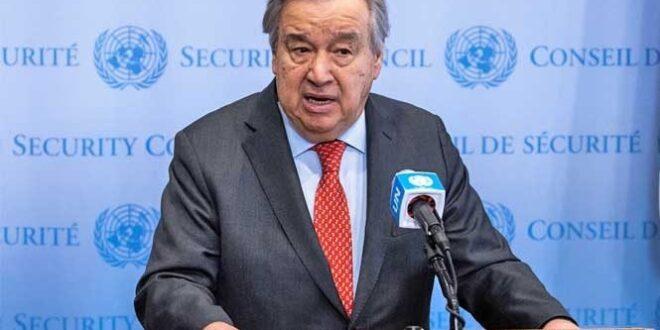
Foreign leaders mostly called for de-escalation in line with the United Nations, whose Secretary-General Antonio Guterres urged Israel and Iran to 'show the greatest restraint.' In Europe, the European Union called to 'defuse the tensions' and its foreign policy chief Kaja Kallas assured that 'diplomacy remains the best path to follow,' while France called 'on all parties to restraint and to avoid any escalation that could jeopardize regional stability.'

UNRWA and Two-State
UNRWA Director of the UNRWA Representation Office for Europe Marta Lorenzo said, 'The Palestinian people must not feel abandoned by the international community,' and the UN News account of the two-state solution framed the conflict as a driver of broader instability. Lorenzo said there is 'no alternative to UNRWA' after António Guterres said on October 29, 2024 that the Israeli Parliament’s decision to ban UNRWA made the agency’s role urgent.
In parallel, UN News reported that a high-level United Nations conference opened on Monday, July 28, with Bob Rae telling UN News, 'This is not a peace conference,' and describing it as a way 'to keep the debate going.' UN News also stated that Israel and its ally, the United States, are not participating in the conference, while UN Secretary-General António Guterres warned in April that the process 'risked disappearing completely.'

Gaza, Occupation, and Risk
United Nations Secretary-General António Guterres said the Israeli-Palestinian conflict remains "the crisis at the root of broader regional instability," stressing that the only reliable way forward is "to end the occupation and achieve a two-state solution."
Guterres warned at a Security Council meeting that "delaying and denial only perpetuate injustice," and said that despite the ceasefire announced eight months ago, Gaza continues to face "a deep state of uncertainty and enormous humanitarian suffering."
He called for the full implementation of the comprehensive plan brokered by the United States, Qatar, Egypt, and Turkey, emphasizing that "humanitarian aid must never be used as a bargaining chip" and that Gaza is and will remain an inseparable part of the Palestinian state.
The UN News conference coverage linked the stakes to the wider political track, quoting Guterres asking, 'what is the alternative? Is there a one-state solution where either the Palestinians are expelled, or they will be forced to live on their land without rights?'