
Nvidia's Networking Division Tops $11 Billion in a Quarter, Rivaling Its Chip Business.
Key Takeaways
- Networking unit generated about $11 billion in quarterly revenue.
- Has grown into a multibillion-dollar engine within Nvidia's portfolio.
- The unit quietly rivals Nvidia's chip business in scale.
Networking Division Surge
Nvidia's networking division has emerged as a powerhouse, generating $11 billion in quarterly revenue.
“Nvidia’s fastest-rising business isn’t its famed GPUs”
This staggering performance represents one of the fastest-growing segments in enterprise tech.
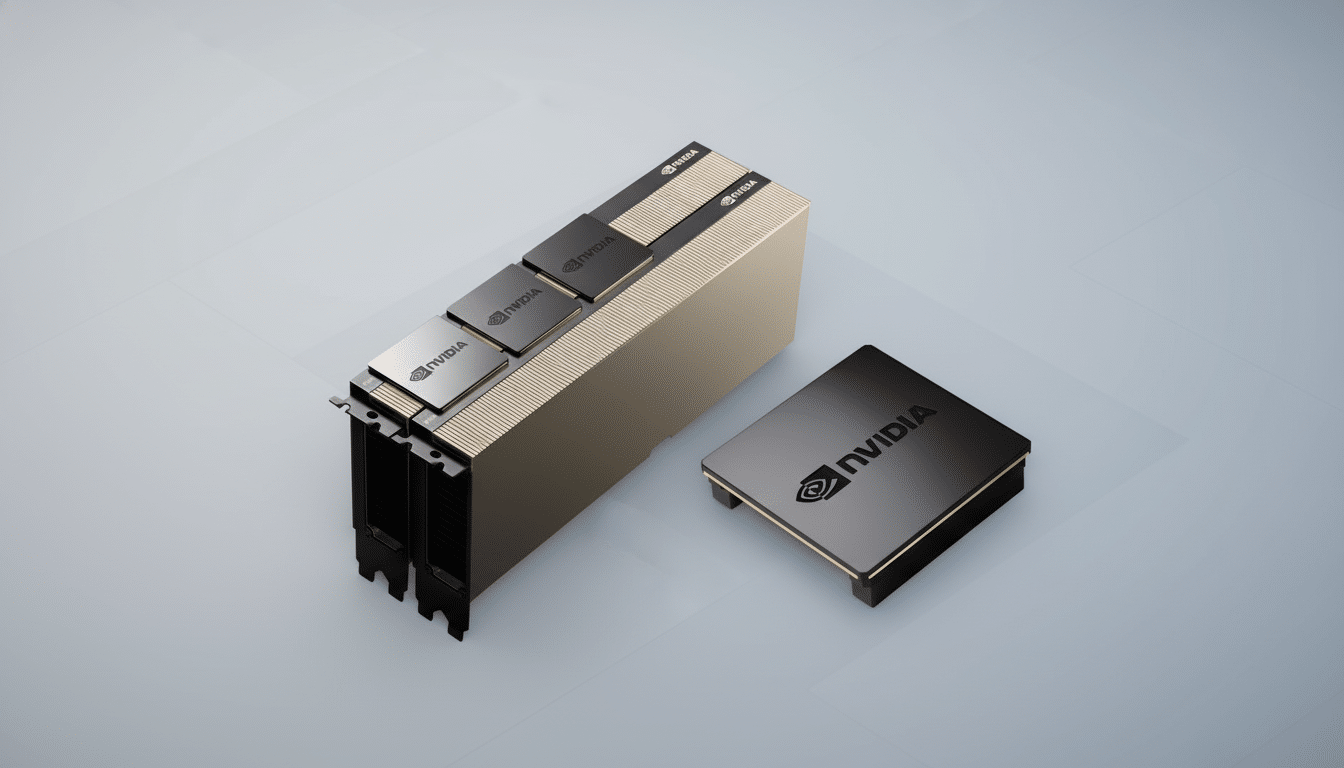
The division has transformed networking from a supporting role into a strategic pillar for the company.
It now serves as the second-largest revenue driver behind compute.
The division's growth has been meteoric, with a 267% year-over-year increase.
It brought in more than $31 billion for the full year according to Nvidia's most recent earnings.
While Wall Street obsesses over GPU shipments, this business building in plain sight receives little attention.
It represents a critical piece of Nvidia's infrastructure dominance.
Mellanox Acquisition
The foundation of Nvidia's networking dominance was laid with its 2020 acquisition of Mellanox Technologies for $7 billion.
This deal appeared expensive at the time but now looks remarkably prescient.

Mellanox, founded in Israel in 1999, brought crucial InfiniBand technology and Ethernet switching expertise.
This technology became the connective tissue making modern AI clusters functional.
The acquisition flew under the radar initially but its strategic importance became clear over time.
Companies discovered that networking bottlenecks were killing AI infrastructure performance.
Nvidia CEO Jensen Huang demonstrated years of market foresight similar to his AI chip vision from 2010.
He recognized the critical importance of networking infrastructure for AI capabilities.
Full-Stack Technology
Nvidia has assembled a comprehensive full-stack networking platform purpose-built for AI factories.
“Nvidia just proved it's not just a chip company anymore”
The platform includes NVLink for GPU-to-GPU communication technology.
It features InfiniBand switches and adapters with in-network compute capabilities.
Spectrum-X provides Ethernet-based AI fabrics for the platform.
Co-packaged optics push signaling closer to silicon for better performance.
These technologies work together to create high-speed, low-latency networking infrastructure.
This addresses the critical need for predictable bandwidth and near-lossless data transfer.
As clusters grow, fabric performance determines how efficiently accelerators actually run.
Market Dominance
Nvidia's networking business has already surpassed the scale of established competitors.
Kevin Cook from Zacks Investment Research noted it
The $11 billion quarterly revenue figure dwarfs Nvidia's original gaming business.
The gaming business is nearly three times smaller than networking revenue.
The networking division also rivals the performance of major networking industry players.
What's remarkable is how little attention this business receives compared to the chip side.
The division represents genuine enterprise infrastructure spending.
This is sticky, high-margin business that doesn't evaporate with consumer trends.
Strategic Future
The strategic importance of Nvidia's networking division extends beyond current revenue figures.
“Nvidia CEO Jensen Huang was years ahead of the market when he pushed the company to start tinkering with building AI-specific chips back in 2010, more than a decade before the current buzz around AI”
It positions the company to dominate the entire AI infrastructure ecosystem.
By controlling both compute (GPUs) and networking fabric, Nvidia creates vertically integrated solutions.
This addresses the fundamental bottleneck in AI scaling: data transfer between processing units.
This dual-positioning could transform Nvidia from primarily a chip company.
It could become a comprehensive AI infrastructure provider in the coming years.
The continued growth of AI model sizes increases strategic value of high-performance networking.
Nvidia's current position in this space is increasingly difficult for competitors to challenge.
More on Technology and Science

Hawaii's Worst Flooding in 20 Years Threatens Dam, Prompts Evacuations as More Rain Looms
11 sources compared

Hawaii Deploys National Guard as Worst Flooding in 20 Years Swamps Oahu
68 sources compared

Heatwave shatters March records as Southwest bakes under extreme temperatures
48 sources compared
Record heat blankets the US Southwest as March logs hottest temperature in Arizona
10 sources compared