Sports13 February, 20263 min read
Olympic Officials Disqualify Ukrainian Skeleton Star Vladyslav Heraskevych Over Helmet Honoring War Dead
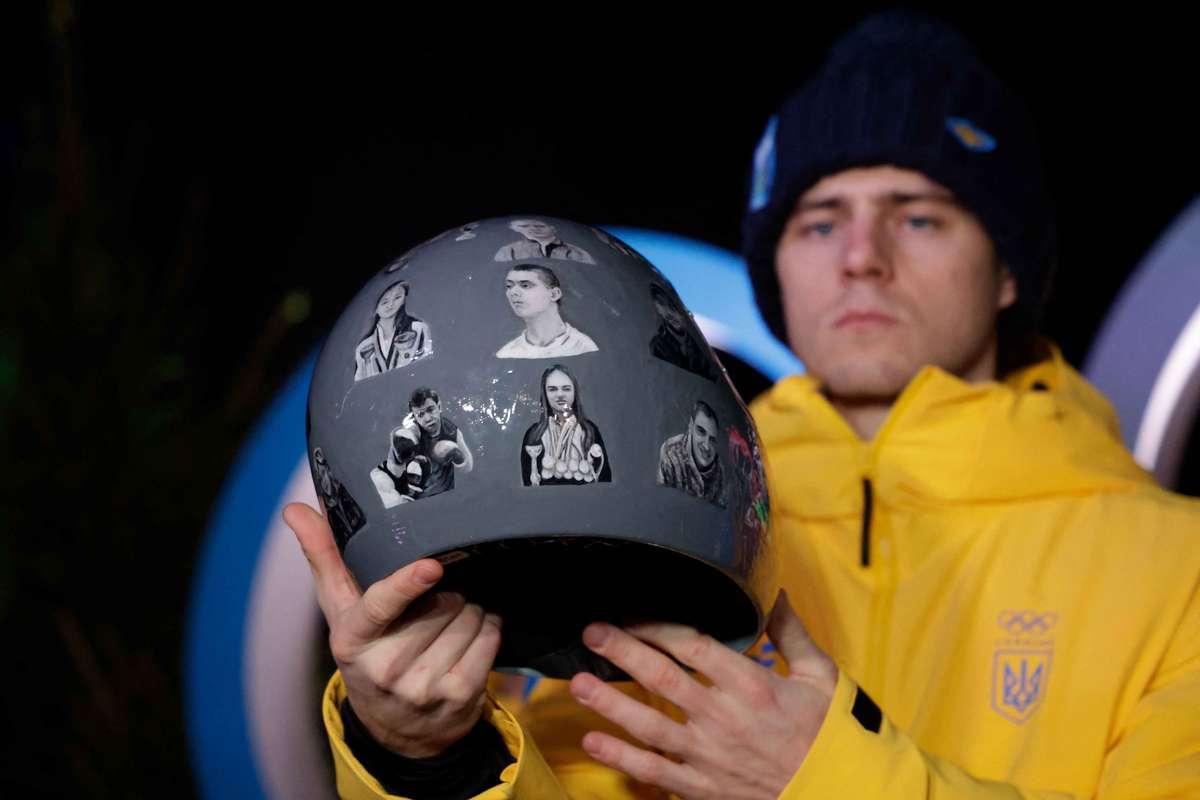
Vladyslav Heraskevych was disqualified for refusing to remove a helmet honoring Ukrainian athletes killed. Heraskevych appealed the disqualification to the Court of Arbitration for Sport.

14 outlets told this the same way.
Outlets did split on Tonda Eckert Keeps Southampton Job After Six-Week Suspended Ban Over Spygate →
Athlete disqualified over helmet
Ukrainian skeleton racer Vladyslav Heraskevych was disqualified from the Milan–Cortina 2026 Winter Olympics after insisting on wearing a helmet that bore portraits of Ukrainian athletes killed in the war with Russia. Officials said the helmet violated rules banning political messaging in competition and removed him shortly before his first run. Multiple outlets reported the ban and its immediate effect, with the San Juan Daily Star writing he was disqualified after officials said the helmet — 'bearing portraits of 21 Ukrainian athletes killed in the war with Russia' — violated the IOC’s ban on political messages.
“Ukrainian skeleton racer Vladyslav Heraskevych was disqualified from the Winter Olympics after officials said the helmet he planned to wear—bearing portraits of 21 Ukrainian athletes killed in the war with Russia—violated the IOC’s ban on political messages in competition.”
Sky News said he 'has been banned from competing' after refusing to remove the helmet, and The Washington Post noted he was barred 'just hours before his race' after refusing to remove it. These accounts consistently place the decision in the hours immediately before competition and describe a last-minute, consequential ruling that prevented him from starting.

IOC Rule 50 dispute
The International Olympic Committee and the sport federation invoked Rule 50/Article 50 and defended the prohibition as a rule-based effort to keep the field of play free from political appeals, while saying they offered alternatives and compromises to Heraskevych. Several sources report the IOC offered a plain black armband and other options. The Hindu lists offers including allowing the helmet in training and to be carried into the mixed zone after the race.
San Juan Daily Star mentions compromises including a black armband and allowing the helmet in the media zone. UNITED24 Media says the IOC and the IBSF barred the helmet under Rule 50 but did allow athletes to wear black armbands instead. The IOC publicly framed the matter as one of placement of political messages rather than the content of the helmet.

Heraskevych CAS appeal outcome
Heraskevych rejected the alternatives, appealed the ruling and underwent a CAS hearing that several outlets reported lasted about two and a half hours. He said logistical and timing realities meant he could not realistically return to competition even if a ruling went in his favor. The Independent notes he "appealed the ban to the Court of Arbitration for Sport (CAS) in Milan — a hearing that lasted about two and a half hours — but acknowledged that, even if he wins, logistical and timing issues mean he can no longer compete."
“He appealed the ban to the Court of Arbitration for Sport (CAS) in Milan — a hearing that lasted about two and a half hours — but acknowledged that, even if he wins, logistical and timing issues mean he can no longer compete.”
ESPN reports the same hearing length and quotes him saying, "Looks like this train has left," and that he "does not have any regrets." The Globe and Mail and Sky News also report his appeal to CAS and that the decision came too late to restore his chance to race.
Reactions to helmet ruling
The move provoked sharp reactions from Ukrainian officials, athletes and some federations, and prompted solidarity actions and formal protests. Ukraine's president Volodymyr Zelenskyy praised Heraskevych’s stance, with San Juan Daily Star reporting Zelenskyy called the helmet "a remembrance of Russian aggression." UNITED24 Media reports Zelenskyy criticized the IOC and that the National Olympic Committee appealed.
Meduza recounts Ukrainian officials including Foreign Minister Andrii Sybiha calling the move "a moment of shame" and notes Zelensky awarded the athlete the Order of Freedom. Bukvy reports several national federations supported Heraskevych and that Latvia led an official protest.
The Hindu and San Juan record that teams, coaches and fans criticized the ruling as unfair and angry. These sources show both institutional protest and popular solidarity in Ukraine and beyond.
IOC protest framing debate
Wider coverage placed the dispute in the context of the IOC’s uneven history on political expression, and journalists debated whether the helmet was a memorial or an inherently political statement. Bukvy explicitly situates the case amid past Olympic controversies, citing Tommie Smith and John Carlos in 1968, Władysław Kozakiewicz in 1980, and Feyisa Lilesa in 2016, to show an uneven IOC record under Article 50. UNITED24 Media and The Hindu note earlier IOC bans on Ukraine‑related messages and Heraskevych’s history of protest, including an anti‑war banner in Beijing 2022.
“The episode follows earlier IOC bans on messages of support for Ukraine (including a helmet reading 'Be brave like Ukrainians') and occurs amid wider Ukrainian concern over the IOC’s decision to permit Russian and Belarusian athletes to compete under neutral status.”
Some outlets urged clearer distinctions between memorial tributes and political advocacy, whereas others emphasized the letter of Olympic rules. The variation in framing—historical inconsistency, rule enforcement, memorialization—reflects different editorial choices and regional sensitivities across the sources.
