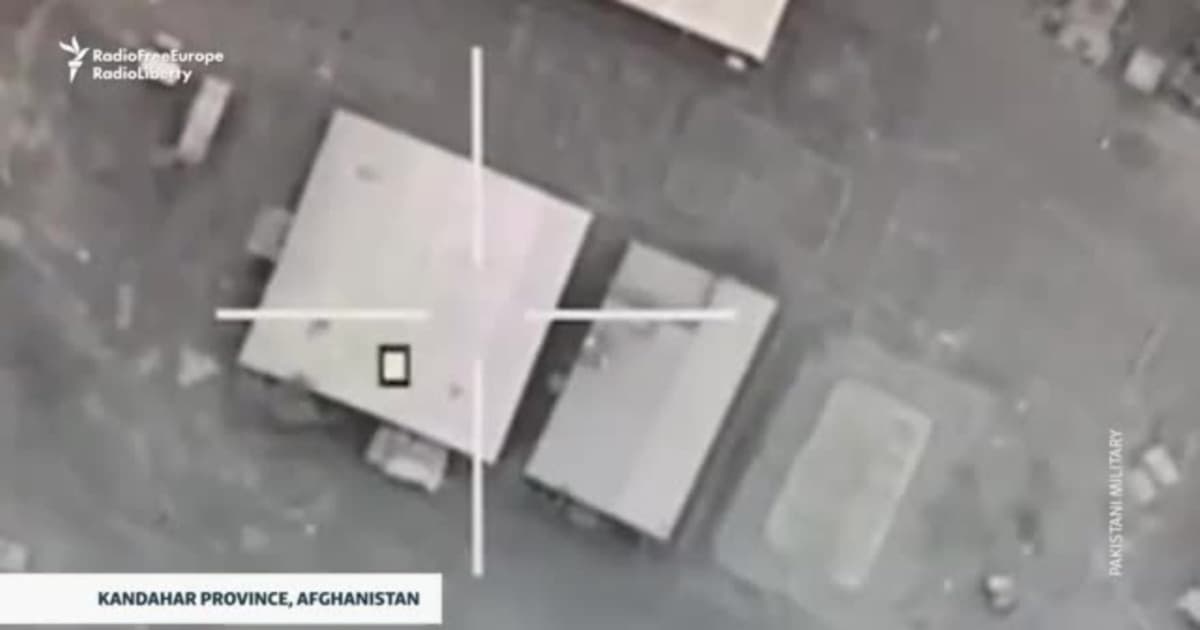
Pakistan strikes Kabul and Kandahar with jets and drones, killing four civilians
Key Takeaways
- Pakistani jets and drones targeted Kabul city and Kandahar, Paktika, and Paktia provinces.
- Taliban authorities say four civilians were killed and 15 injured.
- There is no official Pakistani government confirmation of the strikes.
Cross-Border Strikes
Pakistani military jets and drones conducted cross-border strikes targeting multiple locations in Afghanistan.
“Fresh Pakistani jet and drone strikes targeting Kabul and the Kandahar, Paktika, and Paktia provinces in Afghanistan have cast a shadow over China's shuttle-diplomacy efforts to restore peace between Pakistan and the Taliban”
The targets included Kabul, Kandahar, Paktika, and Paktia provinces according to Taliban authorities.
The attacks occurred on March 13, 2026, resulting in civilian casualties.
Four people were killed and 15 injured in the strikes, Taliban authorities reported.
The Pakistani government has not officially confirmed these operations.
Taliban sources reported that an oil depot was also destroyed in the Pakistani air strikes.
These attacks mark a significant escalation in cross-border tensions between the two neighboring countries.
Retaliatory Strikes
In response to the Pakistani attacks, the Afghan Taliban conducted retaliatory drone strikes against the northwestern Pakistani city of Kohat.
These retaliatory strikes also occurred on March 13, 2026.
Taliban sources reported that their drone operations injured two Pakistani civilians.
The Taliban claimed to have successfully hit a Pakistani military base in Kohat.
Kohat is described as a garrison town near the Afghan border.
The reciprocal violence demonstrates the escalating cycle of cross-border military actions.
This escalation continues despite ongoing diplomatic efforts to de-escalate tensions.
Chinese Diplomacy
China has been intensively engaged in shuttle diplomacy efforts to restore normalcy along the Pakistan-Afghanistan border.
“Fresh Pakistani jet and drone strikes targeting Kabul and the Kandahar, Paktika, and Paktia provinces in Afghanistan have cast a shadow over China's shuttle-diplomacy efforts to restore peace between Pakistan and the Taliban”
Chinese special envoy on Afghan affairs Yue Xiaoyong has held meetings with both Taliban and Pakistani officials.
These diplomatic efforts occurred on March 12, 2026.
Chinese Foreign Minister Wang Yi spoke with Pakistani Foreign Minister Ishaq Dar on March 12.
Wang Yi urged both sides to prevent further escalation and return to negotiations.
Pakistan's special representative for Afghanistan, Mohammad Sadiq, met with Xiaoyong in Islamabad.
They discussed threats posed by terrorist groups such as TTP and ETIM.
China has significant economic interests in the region through Belt and Road Initiative investments.
Security Impasse
The cross-border military operations reflect deep-rooted security concerns for both Pakistan and Afghanistan.
Pakistan blames the Taliban for hosting Tehrik-e-Taliban Pakistan (TTP) and other militant groups.
These groups carry out attacks inside Pakistan according to Islamabad.
Pakistan has stated that as long as the Taliban continues to host these groups, its military will continue cross-border operations.
The Afghan Taliban has maintained its position that it will not allow Afghan soil to be used by groups targeting other countries.
This creates a fundamental impasse that has complicated diplomatic efforts.
The ongoing conflict has undermined China's regional peace initiatives in the area.
Economic Impact
The recent escalation poses significant risks to China's substantial economic investments in the region.
“Fresh Pakistani jet and drone strikes targeting Kabul and the Kandahar, Paktika, and Paktia provinces in Afghanistan have cast a shadow over China's shuttle-diplomacy efforts to restore peace between Pakistan and the Taliban”
This follows attacks on Chinese workers in Tajikistan near the Afghan border.
Chinese workers have also been attacked in Pakistan's Sindh and Balochistan provinces.
China has invested $65 billion in Pakistan under its Belt and Road Initiative.
This investment was made through the China-Pakistan Economic Corridor (CPEC) project.
China has also signed agreements worth hundreds of millions of dollars to develop Afghanistan's mineral resources.
Regional experts note that the expansion of the Afghan-Pakistani conflict does not serve Beijing's interests.
China has concerns about the presence of the East Turkestan Islamic Movement (ETIM) in the region.
More on Asia

Drone strike at Dubai International Airport shuts down flights; attacker unconfirmed.
50 sources compared
Iran Strikes Italian Military Base in Erbil, Forcing Troops Into Bunkers
28 sources compared
Former South Korean president Yoon Suk-yeol appeals life sentence for leading insurrection
14 sources compared

Diet Re-elects Sanae Takaichi as Prime Minister of Japan After LDP Landslide
14 sources compared