
Pakistan strikes Kandahar base after Taliban drone attacks
Key Takeaways
- Pakistan conducted airstrikes against Afghan targets following Taliban drone attacks in Pakistan.
- Taliban drone attacks across Pakistan triggered Pakistani strikes.
- Pakistan's President Asif Ali Zardari warned Kabul had crossed a red line.
Retaliatory Strikes
Pakistan carried out retaliatory strikes on an Afghan military facility in Kandahar province after claiming that Taliban drones targeted civilian areas and military installations across Pakistan.
“Pakistan has carried out strikes on an Afghan military facility in Kandahar after Taliban drones targeted civilian areas and military installations across the country”
This marks a significant escalation in the ongoing cross-border conflict between the two neighboring nations.
Pakistani President Asif Ali Zardari condemned the overnight drone attacks, warning Kabul it had "crossed a red line by attempting to target our civilians".
The exchange represents the sharpest single escalation yet in a conflict that has been building since late February.
Pakistan's military reported that the drones, described as locally produced and rudimentary, were intercepted before reaching their targets.
Falling debris from the intercepted drones wounded two children in Quetta and civilians in Kohat and Rawalpindi.
Islamabad stated that the Kandahar facility had been used both to launch the drone attacks and as a base for cross-border rebel activity.
The Taliban government denied both charges made by Pakistan regarding the facility's use.
Civilian Impact
The cross-border violence has resulted in significant civilian casualties on both sides.
Pakistani strikes on Kabul killed four people including women and children.

The drone attacks on Pakistan wounded civilians including two children in Quetta.
In the Pul-e-Charkhi neighborhood of Kabul, one resident described being buried under rubble after his home was hit.
The resident said he lay there believing it was his "last breath" before neighbours pulled him free.
A local representative told AFP that those killed were "ordinary people, poor people" with no involvement in the conflict.
Pakistani aircraft also struck a fuel depot belonging to the private airline Kam Air near Kandahar airport.
An airport official said the site supplied aid organisations, including the United Nations and the International Committee of the Red Cross.
The official added that there were "no military installations" at the site.
Conflict Origins
The ongoing conflict stems from Pakistan's accusations that Afghanistan's Taliban government is harboring militant groups.
“Residents inspect the site of a strike in Kabul, Afghanistan on Friday”
Pakistan primarily accuses the Taliban of harboring the Pakistani Taliban (TTP) that stage attacks against Pakistani forces.
Pakistan also alleges that the Taliban government is allying with India, while Kabul denies harboring militant groups.
Pakistan's military has said its operations targeted the TTP and their support networks along the border.
Pakistan's Information Minister claimed the military has killed 663 Afghan Taliban since the fighting began.
The Taliban government has responded by accusing Pakistan of conducting airstrikes in Kabul and other areas.
The Taliban claims at least six civilians were killed and 15 others injured in Pakistani strikes.
Pakistan's Prime Minister Shehbaz Sharif's spokesman Mosharraf Zaidi dismissed Afghan claims as propaganda.
Zaidi stated that "the Afghan Taliban are spending more time weaving fantasies" than getting rid of terrorist organizations.
International Response
International community efforts to de-escalate tensions have intensified.
China's Foreign Minister Wang Yi urged a peaceful resolution of the Afghanistan-Pakistan dispute.
Wang warned that the use of force worsens tensions and threatens regional stability.
China's special envoy has been shuttling between the two countries to promote restraint.
Chinese officials encouraged a ceasefire between the neighboring nations.
Afghan Foreign Minister Amir Khan Muttaki stated that Afghanistan seeks regional peace.
Muttaqi said Afghanistan does not want a military conflict and dialogue remains the only solution.
Previous Qatari-mediated ceasefire efforts in October briefly reduced tensions.
Subsequent talks in Turkey failed to produce a lasting agreement.
Pakistan refers to the situation as an "open war" that creates significant regional uncertainty.
Military Escalation
Military operations have expanded beyond drone strikes to include targeted attacks on alleged militant hideouts.
“By ABDUL QAHAR AFGHAN and MUNIR AHMED KABUL, Afghanistan (AP) — Afghanistan’s Taliban government accused Pakistan on Friday of targeting homes in overnight airstrikes on Kabul and other areas of the country, saying at least six civilians were killed and more than a dozen others were injured”
Pakistan's Information Ministry stated that strikes targeted "four alleged militant hideouts and their support infrastructure in Afghanistan."
The conflict has seen both sides claim significant military successes.
Pakistan's military reported successful operations against militant targets.
Afghanistan's Defense Ministry claimed its defense forces captured a Pakistani post.
Afghan forces reportedly killed 14 Pakistani soldiers in eastern provinces.
The Taliban's General Directorate of Intelligence spokesman Khalil Hamraz stated that two drones were used to strike a military facility near Islamabad.
Pakistani police said the drones were rudimentary and brought down using electronic measures.
The drones caused no damage according to Pakistani authorities.
The cycle of retaliation continues as both sides accuse each other of violating territorial sovereignty.
Neither side shows immediate willingness to de-escalate despite international pressure.
More on Pakistan

Indian-Owned Sunrisers Leeds Sign Pakistan Spinner Abrar Ahmed, Breaking IPL-Linked Teams' Boycott
10 sources compared
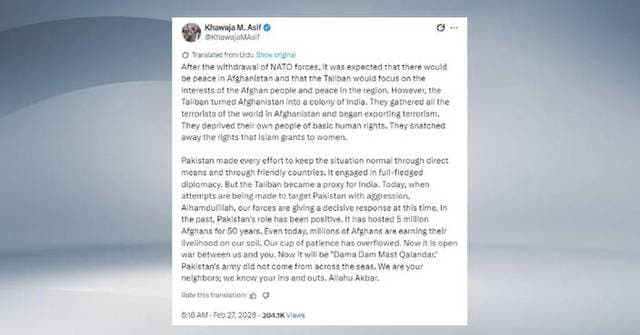
Pakistan Declares 'Open War' and Bombs Kabul, Kandahar
154 sources compared

Pakistan Kills Dozens, Including Children, in Overnight Air Strikes on Afghanistan
19 sources compared
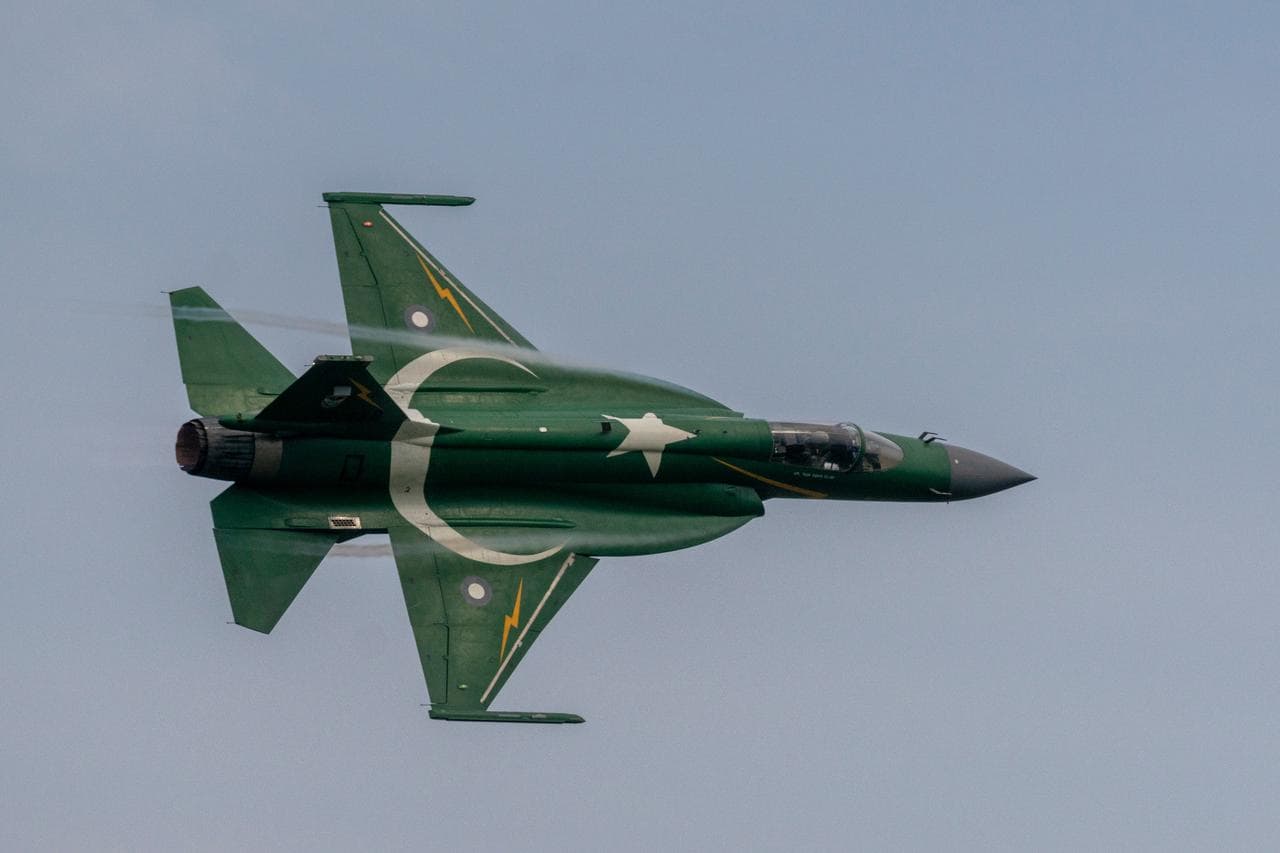
Pakistan in Talks With Saudi Arabia to Repay $2 Billion Loan with JF-17 Fighter Jets
21 sources compared