
Pete Hegseth Says U.S. Blockade of Iranian Vessels Will Continue in Strait of Hormuz
Key Takeaways
- U.S. Navy blockade of Iranian vessels and ports will continue as long as it takes.
- Both sides seized ships, sustaining a tense Hormuz naval standoff.
- Oil prices rose above $100 per barrel amid Hormuz disruptions.
Blockade, mines, and control
The United States’ blockade of Iranian vessels and ports is set to continue “as long as it takes,” Defense Secretary Pete Hegseth said at the Pentagon, while President Donald Trump framed the Strait of Hormuz as under U.S. control.
“On April 20, the United States fired at and then seized an Iranian-flagged container ship close to the Strait of Hormuz in the northern Arabian Sea, amid its blockade of Iranian ports”
Hegseth told reporters that “the U.S. Navy's blockade of Iranian vessels and ports will remain in place ‘as long as it takes’,” and he added that the “clock is not on their side.”

In parallel, Trump said in a Truth Social post that “We have total control over the strait of Hormuz. No ship can enter or leave without the approval of the United States navy. It is ‘Sealed up Tight,’ until such time as Iran is able to make a DEAL!!!”
The standoff is being shaped by naval blockades and the presence of sea mines, with the BBC describing the situation as a “test of wills” as “the US and Iran's rival blockades of the Strait of Hormuz have become a ‘test of wills’, says BBC's Chief International correspondent Lyse Doucet.”
Axios reported that Iran’s Islamic Revolutionary Guard Corps (IRGC) navy laid more mines in the Strait of Hormuz “this week,” citing “a U.S. official and a source with knowledge of the issue.”
The same Axios report said the aircraft carrier USS George H.W. Bush and its strike group arrived Thursday in the U.S. Central Command (CENTCOM) area of responsibility, and it described the mines as deepening “what the International Energy Agency has already called the largest oil supply disruption in the history of the global market.”
What the U.S. is doing
U.S. officials have described the blockade as “ironclad,” while also detailing how many vessels have been turned back and which ships have been seized.
Hegseth said the scope of the U.S. blockade is “ironclad,” and he added that “a second aircraft carrier will be joining the blockade in the coming days.”
He also told reporters that “as of Friday morning, 34 non-Iranian vessels are able to transit the Strait of Hormuz,” and he said “We are seeing vessels transit, there are paths that are open,” while noting that commercial vessels are “much more limited.”
Chairman of the Joint Chiefs of Staff Gen. Dan Caine provided additional details, saying “34 ships have met the U.S. blockade and turned around,” but that “one, the M/V Touska, was seized.”
Caine also said “Two other ‘stateless’ vessels linked to Iran, the M/T Tifani and , were interdicted,” and he said “Their crew remain in U.S. custody.”
In the same briefing, Hegseth said the U.S. would respond directly to mine threats, stating, “If Iran is putting mines in the water, or otherwise threatening American commercial shipping or American forces, we will shoot to destroy. No hesitation.”
How the U.S. justifies escalation
The U.S. has tied its maritime posture to mine threats and to the broader goal of preventing Iran from gaining leverage through the strait.
“Skip to main content Updated Apr 23, 2026 - Politics & Policy Iran deploys more mines in the Strait of Hormuz, sources say Barak Ravid, Marc Caputo email (opens in new window) sms (opens in new window) facebook (opens in new window) twitter (opens in new window) linkedin (opens in new window) bluesky (opens in new window) Add Axios as your preferred source to see more of our stories on Google”
In the Reuters analysis, the U.S. is described as having “protected ships from Iran in the Strait of Hormuz in the ‘80s,” when it escorted Kuwaiti tankers during the “Tanker war,” and the piece asks whether the U.S. could do so “again.”
It says the U.S. could “follow that model now and become more aggressive to protect ships passing through the strait,” while noting that President Donald Trump said he ordered the U.S. military to “shoot and kill” small Iranian boats.
The analysis also emphasizes that today’s environment is more complex, warning that “Small boats, big problems” because Iran’s Revolutionary Guard has adapted to sanctions by using smaller civilian ships for military purposes.
Reuters reported that “Iran seized two cargo ships this week,” and it described a video released by the Guard showing forces aboard patrol boats “dwarfed by the massive container ships,” with “Guardsmen opened fire on the cargo ships, then stormed the vessels.”
In parallel, CNN reported that U.S. military officials are developing plans to target Iran’s Strait of Hormuz defenses if the ceasefire fails, including “dynamic targeting” of “small fast attack boats, minelaying vessels and other asymmetric assets.”
Why this differs from the 1980s
Several reports frame the current Strait of Hormuz crisis as a potential replay of the 1980s “Tanker war,” but they also stress differences in technology, objectives, and risk.
Reuters’ analysis recounts that the “Tanker war” grew out of the “eight-year war between Iraq and Iran in the 1980s,” and it describes how the U.S. launched “Operation Earnest Will” to escort Kuwaiti oil tankers that were “reflagged as American.”

It notes that the operation was “not without danger,” including that the Kuwaiti supertanker Bridgeton “struck a mine while under U.S. escort,” and it recalls that an Iraqi missile strike on the USS Stark killed 37 sailors.
Reuters also recounts that an Iranian mine attack wounded 10 on the USS Samuel B. Roberts, and it says the U.S. “mistook a commercial airliner for a fighter jet and shot it down, killing all 290 people aboard Iran Air flight 655.”
The analysis then argues that replicating the 1980s approach would be difficult because “Military technology has advanced since the ‘Tanker war,’” and because “it’s not clear international shippers would feel safe even with an American Navy escort given it is a combatant now.”
It adds that the U.S. “hasn’t defined the same clear, narrow goals in this war as it did in the 1980s,” and it quotes analyst Torbjorn Soltvedt saying, “it’s much more difficult to secure a waterway now than it was then.”
Markets, ceasefire, and next moves
The Strait of Hormuz standoff is being tracked not only through naval actions but also through oil prices, shipping traffic, and the fragile ceasefire dynamics.
“Washington — Defense Secretary Pete Hegseth said Friday that the U”
NBC News reported that “The price of crude oil rose to more than $105 a barrel in early trading today as regional doubts continue to cloud the market's long- and medium-term outlook,” and it tied the market uncertainty to “Hormuz uncertainty.”

CNBC reported that “Brent oil, the international benchmark, has risen above $100 per barrel again as tanker traffic through the strait remains at a near standstill,” and it said “Two cargo vessels, but no tankers, have crossed the strait so far Thursday.”
CNBC also said “At least nine tankers have transited the sea lane since Monday,” and it described Trump’s claim that the U.S. has “total control” over the sea lane, while Iran continues to demand permission for ships to transit.
The Guardian reported that the dual blockades have been “compounded by the presence of sea mines in the strait,” and it said the impact could linger after any peace deal because of the Pentagon’s mine-clearing timeline.
Axios added that traffic has collapsed to “single digits on most days, down from more than 100 ships daily,” and it said the new mines could deepen the “largest oil supply disruption” described by the International Energy Agency.
More on USA
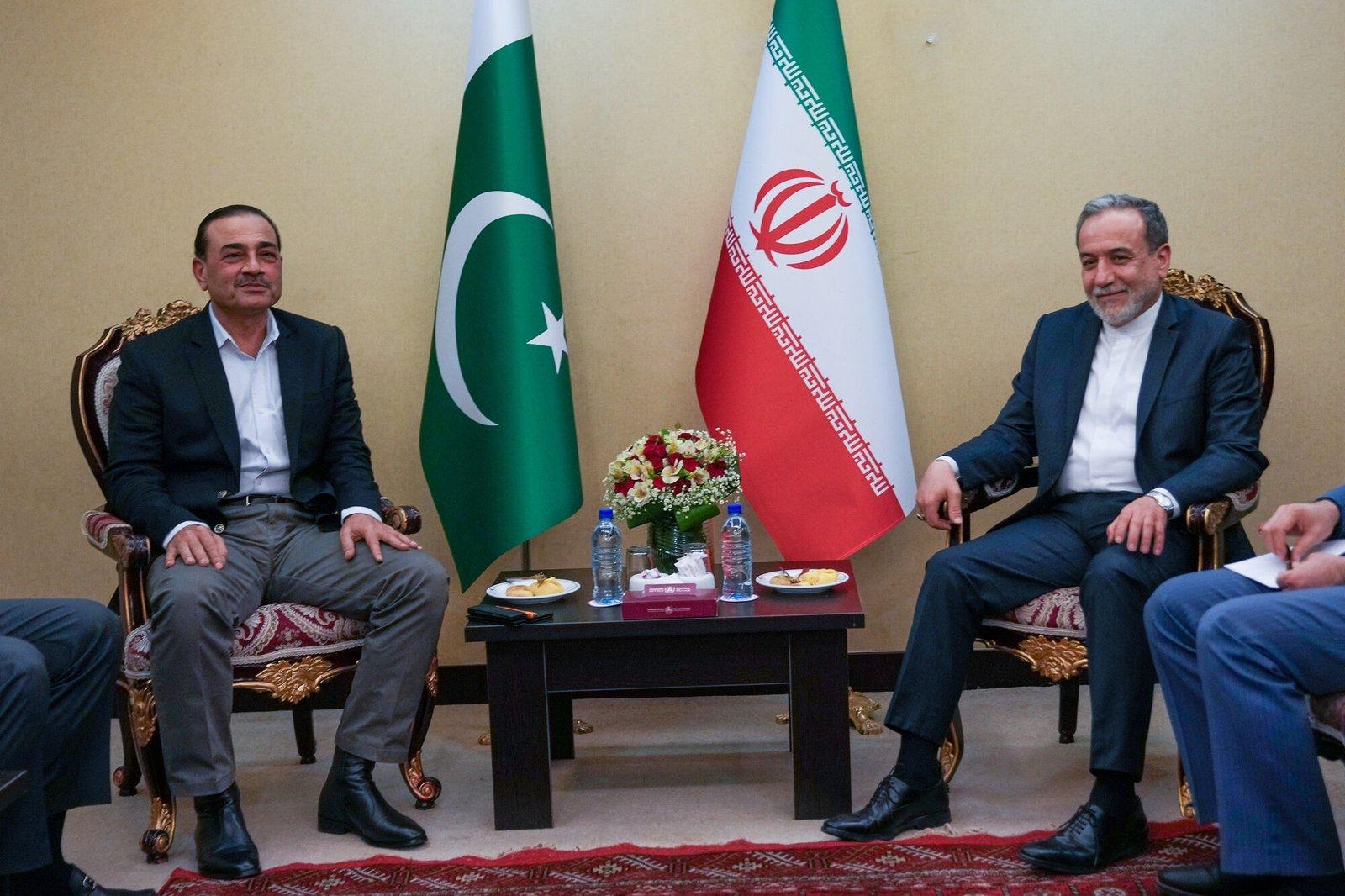
Trump Sends Witkoff and Kushner to Pakistan for Talks With Iran Foreign Minister Araghchi
53 sources compared

DOJ Brings Back Firing Squads, Gas, Electrocution for Federal Executions
12 sources compared

DC Circuit Blocks Trump Executive Order Suspending Asylum Access at U.S.-Mexico Border
13 sources compared

Pete Hegseth Says U.S. Blockade of Iranian Vessels Will Continue in Strait of Hormuz
11 sources compared