
Steve Witkoff and Jared Kushner Travel to Islamabad for Talks With Abbas Araghchi
Key Takeaways
- Witkoff and Kushner head to Pakistan to meet Abbas Araghchi.
- Araghchi arrives in Islamabad to discuss restarting peace talks with the United States.
- Vance is on standby to travel to Islamabad if talks progress.
Envoys Head to Islamabad
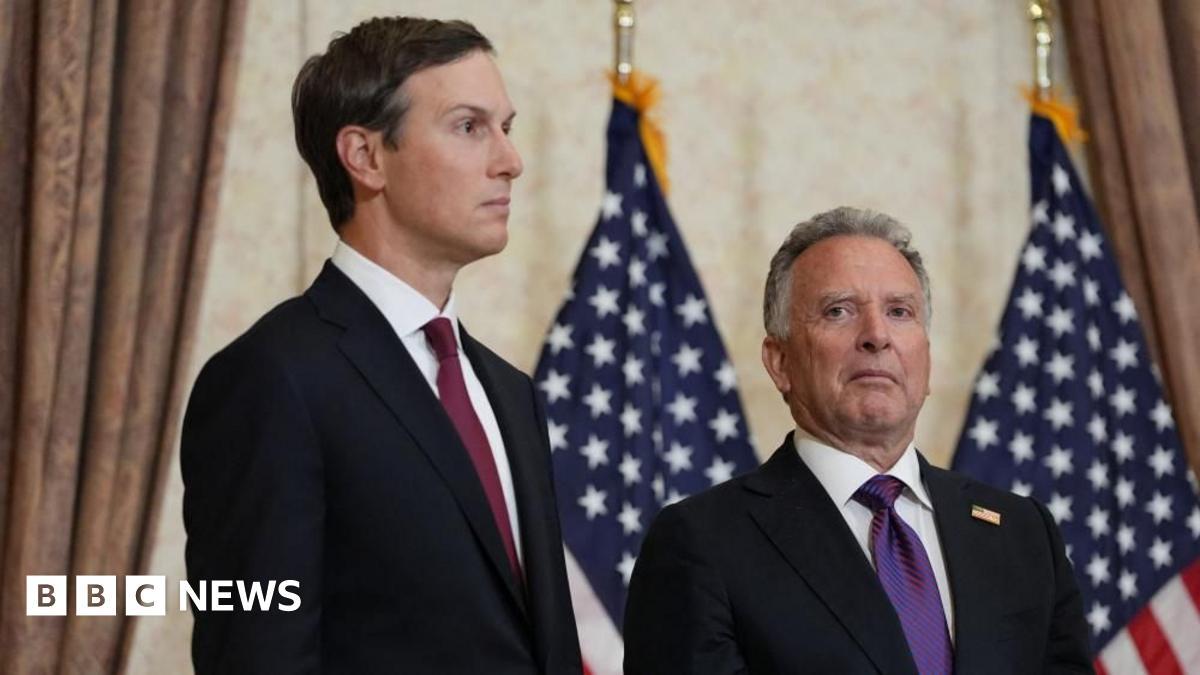
The White House said U.S. envoys Steve Witkoff and Jared Kushner were expected to travel to Pakistan on Saturday for negotiations with Iranian Foreign Minister Abbas Araghchi, with the talks planned to take place in Islamabad.
Axios reported that the trip was announced by the White House and that Iranian state media denied that any meeting had been scheduled, while the White House framed the effort as a push to break a stalemate and build momentum for a deal.

BBC likewise said Witkoff and Kushner were heading to Pakistan for peace talks with Iran on Saturday morning, citing White House press secretary Karoline Leavitt.
Leavitt told reporters, "The Iranians want to talk. They want to talk in person and the president is always willing to give diplomacy a chance," and she added, "We hope progress will be made and we hope that positive development will come from this meeting."
The BBC also quoted Leavitt saying Trump decided to send the envoys to Islamabad "to hear the Iranians out," and it reported that JD Vance was "on standby" to travel if the talks proved successful.
Reuters reporting cited by Axios said Araghchi arrived in Islamabad on Friday night for talks with Pakistani Prime Minister Shehbaz Sharif, Foreign Minister Ishaq Dar and Field Marshal Asim Munir.
The Globe and Mail described the same planned departure, saying Witkoff and Kushner would depart on Saturday morning, and it noted that Islamabad was the venue for U.S.-Iran talks that collapsed earlier this week.
Competing Accounts of Meetings
While the White House and multiple outlets described the envoys’ trip as an effort to hold in-person discussions with Araghchi, Iranian officials and state-linked reporting disputed that any direct meeting would occur.
Axios said Iranian state media denied that any meeting had been scheduled, and it added that Tasnim news agency, affiliated with the Revolutionary Guards, also denied any direct talks between Araghchi and the U.S. envoys were planned at the moment.

BBC reported that Iran’s foreign ministry spokesman Esmail Baqaei said he and Foreign Minister Abbas Araghchi had arrived in Islamabad on Friday evening and that Araghchi would be meeting "Pakistani high-level officials," adding, "No meeting is planned to take place between Iran and the US. Iran's observations would be conveyed to Pakistan."
Ynetnews similarly quoted Baqaei’s post on X saying, "No meeting is planned to take place between Iran and the U.S. Iran's observations would be conveyed to Pakistan."
In contrast, the White House press secretary Karoline Leavitt told reporters that Witkoff and Kushner would leave Saturday for Pakistan to meet Iranian negotiators through Pakistani mediation, and Axios said the planned trip was intended to break the stalemate.
The Guardian described the White House’s position more directly, saying Witkoff and Kushner would meet Iran’s foreign minister, Abbas Araghchi, in Islamabad, and it quoted Leavitt saying, "We’re hopeful that it will be a productive conversation and hopefully move the ball forward to a deal."
The Globe and Mail reported that Pakistani sources said Araghchi was not due to meet U.S. negotiators in Islamabad, even as the U.S. planned to send the envoys.
Why Vance Stays Back
The diplomatic push also came with a clear decision about who would travel, and why.
Axios reported that Vice President JD Vance, who led the U.S. negotiating team in the previous round, would not make the trip, and it said the U.S. officials gave that reason because his counterpart, Speaker of Parliament Mohammad Bagher Ghalibaf, would not travel with Araghchi.
Axios added that a U.S. official and a source with knowledge said Ghalibaf grew frustrated with infighting in the Iranian leadership after the previous round of talks and even threatened to step aside, while also stating, "He was talking to other officials in Iran about resignation and considering it, but he has not done it yet."
BBC and the Globe and Mail both described Vance as not traveling but ready to join if talks progressed, with BBC saying he was "on standby" and the Globe and Mail saying he is ready to travel to Pakistan to join the negotiations if they prove successful.
The Guardian likewise said Vance, who led the previous round of peace talks, is not travelling but will remain on "standby" in case of a breakthrough, and it quoted Leavitt saying, "The president, the vice-president, the secretary of state, will be waiting here in the United States for updates" and that Vance was "on standby" and would "be willing to dispatch to Pakistan if we feel it’s a necessary use of his time".
The CNN report cited by ایران اینترنشنال said Vance was not currently planning to attend and that members of his staff would be in Pakistan and attending the negotiations.
The Globe and Mail also noted that Reuters reports in Iranian state media and Pakistani sources made no mention of Mohammad Baqer Qalibaf, and it said the Iranian Parliament’s media office denied a report that Qalibaf had resigned as head of Iran’s negotiating team.
Nuclear, Hormuz, and the Ceasefire
The weekend diplomacy is framed by both sides around conditions tied to the nuclear issue and the Strait of Hormuz, with the U.S. emphasizing abandonment of a nuclear weapon and Iran linking negotiations to lifting blockades.
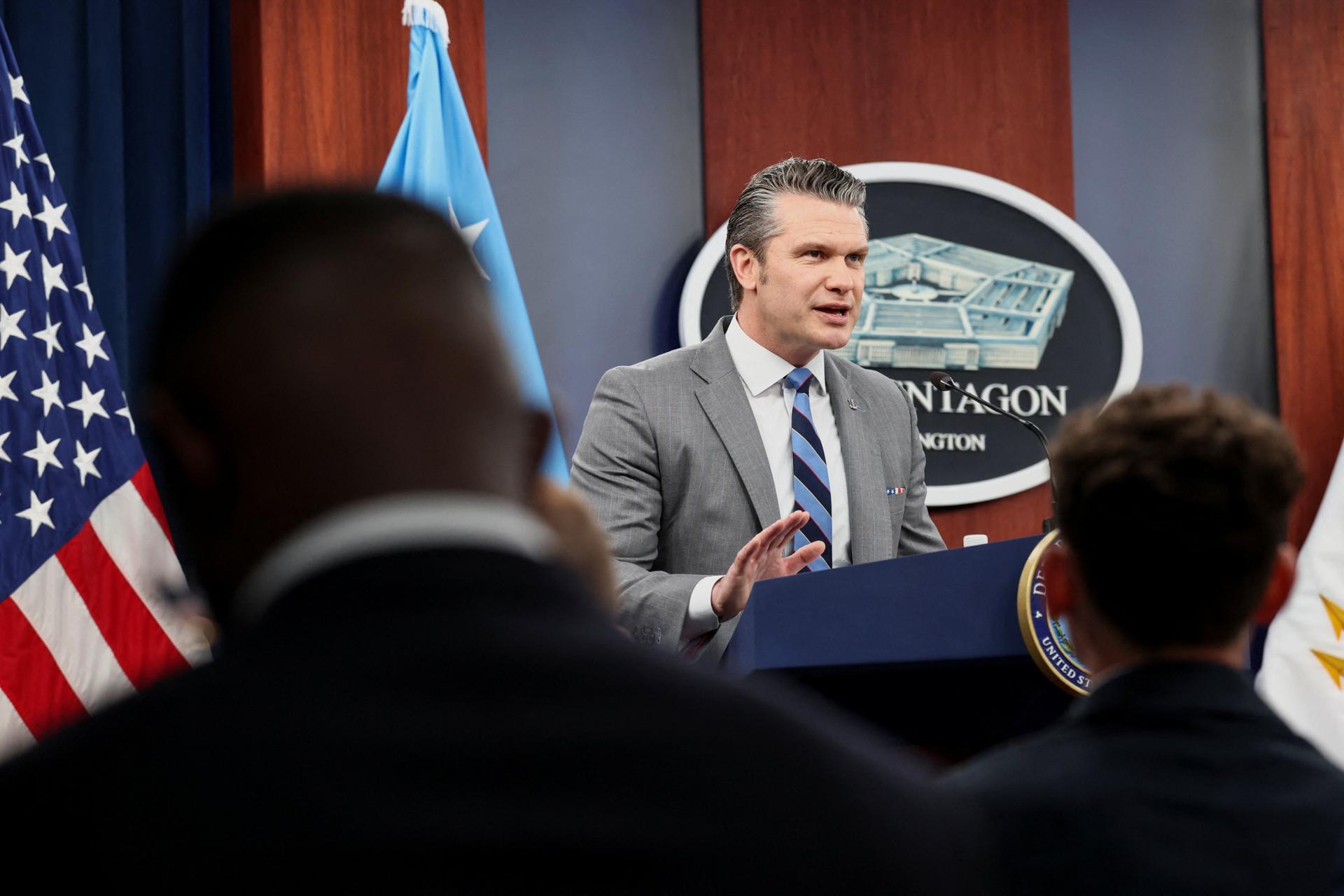
BBC reported that ahead of Baqaei’s comments, U.S. Defence Secretary Pete Hegseth said Tehran had a chance to make a "good deal", stressing that "all they have to do is abandon a nuclear weapon and in meaningful and verifiable ways."

BBC also said Hegseth warned that Washington’s continuing blockade of the Strait of Hormuz was "growing and going global," and it connected the escalation to the U.S. and Israel beginning attacking Iran on 28 February.
The Guardian described Iran’s position as requiring the U.S. to lift its blockade of Iranian ports, while the U.S. demanded verifiable assurances that Tehran would end its nuclear programme and lift its own crippling blockade of the strait.
It added that Araghchi is likely to discuss a potential permanent new arrangement on governing the strait of Hormuz with Oman, which oversees the south of the strait.
The Guardian also quoted an Iranian foreign ministry spokesperson, Esmail Baghaei, saying the main subject in negotiations was no longer the nuclear issue but instead "ending the war in a way that secures the country’s interests," and it included Baghaei’s line, "We accept the ceasefire only if it is the first step to bringing the war to an end on all fronts."
In parallel, the Guardian reported Hegseth saying a total of 34 ships had been turned back as part of the U.S. blockade of Iran’s ports, and it quoted him saying, "No one sails from the strait of Hormuz to anywhere in the world without the permission of the United States navy."
Stakes Beyond Diplomacy
The talks’ stakes extend beyond the negotiating table into sanctions, regional ceasefires, and the human and economic costs of the blockade.
“ISLAMABAD/WASHINGTON: Iranian Foreign Minister Abbas Araghchi arrived in the Pakistani capital Islamabad on Friday to discuss proposals for restarting peace talks with the United States, amid conflicting signals on whether he would meet with US negotiators there”
BBC reported that in other developments on Friday the U.S. treasury imposed sanctions on a major Chinese refinery and 40 other targets, aimed at disrupting "Iran's illicit oil trade".
It also said Israel and the Iran-backed Hezbollah military group in Lebanon accused each other of ceasefire violations, and it noted that the moves came after Trump announced a three-week extension to the Israel-Lebanon truce.
The Guardian described how the U.S. blockade of Iran’s ports had gone global, and it quoted Hegseth saying, "No one sails from the strait of Hormuz to anywhere in the world without the permission of the United States navy."
In the Reuters-cited reporting carried by یالیبنان, the Strait of Hormuz blockade left thousands of seafarers stranded, with India described as having a workforce of more than 300,000, and it quoted Ankit Yadav saying, "The shipping company I work for is not ready to give us the sign-off because they do not want to pay higher air ticket prices, and we cannot afford to buy them on our own. The only way out is the government’s help," while Salman Siddiqui said, "The only thing we do here is plan how to spend the night and pray to god that we do not get hit during an attack."
Meanwhile, the diplomatic track is also tied to broader political moves in Europe and the U.K., with ایيران اینترنشنال reporting that UK Prime Minister Keir Starmer pledged to introduce legislation to proscribe Iran’s Islamic Revolutionary Guard Corps (IRGC) in the next parliamentary session.
In Israel’s political messaging, the same set of articles included a statement from Benjamin Netanyahu saying Israel is working in full coordination with the United States to increase economic and military pressure on Iran while pursuing what he described as a "historic" peace process with Lebanon.
More on USA

Pete Hegseth Says U.S. Blockade of Iranian Vessels Will Continue in Strait of Hormuz
13 sources compared

DOJ Brings Back Firing Squads, Gas, Electrocution for Federal Executions
12 sources compared

DC Circuit Blocks Trump Executive Order Suspending Asylum Access at U.S.-Mexico Border
13 sources compared
Pete Hegseth Says U.S. Blockade of Iranian Vessels Will Continue in Strait of Hormuz
11 sources compared